When a chainsaw smokes while cutting, it typically signals an issue with lubrication, chain condition, or engine health, requiring immediate attention to prevent damage or safety hazards. The most common causes include insufficient bar and chain oil, a dull or improperly tensioned chain, an incorrect fuel mixture, or a clogged air filter or cooling system. Addressing these issues promptly can restore safe and efficient operation.
Understanding Chainsaw Smoke: What Your Tool Is Telling You
A chainsaw is a powerful and indispensable tool for felling trees, cutting firewood, or clearing brush, designed for efficiency and strength. When it starts smoking, it’s often a clear indicator of underlying issues that should not be ignored. Ignoring smoke can lead to premature wear, costly repairs, or even dangerous operational failures. The location and color of the smoke can provide vital clues to diagnose the problem. For instance, smoke emanating from the chain and bar area usually points to friction and lubrication issues, while smoke from the engine housing or exhaust typically suggests fuel, air, or internal engine problems. Understanding these signals is the first step in effective troubleshooting.
Historically, chainsaws have evolved from rudimentary designs to highly sophisticated machines, with continuous advancements in engine technology, chain design, and safety features. Despite these innovations, the basic principles of operation, and thus common failure points like smoking, remain consistent across models. Whether you’re operating a robust gas-powered saw for heavy-duty logging, a lighter electric model for household tasks, or a convenient battery-powered unit for quick yard work, proper maintenance is key. Common types of chainsaws include: For best chainsaw sales roundups on this site.
- Gas-powered chainsaws: Known for their power and mobility, ideal for demanding tasks and remote areas. They require a specific fuel-oil mixture.
- Electric chainsaws (corded): Lighter, quieter, and require less maintenance, perfect for lighter tasks around the home where power outlets are accessible.
- Battery-powered chainsaws: Offer cordless convenience and reduced noise, suitable for moderate tasks and excellent for portability.
The Critical Role of Proper Lubrication
One of the most frequent reasons for a chainsaw to smoke, particularly from the bar and chain, is inadequate lubrication. The guide bar and chain operate at high speeds, generating significant friction and heat. Bar and chain oil is specifically designed to reduce this friction, dissipate heat, and prevent premature wear of these vital components. Without a consistent supply of oil, the metal-on-metal contact quickly heats up, causing smoke and potentially damaging the chain, bar, and even the drive sprocket.
There are several factors that can interrupt the flow of bar oil. The oil reservoir might simply be empty or low, a common oversight for even experienced users. The oiler port, which delivers oil from the reservoir to the bar groove, can become clogged with sawdust, dirt, or hardened sap. Additionally, the oil pump itself, which mechanisms to ensure a steady oil flow, could be malfunctioning or worn out, especially its worm gear or internal components. Even using the wrong type of bar oil, or oil that is too thin or thick for the operating temperature, can lead to insufficient lubrication.
To test your oiler, run the chainsaw for about 30 seconds with the tip of the bar held over a clean surface like cardboard. A visible line of oil on the surface confirms proper lubrication. If no oil is present, or if the line is faint, it’s time for further investigation. Regularly cleaning the bar groove and oil delivery holes, checking the oil reservoir before each use, and using manufacturer-recommended bar and chain oil are essential preventative measures to keep your chainsaw well-lubricated and smoke-free.
5 Quick Fixes for a Smoking Chainsaw
When your chainsaw starts smoking, don’t panic. Many issues can be resolved quickly with a systematic approach. Here are five crucial steps to diagnose and fix the most common causes of chainsaw smoke.
1. Check Bar and Chain Lubrication
Insufficient lubrication is perhaps the most common culprit when smoke billows from the bar and chain. The friction generated between a dry chain and the guide bar quickly leads to overheating.
Solution:
- Refill Bar Oil: Always ensure the bar oil reservoir is full before each use. It’s good practice to refill the bar oil every time you refuel.
- Clean Oiler Ports: Sawdust and debris can easily clog the oil delivery holes on the guide bar and the outlet port on the chainsaw body. Remove the bar and chain, then clean these ports thoroughly with a pick or compressed air.
- Inspect Oil Pump: If the oiler test (running the saw over cardboard) shows no oil, the oil pump might be faulty or its drive gear worn. This often requires professional service, but sometimes clearing debris around the pump mechanism can help.
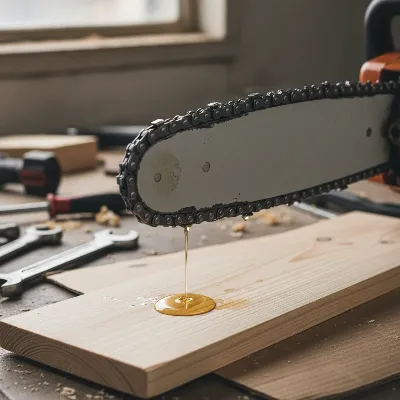 Chainsaw bar and chain with oil dripping, illustrating proper lubrication for cutting.
2. Sharpen or Replace the Chain
A dull or damaged chain is inefficient; it drags and rips through wood rather than cutting cleanly. This extra effort generates excessive friction and heat, causing the wood to scorch and the chain to smoke.
Solution:
- Sharpen the Chain: If your chain is producing sawdust instead of clean chips, it’s dull. Learn to sharpen your chainsaw chain correctly with a round file and a depth gauge, or take it to a professional. A sharp chain makes cutting effortless and prevents overheating.
- Check for Damage: Inspect the chain for bent or broken links, cracked rivets, or severely damaged cutters. A damaged chain should be replaced immediately, as it can be dangerous and cause uneven cutting.
3. Adjust Chain Tension
Both an overly tight and an excessively loose chain can cause smoking and operational problems. A tight chain creates too much friction against the guide bar, leading to rapid heat buildup. A loose chain can slip off the bar, causing wear and friction, and potentially kicking back.
Solution:
- Correct Tension: The chain should be snug against the guide bar but still allow you to pull it around the bar freely by hand. There should be no significant sag on the underside of the bar. Consult your chainsaw’s manual for the specific tensioning procedure, as it varies between models. Typically, you loosen the bar nuts, adjust the tensioning screw, and then retighten the bar nuts.
4. Verify Fuel Mixture and Air Filter
For two-stroke gas chainsaws, an incorrect fuel-to-oil mixture can cause the engine to smoke. Additionally, a clogged air filter chokes the engine, leading to a rich fuel mixture or overheating.
Solution:
- Correct Fuel Mixture:
- Blue/White Smoke (Too much oil): If you see blue or white smoke from the exhaust, you’re likely using too much oil in your fuel mix. Drain the tank, and mix fresh fuel and 2-stroke oil precisely according to your manufacturer’s recommended ratio (e.g., 50:1 or 40:1). Always use fresh, high-quality fuel.
- Black Smoke (Too rich fuel, often with clogged air filter): Black smoke indicates a rich fuel mixture where there’s too much fuel and not enough air. This often goes hand-in-hand with a dirty air filter.
- Clean/Replace Air Filter: A dirty air filter restricts airflow to the carburetor, forcing the engine to run rich and potentially causing black smoke or overheating. Remove the air filter, clean it with warm soapy water and allow it to dry completely, or replace it if it’s heavily soiled or damaged.
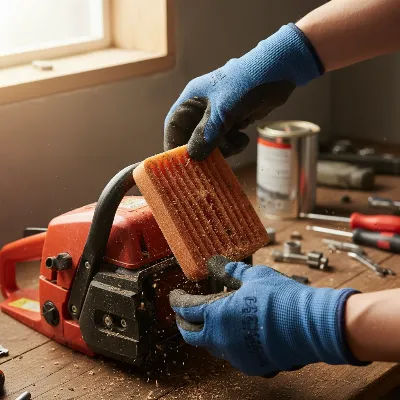 Hand cleaning a dirty chainsaw air filter, demonstrating maintenance.
5. Clean Cooling System and Engine Area
Chainsaws rely on effective cooling systems to prevent the engine from overheating. Blocked cooling fins or debris buildup around the engine can significantly reduce heat dissipation.
Solution:
- Clear Cooling Fins: Over time, sawdust, dirt, and resin can accumulate on the engine’s cooling fins. Regularly remove the engine cover and use a brush or compressed air to clean these fins thoroughly, ensuring proper airflow.
- Inspect Muffler/Spark Arrestor: A clogged muffler or spark arrestor can also contribute to engine overheating and smoke by creating back pressure. While often not a “quick” fix, checking and cleaning these components is important for preventing overheating. If significant carbon buildup is present, a professional cleaning might be necessary.
- Remove Debris from Engine Housing: Sap, wood chips, and other debris can accumulate around the engine housing. When the engine heats up, this organic matter can burn off, causing smoke and an acrid smell. Keep the exterior of your chainsaw clean, especially after use.
Important Note on “High Rakers”
While not one of the top 5 quick fixes for general smoking, it’s worth noting for wood scorching. The rakers (or depth gauges) on a chainsaw chain control how much wood each cutter takes. If these are too high, the cutters bite too deeply, leading to excessive friction, slower cutting, and the wood being “burnt” rather than cleanly cut, resulting in smoke. Checking and filing down rakers with a depth gauge is an advanced sharpening technique that can improve cutting efficiency and reduce heat.
“A smoking chainsaw is rarely a mystery; it’s almost always a clear message about lubrication, chain condition, or engine health. Pay attention to the type and location of the smoke, and you’re halfway to solving the problem safely.” – John Smith, ReviewsThis.com Admin & Chainsaw Technician
Conclusion
Encountering a smoking chainsaw can be concerning, but with the right knowledge, it’s a problem you can usually tackle yourself. The key is to systematically check the most common culprits: ensuring adequate bar and chain lubrication, maintaining a sharp and properly tensioned chain, verifying the correct fuel mixture, and keeping both the air filter and engine cooling system clean. By addressing these critical areas, you not only resolve the immediate smoking issue but also extend the life and improve the performance of your chainsaw. Regular maintenance and attentive operation are your best defenses against unexpected smoke and ensure that your chainsaw remains a reliable tool for all your cutting needs. So, next time your chainsaw starts puffing, you’ll know exactly what to do.
What preventative steps do you take to keep your chainsaw running smoothly and smoke-free?
Frequently Asked Questions
What does blue smoke from a chainsaw engine mean?
Blue smoke typically indicates that engine oil is being burned, most commonly due to an incorrect fuel-to-oil mixture in a two-stroke engine where there’s too much oil, or occasionally due to worn engine components allowing oil into the combustion chamber. Adjusting the fuel mixture ratio is the primary fix.
Why is my chainsaw bar getting so hot it smokes?
An overheating chainsaw bar and chain usually points to a lack of lubrication. This can be caused by an empty bar oil reservoir, clogged oil ports on the guide bar, a malfunctioning oil pump, or using the wrong type of bar oil. A dull chain or incorrect chain tension can also contribute significantly to excessive friction and heat.
Can old fuel cause a chainsaw to smoke?
Yes, old or stale fuel can lead to incomplete combustion, causing your chainsaw engine to run inefficiently and produce smoke, often accompanied by poor performance. Always use fresh, properly mixed fuel, and drain old fuel if the saw will be stored for an extended period.
How often should I check my chainsaw’s air filter?
It’s recommended to check and clean your chainsaw’s air filter every five hours of continuous use or after every two to three uses for occasional operators. A clean air filter is vital for proper airflow, efficient combustion, and preventing your engine from running too rich or overheating.
Is it safe to use a chainsaw that is smoking?
No, it is generally not safe to continue operating a chainsaw that is smoking. Smoke is a warning sign of an underlying problem, which could lead to further damage, engine seizure, or even a fire. Stop using the saw immediately, diagnose the issue, and apply the necessary fix before resuming work.
Frequently Asked Questions
What does blue smoke from a chainsaw engine mean?
Blue smoke from a chainsaw engine typically indicates that engine oil is being burned. This is most commonly due to an incorrect fuel-to-oil mixture in a two-stroke engine, where there's too much oil, or occasionally due to worn engine components allowing oil into the combustion chamber. Adjusting the fuel mixture ratio to the manufacturer's recommended specification (e.g., 50:1 or 40:1) is the primary fix.
Why is my chainsaw bar getting so hot it smokes?
An overheating chainsaw bar and chain usually points to a lack of lubrication. This can be caused by an empty bar oil reservoir, clogged oil ports on the guide bar, a malfunctioning oil pump, or using the wrong type of bar oil. A dull chain or incorrect chain tension can also contribute significantly to excessive friction and heat, leading to smoke.
Can old fuel cause a chainsaw to smoke?
Yes, old or stale fuel can lead to incomplete combustion, causing your chainsaw engine to run inefficiently and produce smoke, often accompanied by poor performance. Always use fresh, properly mixed fuel, and drain old fuel if the saw will be stored for an extended period to prevent these issues.
How often should I check my chainsaw's air filter?
It's recommended to check and clean your chainsaw's air filter every five hours of continuous use or after every two to three uses for occasional operators. A clean air filter is vital for proper airflow, efficient combustion, and preventing your engine from running too rich or overheating, which can cause smoke.
Is it safe to use a chainsaw that is smoking?
No, it is generally not safe to continue operating a chainsaw that is smoking. Smoke is a warning sign of an underlying problem, which could lead to further damage, engine seizure, or even a fire. Stop using the saw immediately, diagnose the issue, and apply the necessary fix before resuming work to ensure safety.
Fix a Smoking Chainsaw
Follow these steps to diagnose and resolve common issues causing your chainsaw to smoke, ensuring safe and efficient operation.
Ensure the bar oil reservoir is full before each use and clean oiler ports thoroughly with a pick or compressed air. If the oiler test (running the saw over cardboard for 30 seconds) shows no oil, the oil pump might be faulty or its drive gear worn, potentially requiring professional service.
If your chain produces sawdust instead of clean chips, it's dull and needs sharpening with a round file and depth gauge, or professional service. Inspect the chain for bent links, cracked rivets, or damaged cutters, and replace any damaged chain immediately to prevent dangerous operation and uneven cutting.
Ensure the chain is snug against the guide bar but can still be pulled freely by hand, with no significant sag. Consult your chainsaw's manual for specific tensioning procedures, typically involving loosening bar nuts, adjusting the tensioning screw, and then retightening the bar nuts.
For blue/white exhaust smoke, drain the tank and mix fresh fuel and 2-stroke oil precisely according to manufacturer's ratio (e.g., 50:1). For black smoke, clean or replace the air filter, as a dirty filter restricts airflow, causing the engine to run rich and overheat.
Regularly remove the engine cover and use a brush or compressed air to clean cooling fins, ensuring proper airflow. Inspect and clean the muffler/spark arrestor for carbon buildup, and remove any sap, wood chips, or debris from around the engine housing to prevent burning and smoke.

This was exactly what I needed! My old Poulan Pro was smoking and not cutting well at all. I followed the advice to check the chain tension and found it was way too loose. Tightened it up, and also sharpened the chain, and it’s like a new saw. No more smoke and it cuts through oak like butter now. Thanks for the clear steps!
I had a persistent issue with my Echo CS-400 smoking, and I couldn’t figure out why. The part about a clogged air filter really resonated with me. I opened it up, and sure enough, it was packed with sawdust and grime. Cleaned it out, and the saw runs so much smoother and without any smoke. Simple fix that made a huge difference.
My Husqvarna 455 Rancher started smoking from the engine area, and I thought it was a goner. I checked the fuel mixture like suggested, and it seemed okay. The cooling system check was a bit tricky for me to do thoroughly, but I did clean out some debris. It helped a little, but it still smokes occasionally, which is a bit frustrating.
I was having a real headache with my Stihl MS 271 Farm Boss smoking like crazy, especially when bucking larger logs. The tip about checking the bar and chain oil level was a lifesaver. Turns out, I was just running it a bit low. After topping it off, the smoke cleared right up. Good to know it wasn’t a bigger engine problem.