For many homeowners and professional landscapers, processing firewood is a demanding task that requires serious power and reliability. While electric and battery-powered chainsaws have made strides, nothing quite matches the raw power and extended runtime of a gas-powered model when tackling thick logs and large volumes of wood. Choosing the right gas chainsaw for cutting firewood can transform a laborious chore into an efficient and satisfying process, saving you time and effort. This comprehensive guide, informed by years of hands-on experience, will navigate you through the essential factors to consider and highlight the top gas chainsaws available in 2026, ensuring you select a tool perfectly suited for your firewood cutting needs.
Overview of Chainsaws for Firewood
A chainsaw is a portable mechanical saw designed for felling trees, limbing branches, and cutting logs into manageable pieces. For generations, these powerful tools have been indispensable for forestry work, construction, and, crucially, preparing firewood. Early chainsaws were bulky and difficult to operate, but advancements in engine technology, ergonomics, and safety features have made modern gas chainsaws more accessible, efficient, and safer for a wider range of users.
Gas chainsaws are typically powered by two-stroke engines, offering superior power-to-weight ratios and the freedom to operate without cords or battery limitations. This makes them the go-to choice for heavy-duty tasks like processing large quantities of firewood, clearing dense brush, or felling medium to large trees where consistent power and unlimited runtime are paramount. While electric models (corded or battery) offer quieter operation and less maintenance, they often lack the sheer cutting force and endurance needed for serious firewood work, particularly with hardwoods. For chainsaw sales buying guides on this site.
Key Factors When Selecting a Gas Chainsaw for Firewood
Choosing the perfect gas chainsaw for cutting firewood involves balancing several crucial factors. The ideal saw for you will depend on the types of wood you’re cutting, the frequency of use, and your personal comfort and experience level.
Chainsaw Type
While this guide focuses on gas chainsaws, understanding their advantages over other types helps in making an informed decision. Gas chainsaws are known for their robust performance and ability to handle larger logs without bogging down. They deliver consistent power and often come with longer guide bars, enabling you to tackle thicker trees or logs in a single pass. However, they demand more maintenance, including fuel mixing and regular tune-ups, and produce more noise and emissions.
Conversely, battery-powered chainsaws are portable and quieter, ideal for smaller tasks or areas where noise is a concern. Corded electric chainsaws offer continuous power but are limited by cord length and require an outlet. For serious firewood processing, especially involving dense hardwoods or large volumes, the sustained power of a gas chainsaw is generally unmatched.
Size and Weight
The physical dimensions and weight of a chainsaw significantly impact its usability and the type of work it can handle. A lighter saw (under 12 lbs) is easier to maneuver and reduces fatigue during extended use, making it suitable for beginners and lighter tasks. However, heavier saws (15-20 lbs or more) often provide better stability during cuts, leading to cleaner results, which can be advantageous when bucking larger logs.
For general homeowner use and cutting firewood, a guide bar length between 16 to 20 inches strikes an excellent balance between maneuverability and cutting capacity. This length allows you to cut most firewood efficiently while remaining manageable. Professional loggers and those felling very large trees might opt for bars over 20 inches, but these require more power and expertise to handle safely. The general rule of thumb is that your bar should be at least two inches longer than the diameter of the wood you typically cut in one pass.
Power
A gas chainsaw’s power is primarily determined by its engine displacement, measured in cubic centimeters (cc). The higher the cc rating, the more powerful the engine, and generally, the greater its cutting capacity.
- 30cc – 40cc: Best for light-duty cutting, pruning, and small firewood tasks.
- 40cc – 60cc: Ideal for medium-duty jobs like cutting thick logs and felling medium-sized trees, making this range perfect for most firewood cutting.
- 60cc – 80cc+: Designed for heavy-duty professional use, handling large trees and demanding, continuous work.
For efficient firewood processing, especially with dense hardwoods, aim for a chainsaw with an engine in the 40-60cc range. Some modern engines, like Husqvarna’s X-Torq, also focus on fuel efficiency and reduced emissions alongside power, which is beneficial for prolonged cutting sessions.
Safety Features
Given the inherent risks of operating a powerful tool like a chainsaw, safety features are paramount. Look for models equipped with:
- Chain Brake: This critical feature stops the chain’s rotation immediately in the event of kickback, a sudden upward and backward motion of the guide bar that can occur if the saw tip hits an obstruction.
- Anti-Vibration System: Reduces the vibration transmitted to the handles, minimizing operator fatigue and reducing the risk of Hand-Arm Vibration Syndrome (HAVS) during long cutting sessions.
- Handguard: Protects your hand from the chain if it derails or breaks, and acts as a barrier during kickback.
- Throttle Lockout: Prevents accidental acceleration of the chain when starting or moving the saw.
- Low Kickback Bar and Chain: Designed to reduce the force of kickback, making the saw safer for less experienced users.
Prioritizing these features will ensure a safer and more comfortable experience when cutting firewood.
Brand and Price
Reputable brands such as Husqvarna, Stihl, Echo, and Remington consistently produce high-quality, durable gas chainsaws. While these brands often come with a higher price tag, they typically offer better performance, reliability, and access to parts and service. Cheaper models might be tempting, but they can often lack the power, durability, and safety features necessary for efficient and safe firewood processing. Investing in a well-regarded brand usually pays off in the long run through extended tool life and consistent performance.
The Top Gas Chainsaws for Cutting Firewood in 2026
Based on current trends, expert reviews, and user feedback, several gas chainsaws stand out for their exceptional performance, reliability, and suitability for cutting firewood in 2026. This selection covers a range of power and features to suit different needs and budgets.
1. Husqvarna 455 Rancher (20-inch)
Often considered the gold standard for firewood cutting, the Husqvarna 455 Rancher is a powerful and reliable choice. Its 55cc X-Torq engine delivers excellent fuel efficiency and reduced emissions, while the 20-inch bar effortlessly tackles logs up to 18 inches in diameter. Users consistently praise its durability and ease of use for regular firewood processing.
2. Echo CS-590 Timber Wolf (20-inch)
For budget-conscious buyers seeking professional-grade performance, the Echo CS-590 Timber Wolf is an outstanding value. This chainsaw boasts a robust 59.8cc engine and a 20-inch bar, delivering impressive cutting capacity for heavy-duty applications, including large tree removal and processing thick hardwoods. Its reliable starting system and solid build quality are frequently highlighted.
3. Stihl MS 271 Farm Boss (20-inch)
The Stihl MS 271 Farm Boss is a perennial favorite, renowned for its tremendous cutting power and consistent performance. Its 50.2cc engine combined with a 20-inch bar makes it highly effective for felling, limbing, and bucking firewood. Users appreciate its excellent vibration dampening system, which significantly enhances comfort during extended use.
4. Husqvarna 460 Rancher (24-inch)
Stepping up in power, the Husqvarna 460 Rancher is a true workhorse, combining a 60.3cc X-Torq engine with a 24-inch bar. This model is designed for serious displacement, offering strong, usable torque for thick hardwood and large-scale land clearing. Its controlled handling and adjustable oil pump ensure consistent lubrication and stable chain speed under heavy loads.
5. Remington RM4618 Outlaw (18-inch)
The Remington RM4618 Outlaw stands out for combining powerful cutting with user comfort. Featuring an 18-inch bar and a 46cc two-cycle engine, it’s designed for ease of use. Key features include a 5-point anti-vibration system and a cushioned, full-wrap handle for a smooth cutting experience, along with an automatic oiling system.
6. RYOBI RY5020 (20-inch)
The RYOBI RY5020 is a lightweight yet powerful option, capable of tackling larger jobs with its 50cc engine and 20-inch bar, despite weighing just over 11 pounds. Its metal bucking spikes aid in felling large trees, and a 3-point vibration isolation system ensures comfortable operation. It also includes a heavy-duty carrying case and a three-year warranty.
7. Craftsman S205 (20-inch)
The Craftsman S205 is a high-output model featuring a 46cc 2-cycle engine and a 20-inch bar. It’s praised for its 5-point anti-vibration system and easy-start technology, providing durable power with reduced user fatigue. This chainsaw also comes with a sturdy case for convenient storage and transport.
8. DEREAL 6220F (20-inch)
The DEREAL 6220F offers an impressive combination of power and affordability. Its 62cc, 3.4 horsepower engine paired with a 20-inch saw bar makes it powerful enough for tough jobs. It includes an automatic oiling system, a variable speed trigger, and safety features like a trigger lock and built-in chain brake.
9. HUYOSEN 5820L (20-inch)
A high-performance machine, the HUYOSEN 5820L is capable of handling even the toughest cutting tasks. It features a 3.6 horsepower, 62cc engine and a 20-inch saw bar, along with electronic ignition and a non-slip handle designed to reduce vibration.
10. Husqvarna 440 (18-inch)
The Husqvarna 440 is an excellent gas-powered chainsaw for homeowners, providing robust cutting power and speed for various tasks around the property, including processing firewood. Its 40.9cc engine and 18-inch bar offer a great balance of power and maneuverability. Users often commend its ease of starting.
> “For serious firewood processing, especially with dense hardwoods, the sustained power of a gas chainsaw is generally unmatched by its electric counterparts. Always match the saw’s capabilities to your specific needs for optimal efficiency and safety.” – Admin, ReviewsThis.com, Chainsaw Expert
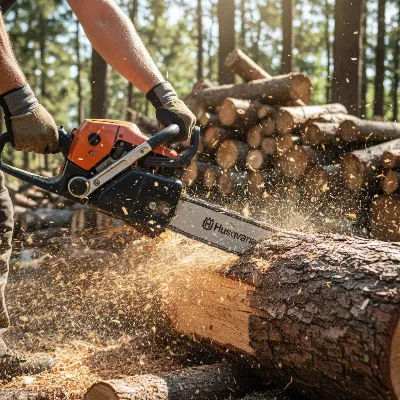 A powerful gas chainsaw cutting through a thick log of firewood with woodchips flying.
Gas Chainsaw Buying Guide
Making the right choice for a gas chainsaw is a significant investment. This guide helps distill your options down to the most suitable model for your specific needs.
Determine Usage Needs
Before anything else, clearly define what you’ll be using the chainsaw for.
- Type of work: Are you primarily cutting small branches, bucking medium-sized logs for firewood, or felling larger trees? For general firewood cutting, a 16-20 inch bar with a 40-60cc engine is typically recommended.
- Frequency of use: Will you use it occasionally for light tasks, or regularly for heavy-duty firewood processing? Frequent users will benefit from more robust, professional-grade models that offer better durability and comfort.
- Type of wood: Softwoods are easier to cut than hardwoods. If you’re consistently cutting dense hardwoods, you’ll need more engine power (higher cc) and a sturdy bar and chain.
Budget
Chainsaw prices vary widely. While it’s tempting to opt for the cheapest model, remember that quality often correlates with performance, safety, and longevity.
- Entry-level (light use): Often under $300, suitable for occasional small tasks.
- Mid-range (homeowner/firewood): $300-$600, offering a good balance of power, features, and durability for regular firewood cutting. This is where most of the top recommendations fall.
- Professional-grade (heavy-duty): $600+, built for demanding, continuous use.
Invest in the best chainsaw you can afford within your budget, prioritizing safety features and engine power for your intended use.
Research Information
The best way to ensure you’re making a good decision is to do your homework.
- Read reviews and comparisons: Look for independent reviews from reliable sources and user testimonials. Pay attention to feedback regarding starting ease, vibration, cutting performance, and long-term reliability.
- Consult experts: Talk to experienced chainsaw users, local hardware store staff, or professionals in forestry or landscaping for their recommendations.
Purchase from Reputable Source
Where you buy your chainsaw is almost as important as which chainsaw you buy.
- Authorized dealers: Purchasing from an authorized dealer often ensures you get genuine products, access to expert advice, proper warranty coverage, and reliable after-sales service and parts.
- Check warranty and return policies: Understand the manufacturer’s warranty and the retailer’s return policy in case of any issues.
Gas Chainsaw Usage and Maintenance Tips
Proper usage and regular maintenance are crucial for maximizing your chainsaw’s lifespan, ensuring efficient cutting, and, most importantly, maintaining safety.
Safe Usage of a Chainsaw
Operating a chainsaw safely requires awareness, proper technique, and the right protective gear.
- Wear Personal Protective Equipment (PPE): Always wear a hard hat, eye protection (goggles or face shield), hearing protection (earplugs or earmuffs), cut-resistant leg protection (chaps), safety boots with steel toes and non-slip soles, and work gloves.
- Inspect Before Use: Before each use, check for dirty, damaged, loose, or broken parts, including the bar, chain, guards, shields, and chain brake. Ensure the chain is sharp and tensioned correctly.
- Clear Work Area: Remove any obstacles, brush, or debris that could interfere with your cutting or retreat path. Ensure no one is within two tree lengths of your felling operations.
- Proper Starting Technique: Place the saw on level ground, engage the chain brake, and ensure the bar and chain are clear of obstructions. Use your foot in the rear handle guard for stability while pulling the starter rope. Never drop-start the saw.
- Maintain Control: Always grip the saw firmly with both hands, keeping your thumbs wrapped around the handles. Be aware of kickback potential and avoid cutting with the tip of the guide bar.
- Plan Your Cuts: For felling trees, plan the direction of fall, make a proper notch, and ensure a clear escape route at a 45-degree angle away from the fall line. Never cut a standing tree completely through; leave a hinge for control.
Chainsaw Maintenance to Extend Lifespan
Regular maintenance is key to reliable performance and longevity.
- Keep the Chain Sharp: A sharp chain cuts more effectively, reduces operator fatigue, and is safer. Sharpen your chain regularly, or have it professionally sharpened, if you notice dullness (fine sawdust instead of chips, burning wood smell, or crooked cuts).
- Maintain Correct Chain Tension: A chain that is too loose can derail, while one that is too tight can bind and overheat. Check the tension regularly, especially during the first half-hour of operation, and adjust according to your manufacturer’s recommendations.
- Ensure Proper Lubrication: The guide bar and chain require constant lubrication to prevent overheating and wear. Ensure your saw’s automatic oiler is functioning correctly and kept filled with appropriate bar oil. Periodically, pump the oiler while pulling the chain by hand to ensure even distribution.
- Clean After Each Use: Clear out sawdust, dirt, and debris from the air filter, cooling fins, guide bar groove, and chain. A clean saw runs cooler and more efficiently.
- Proper Fuel Storage: For two-stroke engines, you must mix oil with gasoline. Store this fuel mixture in an approved, clearly labeled container and ensure it’s fresh. If operating infrequently, drain the fuel tank or add a stabilizer to prevent deposits from building up in the carburetor.
> “Preventive maintenance allows you to cut more wood quickly and safely. This includes ensuring your saw has sharp teeth, correct chain tension, proper lubrication, a properly tuned engine, and functioning safety equipment.” – Oklahoma State University Extension, Chainsaw Safety Guidelines
 Close-up view of a person cleaning and inspecting a chainsaw guide bar and chain.
Conclusion
Choosing the top gas chainsaw for cutting firewood in 2026 involves more than just picking the most powerful model; it’s about finding a balance of power, safety, comfort, and reliability that aligns with your specific needs. Whether you’re a homeowner preparing for winter or a professional clearing land, a well-chosen gas chainsaw is an indispensable tool that can significantly lighten your workload. By considering factors like engine size, bar length, safety features, and investing in reputable brands, you can ensure a safe, efficient, and long-lasting partnership with your machine.
With the right gas chainsaw, you’re not just buying a tool; you’re investing in the power and capability to tackle demanding outdoor tasks with confidence and ease. What kind of firewood project are you planning to conquer next with your ideal gas chainsaw?
Frequently Asked Questions
What is the ideal engine size (cc) for a gas chainsaw used for cutting firewood?
For most firewood cutting, especially medium to thick logs and hardwoods, a gas chainsaw with an engine displacement between 40cc and 60cc is ideal. This range provides ample power without being excessively heavy or difficult to handle for the average user.
What bar length is best for processing firewood?
A guide bar length of 16 to 20 inches is generally recommended for cutting firewood. This length offers a good balance, allowing you to cut through most common log diameters (up to 18 inches in a single pass) while maintaining good maneuverability and control.
Are gas chainsaws still relevant with the rise of battery-powered models?
Absolutely. While battery-powered chainsaws are increasingly powerful for lighter tasks, gas chainsaws remain the preferred choice for heavy-duty firewood cutting, large tree felling, and extended use due to their superior power, unlimited runtime (with fuel), and ability to handle dense hardwoods without performance degradation.
What are the most crucial safety features to look for in a gas chainsaw?
Essential safety features include a chain brake to prevent kickback injuries, an anti-vibration system for operator comfort and fatigue reduction, and a throttle lockout to prevent accidental acceleration. Always ensure these are functioning correctly.
How often should I sharpen my chainsaw chain when cutting firewood?
The frequency depends on usage and the type of wood. If you notice the saw producing fine sawdust instead of chips, burning wood, or requiring excessive downward pressure, it’s time to sharpen the chain. Regular sharpening, even after a few hours of cutting, ensures optimal performance and safety.
Can I use regular gasoline in my gas chainsaw?
No, most gas chainsaws use two-stroke engines that require a specific mix of unleaded gasoline and two-stroke engine oil. Always refer to your chainsaw’s owner’s manual for the correct fuel-to-oil ratio and type of oil to ensure proper engine lubrication and prevent damage.
What maintenance tasks are most important for a gas chainsaw?
Key maintenance tasks include keeping the chain sharp and correctly tensioned, ensuring the automatic oiler is working and filled with bar oil, cleaning the air filter and cooling fins regularly, and using fresh, correctly mixed fuel. Following these steps significantly extends the saw’s life and ensures safe operation.
