For professional loggers, a chainsaw is more than just a tool; it’s an indispensable partner in the demanding world of timber harvesting. The relentless challenges of felling massive trees, limbing heavy branches, and bucking logs require equipment that embodies raw power, unwavering durability, and advanced safety. Choosing the right commercial chainsaw is paramount, directly impacting efficiency, safety, and ultimately, the profitability of logging operations. This guide delves into the specifics that define top-tier professional chainsaws, helping you navigate the market to select a machine built to conquer the forest.
Understanding Commercial Chainsaws for Professional Logging
Commercial chainsaws are purpose-built for the rigors of professional logging, setting them apart from homeowner models designed for occasional use. These formidable machines are engineered to withstand continuous, daily operation in harsh environments, from dense forests to extreme weather conditions. Their primary applications include felling large timber, bucking logs into manageable sections, and efficient limbing.
The evolution of chainsaws for logging has been remarkable. Modern professional saws integrate decades of engineering innovation with high-grade materials and sophisticated features unimaginable in earlier generations. Today’s loggers benefit from advanced engine technologies, superior anti-vibration systems, and precision-engineered components that maximize both cutting performance and operator comfort during extended work shifts.
Typically, commercial chainsaws primarily come in two main power sources: gasoline and battery. While corded electric chainsaws exist, they are generally unsuitable for professional logging due to their limited range and reliance on a power outlet, which is impractical in forest environments.
Essential Factors When Choosing a Commercial Chainsaw
Selecting the ideal commercial chainsaw involves a careful evaluation of several critical factors. Each element contributes to the saw’s overall performance, safety, and suitability for the demanding tasks professional loggers face daily.
Power Source
The choice of power source fundamentally dictates a chainsaw’s capabilities and operational characteristics for logging professionals.
-
Gasoline Chainsaws: These are the traditional workhorses of the logging industry, favored for their immense power, extended runtime, and ability to handle the largest trees and toughest wood.
- Pros: Unrivaled power, long runtimes, independent of external power, robust for heavy-duty felling and bucking.
- Cons: Require fuel mixing, higher maintenance, produce emissions and significant noise, heavier.
- Applications: Heavy-duty felling, bucking large logs, sustained operations in remote areas.
-
Battery-Powered Chainsaws: While traditionally less powerful than gas, professional-grade battery saws have made significant strides, offering compelling advantages for certain logging tasks.
- Pros: Quieter operation, no exhaust emissions, less maintenance, instant starts, lighter for some models.
- Cons: Limited runtime per battery, requires battery charging, generally less power for the largest timber compared to high-end gas saws.
- Applications: Limbing, bucking smaller to medium-sized logs, utility work, areas with noise/emission restrictions, supplemental saw.
Engine Displacement and Power Output (CC/HP)
For professional logging, engine displacement (measured in cubic centimeters or CC) and horsepower (HP) are critical indicators of a chainsaw’s cutting prowess. Professional saws typically start around 50cc and can exceed 100cc, offering the high torque needed to power through dense hardwoods and large diameters quickly. A higher displacement generally translates to more power and faster cutting, essential for maintaining productivity when felling substantial trees. Choosing a saw with insufficient power for the job can lead to overheating, premature wear, and reduced efficiency.
Bar Length and Cutting Capacity
The guide bar length determines the maximum diameter a chainsaw can cut in a single pass. For professional loggers, bar lengths commonly range from 18 inches up to 36 inches or more, depending on the typical size of the timber being felled.
- Shorter bars (18-20 inches) offer better maneuverability for limbing, bucking smaller logs, and working in tight spaces.
- Longer bars (24-36+ inches) are indispensable for felling large-diameter trees and processing substantial timber efficiently. Many professionals maintain a selection of saws with varying bar lengths to match the specific demands of different tasks.
Weight and Ergonomics
Professional loggers often operate chainsaws for hours on end, making weight and ergonomic design crucial for minimizing fatigue and maximizing control. A well-balanced saw, even a powerful one, feels lighter and reduces strain on the operator’s arms and back.
- Anti-Vibration Systems: Modern commercial chainsaws incorporate advanced anti-vibration technologies that isolate the engine from the handles, significantly reducing the impact on the user. This feature is vital for preventing hand-arm vibration syndrome (HAVS) and allowing for longer, more comfortable work periods.
- Handle Design: Padded, ergonomically designed handles provide a secure grip and further enhance comfort during prolonged use.
Advanced Safety Features
Safety is paramount in logging, and commercial chainsaws integrate numerous features to protect the operator.
- Chain Brake: A critical safety device that stops the chain almost instantly in the event of kickback or other sudden movements, significantly reducing the risk of injury.
- Anti-Kickback Systems: Features designed into the chain and bar reduce the likelihood and severity of kickback, a violent upward and backward thrust of the saw.
- Handguards: Protect the operator’s hands from flying debris and from the chain itself if it were to derail.
- Inertia Safety Chain Brake: This advanced chain brake system is activated by the inertia of a kickback event, providing an extra layer of protection.
- Automatic Chain Oiling: Ensures the bar and chain are continuously lubricated, reducing friction, wear, and heat buildup, which also contributes to safer operation.
Durability and Build Quality
A professional chainsaw must be built to last in challenging conditions. Manufacturers achieve this by using high-quality, robust materials.
- Magnesium and Forged Steel: These materials are commonly found in commercial-grade chainsaws for crankcases, housings, and other critical components, offering superior strength and heat dissipation compared to the plastic parts often found in consumer models.
- Professional-Grade Components: Every part, from the engine to the air filtration system, is designed for longevity and resilience against dust, debris, impacts, and extreme temperatures. This ensures the saw can withstand years of rigorous daily use.
Brand Reputation and Dealer Support
The choice between leading brands like Husqvarna and Stihl often comes down to personal preference and, crucially, local dealer support.
- Husqvarna and Stihl: Both are giants in the industry, renowned for producing high-quality, reliable professional chainsaws. Each brand has its loyalists, with differences often subtle, such as Stihl’s reputation for ruggedness and low-end torque, versus Husqvarna’s focus on power-to-weight ratio and advanced engine management systems like AutoTune.
- Echo: Another reputable brand offering robust commercial-grade saws.
- Importance of Dealer Support: Having a local dealership that provides expert service, readily available spare parts, and knowledgeable advice is invaluable for professional loggers, minimizing downtime and ensuring saws are always in optimal working condition.
Top Commercial Chainsaws for Professional Loggers: A Comparison
When it comes to professional logging, certain models consistently stand out for their performance, reliability, and features. Below is an overview of leading models from Husqvarna and Stihl, alongside a comparison table to highlight their key attributes.
Leading Models:
-
Husqvarna:
- Husqvarna 572 XP: A powerful and durable saw designed for demanding forestry work, known for its excellent power-to-weight ratio and X-Torq engine for fuel efficiency and lower emissions. Features AutoTune for optimal engine performance.
- Husqvarna 550 XP Mark II: A versatile saw for felling, limbing, and bucking medium-sized timber, offering exceptional cutting capacity and maneuverability. Also features AutoTune and X-Torq.
- Husqvarna 460 Rancher: Often cited as a strong value proposition, providing professional-level power and durability for heavy-duty tasks at a more accessible price point.
- Husqvarna 555: Widely regarded as an excellent choice for professional logging, delivering robust horsepower and commercial-grade durability with AutoTune technology.
-
Stihl:
- Stihl MS 500i: The world’s first chainsaw with electronically controlled fuel injection (EFI), offering instant acceleration, optimal power, and consistent performance across varying conditions. A true powerhouse for large timber.
- Stihl MS 462: A high-performance, lightweight professional saw known for its rapid acceleration and excellent power-to-weight ratio, suitable for felling and processing large timber.
- Stihl MS 881 Magnum: Stihl’s most powerful production chainsaw, designed for the largest timber, extreme felling, and portable sawmills. Offers immense power for the most challenging jobs.
- Stihl MS 261 C-M: A highly popular mid-range professional saw, known for its versatility, M-Tronic electronic engine management, and reliability for felling smaller trees and limbing.
| Model | Engine CC | Bar Length Range (inches) | Weight (lbs, powerhead) | Key Features | Best Use Case |
|---|---|---|---|---|---|
| Husqvarna 572 XP | 70.6 | 20-28 | 14.5 | AutoTune, X-Torq, Air Injection, RevBoost | Heavy-duty felling, large timber |
| Husqvarna 550 XP Mk II | 50.1 | 13-20 | 11.7 | AutoTune, X-Torq, Air Injection | Felling, limbing, bucking medium timber |
| Husqvarna 460 Rancher | 60.3 | 18-24 | 12.8 | X-Torq, Air Injection, LowVib | Demanding logging tasks, good value |
| Stihl MS 500i | 79.2 | 20-36 | 13.9 | Electronic Fuel Injection (EFI), rapid acceleration, optimal power-to-weight | Large timber felling, high-performance tasks |
| Stihl MS 462 | 72.2 | 16-32 | 13.2 | M-Tronic, optimal power-to-weight, high torque | Felling, bucking large timber, versatile professional |
| Stihl MS 881 Magnum | 121.6 | 25-59 | 22.5 | Stihl’s most powerful, heavy-duty air filter, decompression valve | Extreme felling, largest timber, portable sawmills |
| Stihl MS 261 C-M | 50.2 | 16-20 | 11.5 | M-Tronic, high torque, anti-vibration | Versatile for felling small trees, limbing, bucking |
Your Professional Chainsaw Buying Guide
Making an informed decision about a commercial chainsaw goes beyond just looking at specifications. It involves understanding your operational context and strategic planning.
Assess Your Specific Logging Needs
Before committing to a purchase, take a thorough inventory of your typical logging activities.
- Type of Timber: Are you primarily cutting softwoods or dense hardwoods? Hardwoods demand more power and robust chains.
- Size of Trees: The average diameter of trees you fell will dictate the necessary bar length and engine power.
- Frequency of Use: Daily, extended use warrants the most durable, feature-rich professional models. Occasional heavy work might allow for a slightly less intense (and less expensive) option.
- Terrain and Conditions: Working on steep slopes or in remote locations might prioritize lighter weight or easier starting mechanisms.
Set a Realistic Budget
Commercial chainsaws represent a significant investment, but it’s crucial to consider both the initial purchase price and the long-term operational costs. While a top-tier professional saw may have a higher upfront cost, its durability, fuel efficiency, and reduced maintenance over time can make it more economical than cheaper models that frequently break down or perform poorly. Factor in costs for fuel, bar and chain oil, replacement chains, air filters, and professional servicing.
Research and Read Reviews
Leverage the vast amount of information available from expert reviews and, more importantly, from other professional loggers. These insights provide real-world perspectives on a saw’s performance, reliability, and any potential quirks. Online forums, professional logging communities, and detailed product comparisons can offer invaluable feedback that goes beyond manufacturer claims.
Prioritize Local Dealer Support
This is arguably one of the most critical, yet often overlooked, factors for professionals. A strong relationship with a local authorized dealer is invaluable.
- Expert Service: Access to trained technicians who can quickly diagnose and repair issues, minimizing downtime.
- Readily Available Parts: Ensures that common wear-and-tear components or unexpected breakages can be addressed promptly.
- Knowledgeable Advice: Dealers can offer guidance on maintenance, optimal bar/chain combinations for specific tasks, and new product offerings.
> “For professional loggers, the saw’s performance is only as good as the support behind it. A reliable local dealer is a true asset in keeping your operation running smoothly.” – John Timber, Master Logger & ReviewsThis.com Admin
Essential Tips for Chainsaw Usage and Maintenance
Maximizing the lifespan and safety of your commercial chainsaw requires adherence to proper usage and a consistent maintenance regimen.
Safe Operation Practices:
- Personal Protective Equipment (PPE): Always wear a helmet with face shield and hearing protection, cut-resistant chaps, heavy-duty gloves, and steel-toed boots.
- Proper Technique: Understand felling techniques, limb removal, and bucking procedures. Never operate a chainsaw with one hand unless it’s a specialized top-handle saw for arborists, and even then, only with proper training.
- Clear Work Area: Ensure your felling zone and escape routes are clear of obstacles.
- Pre-Operation Checks: Always check chain tension, oil and fuel levels, chain sharpness, and brake functionality before starting.
Routine Maintenance for Longevity:
- Daily Cleaning: Clear sawdust and debris from the air filter, cooling fins, and around the bar and chain.
- Chain Sharpening: A sharp chain cuts efficiently and safely. Dull chains are dangerous and put unnecessary strain on the saw. Sharpen regularly or replace the chain as needed.
- Chain Tension: Check and adjust chain tension frequently. A properly tensioned chain prevents derailing and ensures smooth operation.
- Air Filter: Clean or replace the air filter regularly, especially in dusty conditions, to ensure optimal engine performance and prevent wear.
- Spark Plug and Fuel Filter: Inspect and replace these components according to the manufacturer’s recommendations.
- Bar and Chain Oiling: Always use quality bar and chain oil and ensure the automatic oiler is functioning correctly.
- Fuel Mix: For gas saws, use the correct fuel-to-oil mixture as specified by the manufacturer, and always use fresh, high-quality fuel.
Popular Commercial Chainsaw Models Highlighted
Let’s take a closer look at a few of the most highly regarded commercial chainsaws favored by professional loggers.
- Husqvarna 572 XP: This 70.6cc gas chainsaw is a powerhouse built for heavy-duty logging. Its X-Torq engine delivers excellent power with improved fuel efficiency and reduced emissions, while the AutoTune system automatically adjusts engine settings for optimal performance in varying conditions. The 572 XP also features Air Injection to keep the filter clean and a robust cooling system, ensuring consistent performance during long, arduous shifts. Loggers praise its power-to-weight ratio and ability to handle large hardwoods with ease.
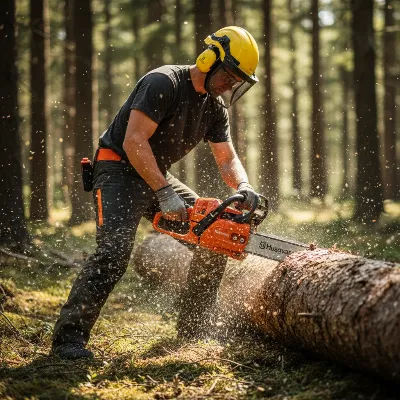 Husqvarna 572 XP chainsaw in action cutting a large log in a forest environment
-
Stihl MS 500i: As Stihl’s flagship professional saw, the MS 500i is a revolutionary machine featuring electronic fuel injection. This technology eliminates the carburetor, providing instant starting, optimal engine performance, and constant power regardless of altitude or temperature. Its 79.2cc engine offers incredible acceleration and a superb power-to-weight ratio, making it an agile yet immensely powerful choice for felling large timber. Professional users often highlight its responsive throttle and consistent torque in challenging cuts.
-
Husqvarna 460 Rancher: Positioned as a strong contender for professional-level work at a competitive price, the 460 Rancher (60.3cc) is a popular choice for loggers needing reliable performance without the top-tier investment. It features Husqvarna’s X-Torq engine for efficiency and emissions reduction, along with LowVib anti-vibration technology for operator comfort. While perhaps not as aggressively powerful as the 572 XP or MS 500i for the absolute largest timber, it offers a robust and dependable solution for a wide range of demanding logging tasks.
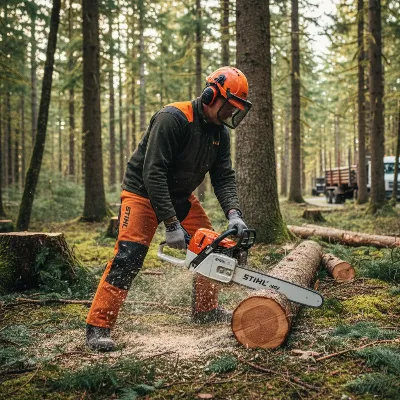 Stihl MS 462 chainsaw being used by a professional logger in a woodland setting
Conclusion
Choosing the best commercial chainsaw is a pivotal decision for any professional logger. It involves a meticulous evaluation of power, durability, safety features, and ergonomic design, all balanced against your specific logging needs and budget. Top brands like Husqvarna and Stihl consistently deliver machines engineered to excel in the most demanding forestry environments, offering advanced technologies and robust construction. Prioritizing local dealer support ensures your investment remains operational and productive for years to come. By carefully considering these factors, you can select a chainsaw that not only meets but exceeds the rigorous demands of professional logging, empowering you to work safely and efficiently.
What specific challenges do you face in your daily logging operations that influence your chainsaw choice?
Frequently Asked Questions
What engine size do professional loggers use?
Professional loggers typically use chainsaws with engine displacements ranging from 50cc up to over 100cc. For heavy-duty felling of large timber and dense hardwoods, saws in the 70cc to 90cc range are common, while smaller, more nimble saws (50-60cc) might be used for limbing or bucking medium-sized logs.
Which is better: Stihl or Husqvarna for professional logging?
Both Stihl and Husqvarna are considered industry leaders and produce excellent commercial chainsaws. Stihl often has a reputation for ruggedness, high torque, and longevity, while Husqvarna is known for powerful engines, innovative features like AutoTune, and good power-to-weight ratios. The “better” brand often comes down to personal preference, specific model features, and the availability of local dealer support.
How long do professional chainsaws last?
With proper maintenance, regular servicing, and careful use, a professional-grade chainsaw can last for many years, often exceeding 5-10 years, even under daily heavy use. Their robust construction with high-quality materials like magnesium and forged steel is designed for extreme durability and longevity, unlike homeowner models.
Are battery chainsaws suitable for professional logging?
While high-end gas chainsaws remain the primary choice for heavy-duty felling and sustained logging operations, professional-grade battery chainsaws are increasingly suitable for specific tasks like limbing, bucking smaller to medium-sized logs, or utility work. They offer advantages like lower noise, zero emissions, and less maintenance, making them excellent supplementary tools for many professional loggers.
