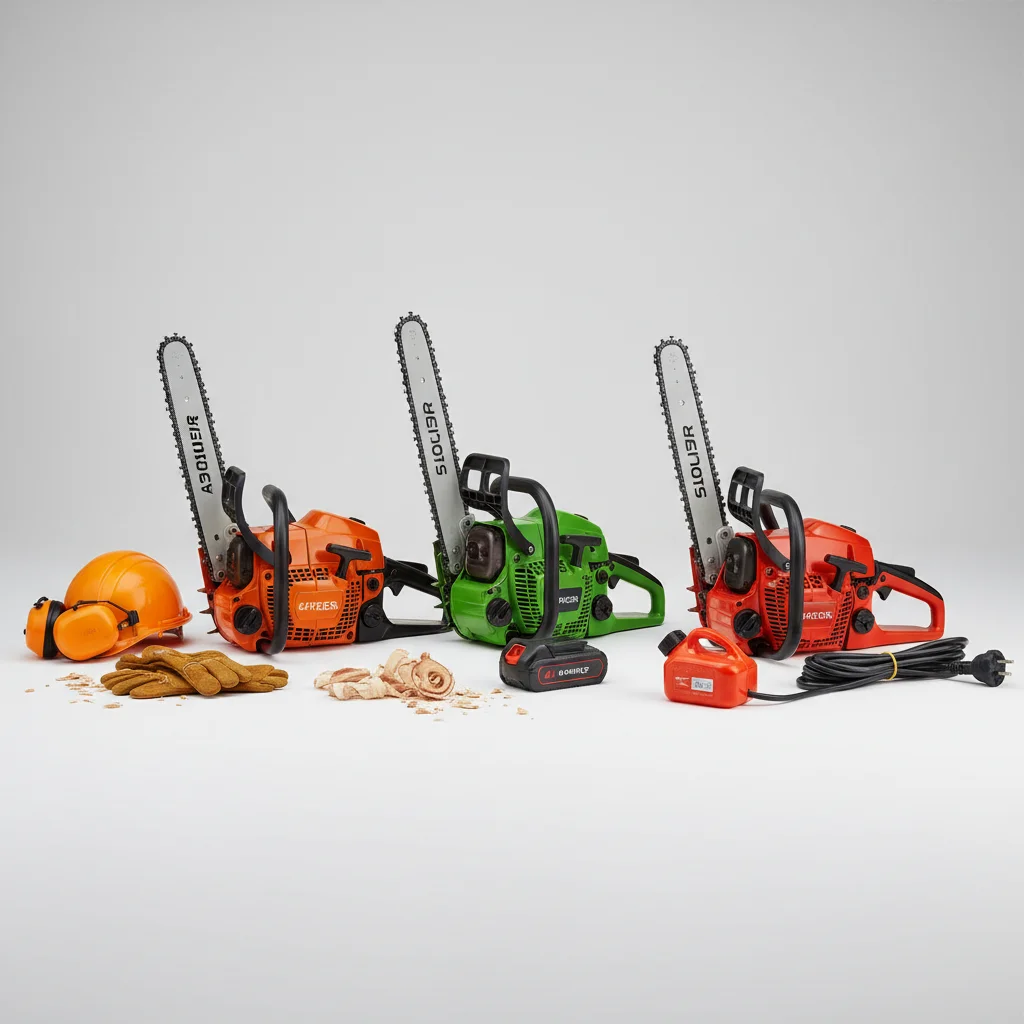
When it comes to felling trees, selecting the right chainsaw is paramount for both safety and efficiency. For homeowners and professionals alike, the ideal chainsaw combines sufficient power, appropriate bar length, and reliable safety features. This guide will help you navigate the options to find the perfect tool for your tree-felling needs.
Understanding Chainsaw Types for Tree Felling
Chainsaws generally fall into three main categories: gas-powered, electric (corded), and battery-powered (cordless). Gas chainsaws are the traditional choice for felling larger trees due to their raw power and extended run times, making them suitable for heavy-duty tasks and remote locations. Electric corded chainsaws are lighter and quieter, ideal for smaller trees and tasks within reach of an outlet. Battery-powered chainsaws offer portability and convenience without the fumes, but their power and run time are typically best suited for medium-sized trees and lighter felling jobs.
For felling larger trees, a gas chainsaw with an engine displacement of 50cc or more and a bar length of at least 18 inches is often recommended. For smaller trees (under 12 inches in diameter), a powerful battery-powered model or a robust corded electric chainsaw can be sufficient.
Key Features to Consider for Tree Felling
Several features are crucial when choosing a chainsaw for felling trees. The engine power or motor strength dictates its ability to cut through dense wood. Bar length must be appropriate for the diameter of the trees you plan to cut; a general rule is that the bar should be at least two inches longer than the tree’s diameter. Safety features like chain brakes, anti-vibration systems, and handguards are non-negotiable for preventing accidents.
- Chain Brake: Essential for stopping the chain instantly in case of kickback.
- Anti-Vibration System: Reduces operator fatigue during prolonged use.
- Ergonomic Design: Improves balance and control, especially important when felling.
- Automatic Oiler: Ensures consistent lubrication of the bar and chain.
- Tool-less Chain Tensioning: Simplifies maintenance and adjustments in the field.
Choosing the Right Bar Length and Power
|
Our Picks for the Best Chain Saw in 2026
As an Amazon Associate I earn from qualifying purchases.
|
||
| Num | Product | Action |
|---|---|---|
| 1 | Stihl GTA 26 Wood Cutter with AS 2 Battery and Charger AL 1, Battery Operated |

|
| 2 | Makita-UC4051A Chain Saw, Electric, 16 in. Bar - Sliver |
|
| 3 | Husqvarna 450 Rancher 20 Inch Gas Chainsaw, 50.2-cc 3.2-HP, 2-Cycle X-Torq Engine, For Tree Pruning, Yard Cleanups and Firewood Cutting, 970613120 |
|
| 4 | Oregon 3-Pack Chainsaw Chain 3/8" LP Pitch, .050" (1.3 mm) Gauge for 18" (45cm) Bar, 62 Drive Links – Low-kickback Replacement Saw Chain, Fits Husqvarna, Echo, Poulan, Homelite, Craftsman and more |
|
| 5 | Greenworks 80V 16" Brushless Cordless Chainsaw (Great For Tree Felling, Limbing, Pruning, and Firewood / 75+ Compatible Tools), Tool Only |
|
| 6 | Gas Chainsaw 62CC 20 Inch Professional Powerful 2-Stroke Engine for Tree Cutting, Logging and Firewood with Chain Brake |
|
| 7 | Greenworks 24V 12" Brushless Cordless Compact Chainsaw (Great For Storm Clean-Up, Pruning, and Firewood / 125+ Compatible Tools), Tool Only |
|
| 8 | Greenworks 24V 10" Cordless Compact Chainsaw (Great For Storm Clean-Up, Pruning, and Firewood), 2.0Ah Battery and Charger Included |
|
| 9 | STIHL Battery Operated Chainsaw with Sound Kids Toy |
|
| 10 | Makita XCU03PT1 18V X2 (36V) LXT Lithium-Ion Brushless Cordless 14" Chain Saw Kit with, 4 Batteries (5.0Ah) |
|
The bar length is a critical factor. For trees up to 12 inches in diameter, a 14-16 inch bar is usually adequate. For trees between 12 and 24 inches, an 18-20 inch bar is more appropriate. Larger trees, exceeding 24 inches, will require a 20-inch bar or longer. Always ensure the chainsaw’s engine or motor has enough power to drive the chosen bar length effectively. An underpowered chainsaw with a long bar can be inefficient and dangerous.
Consider the type of wood you’ll be cutting. Hardwoods like oak and maple demand more power than softer woods like pine. If you frequently deal with hardwoods, opt for a chainsaw with higher displacement (for gas) or higher voltage/amp-hours (for battery) to ensure smooth and consistent cutting performance.
Maintenance and Safety Practices
Proper maintenance is vital for the longevity and safe operation of your chainsaw. Regularly check chain tension, sharpen the chain, and clean the air filter and spark plug (for gas models). Always wear appropriate personal protective equipment (PPE), including a helmet with a face shield, hearing protection, safety glasses, chainsaw chaps, and sturdy gloves. Never operate a chainsaw when fatigued or under the influence of substances.
Before felling any tree, assess the area for potential hazards, plan your escape route, and understand the tree’s lean. Always make proper felling cuts to control the direction of the fall. If you are new to tree felling, consider taking a professional course or hiring a certified arborist for larger or more complex jobs.
Our Top Recommendations for Tree Felling Chainsaws
Based on power, reliability, and safety features, several models stand out for tree felling. For heavy-duty tasks and large trees, gas-powered models from brands like Stihl and Husqvarna are consistently top performers. Their robust engines and durable construction make them ideal for demanding work.
For those seeking a balance of power and convenience for medium-sized trees, high-voltage battery-powered chainsaws have made significant advancements. Brands like EGO and DeWalt offer impressive cutting capabilities without the noise and fumes of gas models. These are excellent for homeowners who need to fell a few trees periodically.

I’ve been using gas-powered chainsaws for years, and this guide really helped me narrow down my next purchase. The emphasis on raw power and extended run times for felling larger trees is spot on. I ended up going with a Stihl model you mentioned, and it’s been a beast for clearing out some old oaks on my property. Definitely recommend doing your research like this before buying.
Good overview, but I found the section on electric corded chainsaws a bit too optimistic for anything beyond really small stuff. I tried using one for a medium-sized maple and it just didn’t have the torque. It’s fine for light pruning, but for actual tree felling, even small ones, I’d stick with gas or a high-end battery model. Still, helpful for beginners.
Safety features are always my top priority, and I appreciated how much this guide highlighted their importance. It’s easy to get caught up in power and bar length, but knowing what to look for in terms of chain brakes and anti-vibration systems made me feel much more confident in my choice. My new Husqvarna has excellent safety features and handles like a dream.
I was on the fence about getting a battery-powered chainsaw, but the portability and convenience without the fumes really sold me. It’s perfect for the smaller trees and branches I need to take care of around my yard. While it doesn’t have the same oomph as a gas one, it’s surprisingly capable for its size and the battery life is decent for my needs.