The Ryobi 40V Brushless Cordless Chainsaw lineup offers gas-like power with the convenience of battery operation, making it a compelling alternative to traditional gas chainsaws for homeowners and professionals. These models eliminate pull-starts, fuel mixing, and noisy emissions, providing efficient cutting for tasks ranging from light limbing to felling medium-sized trees. For example, the 16-inch model (RY40HPCW02) delivers power comparable to a 40cc gas chainsaw, capable of up to 60 cuts on a 4.0Ah battery.
Overview of Chainsaws
Chainsaws are indispensable tools designed for cutting wood, ranging from trimming small branches to felling large trees. These powerful devices feature a rotating chain with sharp teeth that efficiently slices through timber. While their core function remains consistent, chainsaws have evolved significantly since their early, often cumbersome, designs.
Historically, chainsaws were exclusively gas-powered, relying on internal combustion engines to drive their cutting chains. These models were, and still are, known for their raw power and extended runtime, making them the go-to for heavy-duty logging and extensive land clearing. However, they come with trade-offs, including noise, exhaust fumes, regular maintenance, and the effort required for pull-starting. The last few decades have seen the emergence of electric chainsaws, first corded, then increasingly cordless. Corded electric chainsaws offer instant power without fuel, but their range is limited by an outlet. Cordless battery-powered chainsaws, like the Ryobi 40V Brushless series, represent the pinnacle of this evolution, blending the mobility of gas models with the convenience and lower maintenance of electric power, largely thanks to advancements in lithium-ion battery and brushless motor technology. For explore our chainsaw sales reviews on this site.
Factors to Consider When Buying a Chainsaw
Choosing the right chainsaw can be a challenging task given the multitude of options available. To ensure you select a tool that truly matches your needs, it’s crucial to evaluate several key factors beyond just cutting power. Understanding these elements will help you make an informed decision and invest in a chainsaw that offers both performance and peace of mind.
Type of Chainsaw
The type of chainsaw you choose fundamentally impacts its application and user experience. Each power source—gas, corded electric, or battery—caters to different demands and priorities.
- Gas Chainsaws: These are the traditional workhorses, offering the highest power and longest runtimes for demanding jobs like felling large trees or extensive bucking. Their robust engines are designed for sustained, heavy-duty use. However, gas models require fuel mixing, produce significant noise and emissions, and demand more maintenance, including spark plug changes and carburetor adjustments. They are often heavier and can be more challenging to start, particularly in cold weather.
- Corded Electric Chainsaws: Ideal for homeowners with access to an electrical outlet, these chainsaws provide instant, consistent power without the need for fuel or battery charging. They are typically lighter, quieter, and require less maintenance than gas models. The primary drawback is the limiting cord, which restricts mobility and can be a safety hazard if not managed carefully, making them unsuitable for remote work or large properties.
- Battery-Powered Chainsaws: Representing a modern solution, battery chainsaws offer the best of both worlds: freedom of movement without the cord and reduced noise/emissions compared to gas. Advanced models, especially those with brushless motors and high-voltage batteries like the Ryobi 40V series, can rival smaller gas saws in power and runtime for many common tasks. Their benefits include instant starts, minimal maintenance, and quieter operation. Downsides can include limited runtime per charge, the weight of larger batteries, and the initial cost of batteries and chargers.
Size and Weight
|
Our Picks for the Best Chain Saw in 2026
As an Amazon Associate I earn from qualifying purchases.
|
||
| Num | Product | Action |
|---|---|---|
| 1 | Gas Chainsaw 62CC 20 Inch Professional Powerful 2-Stroke Engine for Tree Cutting, Logging and Firewood with Chain Brake |

|
| 2 | Husqvarna 450 Rancher 20 Inch Gas Chainsaw, 50.2-cc 3.2-HP, 2-Cycle X-Torq Engine, For Tree Pruning, Yard Cleanups and Firewood Cutting, 970613120 |
|
| 3 | STIHL Battery Operated Chainsaw with Sound Kids Toy |
|
| 4 | Greenworks 24V 10" Cordless Compact Chainsaw (Great For Storm Clean-Up, Pruning, and Firewood), 2.0Ah Battery and Charger Included |
|
| 5 | Makita-UC4051A Chain Saw, Electric, 16 in. Bar - Sliver |
|
| 6 | Stihl GTA 26 Wood Cutter with AS 2 Battery and Charger AL 1, Battery Operated |
|
| 7 | Greenworks 24V 12" Brushless Cordless Compact Chainsaw (Great For Storm Clean-Up, Pruning, and Firewood / 125+ Compatible Tools), Tool Only |
|
| 8 | Makita XCU03PT1 18V X2 (36V) LXT Lithium-Ion Brushless Cordless 14" Chain Saw Kit with, 4 Batteries (5.0Ah) |
|
| 9 | Greenworks 80V 16" Brushless Cordless Chainsaw (Great For Tree Felling, Limbing, Pruning, and Firewood / 75+ Compatible Tools), Tool Only |
|
| 10 | Oregon 3-Pack Chainsaw Chain 3/8" LP Pitch, .050" (1.3 mm) Gauge for 18" (45cm) Bar, 62 Drive Links – Low-kickback Replacement Saw Chain, Fits Husqvarna, Echo, Poulan, Homelite, Craftsman and more |
|
The physical dimensions and heft of a chainsaw directly influence handling, maneuverability, and user fatigue, especially during prolonged use. Choosing a chainsaw with appropriate size and weight is essential for comfortable and safe operation.
Smaller, lighter chainsaws are easier to control, making them perfect for light pruning, limbing, and tasks requiring precision. They reduce strain on the user, allowing for longer work sessions without excessive fatigue. Conversely, larger chainsaws with longer bars and more powerful engines are heavier. While this weight often correlates with increased cutting capacity and power, it also makes them more strenuous to operate. For felling larger trees or cutting thick logs, a heavier saw might be necessary, but for general yard work, a balanced and manageable weight is preferable to avoid unnecessary physical strain.
Power Output
The power output of a chainsaw dictates its ability to cut through different types and thicknesses of wood efficiently. A chainsaw’s power is typically measured in cubic centimeters (cc) for gas models or voltage (V) and amp-hours (Ah) for battery-powered units, often translated into “gas equivalent” ratings for comparison.
For light tasks like pruning small branches, a lower-powered saw is sufficient. However, for felling medium-sized trees, bucking firewood, or clearing dense brush, a higher power output is crucial to prevent the saw from bogging down or stalling. Brushless motors in battery chainsaws, like those found in the Ryobi 40V HP lineup, enhance efficiency and torque, allowing them to tackle tougher materials that would challenge less powerful electric models. Fuel efficiency, or battery runtime, is also a critical consideration, as it determines how long you can work before needing to refuel or recharge.
Safety Features
Chainsaws are powerful and potentially dangerous tools, making robust safety features paramount for user protection. Never compromise on safety when selecting a chainsaw.
Essential safety features include a chain brake, which quickly stops the chain in the event of kickback or loss of control, significantly reducing the risk of injury. A handguard protects the operator’s hand from the chain if it derails or breaks. Anti-vibration systems are crucial for reducing operator fatigue and the risk of developing conditions like Hand-Arm Vibration Syndrome (HAVS) during extended use. Other important features might include a trigger lockout to prevent accidental starting, bucking spikes (or felling dogs) for better grip on wood during cuts, and low kickback bars and chains designed to minimize dangerous rotational forces.
Brand and Price
The brand and price of a chainsaw are often intertwined, reflecting perceived quality, features, and customer support. While a higher price doesn’t always guarantee superior performance, established brands typically offer better reliability and warranty coverage.
Reputable chainsaw brands have a track record of producing durable and effective tools, often investing in research and development to integrate advanced technologies and safety features. Ryobi, for instance, is known for offering a broad range of cordless tools that blend performance with value, making their 40V series an attractive option for homeowners. When considering price, it’s important to look beyond the initial purchase cost to include long-term value, such as warranty, availability of replacement parts, and the cost of associated accessories like batteries and chargers. A well-known brand often provides a more reliable investment over time, despite potentially higher upfront costs for certain models.
So, How Does the Ryobi 40V Brushless Cordless Chainsaw Stack Up?
Ryobi’s 40V HP Brushless chainsaw line is designed to bridge the gap between gas-powered performance and battery-powered convenience, offering several models tailored for various tasks. From light limbing to felling medium-sized trees, these chainsaws leverage advanced technology to provide impressive power and runtime, making them a strong contender in the cordless market.
The Ryobi 40V HP Brushless 16-inch Chainsaw (RY40HPCW02) is a standout model, delivering power comparable to a 40cc gas chainsaw. It’s an excellent all-rounder for felling, bucking, and limbing, capable of cutting through wood up to 14 inches in diameter (or 28 inches from both sides). This model, weighing 12.8 lbs (bare tool), offers up to 60 cuts on a 4.0Ah battery and an impressive 130 cuts with an 8.0Ah battery. For those needing more cutting capacity, the Ryobi 40V HP Brushless 18-inch Chainsaw (RY40HPCW01/RY40580) has been lauded as a “Best Overall” electric chainsaw. It features an adjustable automatic oiler, side access chain tensioning, and robust kickback protection. Stepping up to the Ryobi 40V HP Brushless 20-inch Chainsaw (RY40HPCW03), you get Ryobi’s most powerful 40V offering, rivaling a 52cc gas saw with chain speeds up to 25 m/s, making it suitable for more demanding applications. Each of these models features a brushless motor, which enhances efficiency, extends tool life, and provides consistent power delivery.
> “The evolution of Ryobi’s 40V brushless chainsaw line truly represents a turning point for homeowners. They’re no longer sacrificing significant power for the convenience of battery. These tools are real gas replacements for a vast majority of yard tasks.” – Alex Miller, Chainsaw Technology Specialist
These Ryobi chainsaws also come equipped with important safety features like a mechanical chain brake and metal bucking spikes, providing essential protection against kickback and ensuring stability during cuts. While some models utilize tooled chain tensioning (requiring a scrench, which is often stored onboard), many users appreciate the security this method offers. The translucent oil tank and automatic oiling system are convenient additions, though some older Ryobi models had complaints about excessive oil consumption or leaks in storage. Overall, the current 40V HP Brushless series offers a compelling package of performance, safety, and user-friendly features.
Comparison of Popular Chainsaw Models
To give you a clearer perspective, here’s a comparison highlighting key specifications of some popular Ryobi 40V Brushless models and a couple of notable competitors. This table focuses on factors relevant to typical homeowner and semi-professional use in 2026.
| Feature | Ryobi 40V HP Brushless 16-inch (RY40HPCW02) | Ryobi 40V HP Brushless 18-inch (RY40HPCW01/RY40580) | Ryobi 40V HP Brushless 20-inch (RY40HPCW03) | EGO Power+ CS1803 (18-inch) | DeWalt 60V MAX (18-inch) |
|---|---|---|---|---|---|
| Power Source | 40V Battery | 40V Battery | 40V Battery | 56V Battery | 60V MAX Battery |
| Gas Equivalent | ~40cc | ~42cc+ | ~52cc | ~45cc | ~55cc+ |
| Bar Length | 16 inches | 18 inches | 20 inches | 18 inches | 18 inches |
| Max Cut Diameter | 14 in (28 in both sides) | 16 in (32 in both sides) | 18 in (36 in both sides) | Varies by wood type | Varies by wood type |
| Bare Tool Weight | 12.8 lbs | ~14.1 lbs | Not specified (heavier than 18″) | ~11.5 lbs | ~11.5 lbs |
| Key Features | Variable speed, auto oiler, chain brake | Auto oiler, side tension, chain brake, carry case | High chain speed (25 m/s), metal buck spikes | Tool-free tension, auto oiler, chain brake | Tool-free tension, auto oiler, chain brake |
| Runtime (e.g., 4Ah) | 60 cuts (4.0Ah) / 130 cuts (8.0Ah) | Up to 300 cuts (5.0Ah) | Varies with battery (8.0Ah recommended) | Up to 300 cuts (5.0Ah) | Excellent runtime with 9.0Ah+ battery |
| Pros | Good value, versatile for homeowners | Excellent power, good balance, included case | Most powerful Ryobi, serious gas replacement | High power, long runtime, strong reputation | Very powerful, robust, pro-grade performance |
| Cons | Tooled tensioning, heavier than some | Can leak oil in storage (older iterations) | Heaviest model, higher cost | Higher initial cost | Highest cost, heaviest for its class |
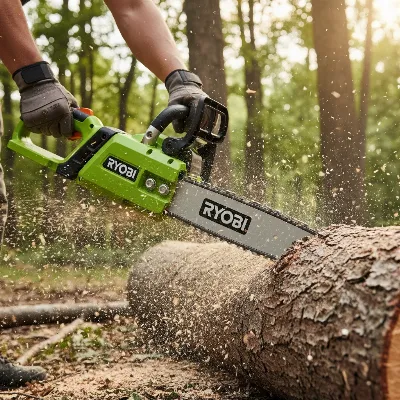 A Ryobi 40V brushless chainsaw powerfully cutting through a thick tree trunk in a forested backyard setting, highlighting its cutting efficiency.
Buying Guide: Choosing Your Ideal Chainsaw
Navigating the world of chainsaws requires careful consideration to ensure you invest in a tool that precisely meets your cutting needs and preferences. This guide provides a systematic approach to help you confidently select the perfect chainsaw, balancing performance, budget, and safety.
Determine Your Usage Needs
Before anything else, clearly define what tasks you’ll be performing with your chainsaw and how often. This fundamental step will narrow down your options considerably. Are you primarily trimming small branches around the yard, cutting firewood for the winter, or tackling larger tree removal projects after a storm? The type of work dictates the necessary bar length, power output, and overall design. Occasional light pruning might only require a compact battery-powered saw, while frequent felling of large timber demands a more powerful, possibly gas-equivalent, model. Consider the typical diameter of the wood you’ll be cutting and the frequency of use – whether it’s a few times a year or a regular weekly chore.
Set Your Budget
Chainsaws come in a wide price range, from entry-level homeowner models to professional-grade equipment. Establishing a realistic budget upfront will help guide your search. that the initial purchase price is not the only cost; factor in accessories like batteries, chargers, bar and chain oil, safety gear, and potential maintenance expenses. While cheaper models might be appealing, they can sometimes lack durability or features critical for safety and efficiency. Striking a balance between affordability and quality is key. Ryobi’s 40V lineup typically offers a strong value proposition, providing robust features at a more accessible price point than some high-end professional brands.
Research and Information Gathering
Once you have a clear idea of your needs and budget, dive into research. Read product reviews from both experts and other users, compare specifications across different models and brands, and watch demonstration videos. Pay attention to common complaints or praises about specific models, such as battery life, chain tensioning mechanisms, or oiling systems. Online forums and community discussions can also offer valuable insights from experienced users. For example, many reviews for the Ryobi 40V brushless series highlight its powerful performance for homeowners and its compatibility with the broader Ryobi 40V battery ecosystem. This thorough research will empower you to make an informed decision based on real-world experiences.
Purchase from Reputable Retailers
Where you buy your chainsaw is as important as the chainsaw itself. Always opt for established retailers or authorized dealers known for selling genuine products and offering excellent customer service. Reputable sellers typically provide comprehensive product information, honor manufacturer warranties, and have clear return and exchange policies. This ensures you receive a legitimate product and have support in case of any issues. Check for warranty specifics on both the tool and its battery, as these can vary significantly. Buying from a trusted source provides peace of mind and access to necessary after-sales support, including spare parts and technical assistance.
Tips for Safe Usage and Maintenance
Operating a chainsaw safely and maintaining it properly are critical for maximizing its lifespan and ensuring your protection. A well-maintained chainsaw performs more efficiently and reduces the risk of accidents.
Always prioritize safety. Before starting any cutting task, ensure you are wearing appropriate Personal Protective Equipment (PPE), including a helmet with face shield and hearing protection, safety glasses, heavy-duty gloves, chainsaw chaps, and steel-toed boots. Inspect your chainsaw before each use: check the chain tension, ensure the chain brake is functional, and verify that the oil reservoir is full. Maintain a firm grip with both hands, keep bystanders at a safe distance, and be aware of your surroundings, especially potential kickback hazards and falling debris. Always follow the manufacturer’s instructions for operation specific to your model.
Regular maintenance is key to extending your chainsaw’s life and performance. Keep the chain sharp; a dull chain forces the motor to work harder, drains battery faster, and increases kickback risk. Clean the air filter, guide bar groove, and spark plug (for gas models) regularly. For battery chainsaws, ensure the bar and chain oil is topped off. If your Ryobi 40V has a manual oiler adjustment, to dial it down when storing to prevent leaks, and dial it back up for use. After each use, clean debris from the tool and store it in a dry, safe place. Periodically check for loose fasteners and adjust as needed. Addressing minor issues promptly can prevent more significant problems down the line.
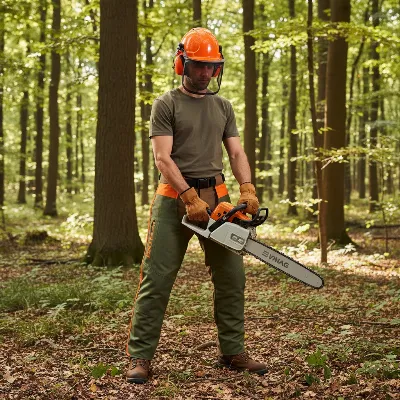 A person demonstrating proper chainsaw safety gear including a helmet, chaps, and gloves in a forest environment before operating the tool.
Most Popular Chainsaw Products Today
In today’s market, the landscape of chainsaws is dominated by powerful cordless battery-powered models that offer convenience without a significant compromise on performance. Among these, the Ryobi 40V HP Brushless series has carved out a strong niche, particularly for homeowners and serious DIY enthusiasts seeking a reliable alternative to gas.
The Ryobi 40V HP Brushless 16-inch Chainsaw (RY40HPCW02) continues to be a top seller, praised for its balanced power and maneuverability, making it ideal for a variety of medium-duty tasks around the home. It strikes an excellent balance between cutting capacity and ease of use. For those who require more substantial cutting power, the Ryobi 40V HP Brushless 18-inch Chainsaw (RY40HPCW01/RY40580) is often highlighted in “best of” lists, commended for its ability to handle challenging cuts and its robust design. The addition of a durable carrying case and a rapid charger with many kits further enhances its appeal. At the apex of the Ryobi 40V line is the Ryobi 40V HP Brushless 20-inch Chainsaw (RY40HPCW03), which is specifically designed to replace larger gas models, offering the highest equivalent power and chain speed for tackling bigger felling and bucking jobs. This model appeals to users who demand maximum performance from a battery-powered unit. Other popular brands, such as EGO Power+ and DeWalt, also offer highly rated cordless chainsaws that compete in the premium segment, often noted for their professional-grade power and advanced battery technology, but Ryobi consistently delivers a compelling package of features and performance for its price point.
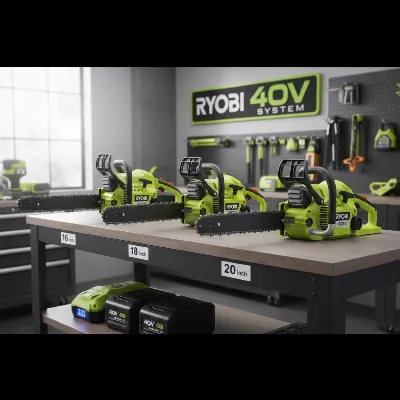 A visual display of the Ryobi 40V brushless chainsaw lineup, showing various bar lengths and associated batteries in a clean workshop setting.
Conclusion
The Ryobi 40V Brushless Cordless Chainsaw series stands as a shows the remarkable progress in battery-powered outdoor equipment, offering a compelling blend of power, convenience, and reduced environmental impact. For homeowners and many professionals, these models provide a viable, often superior, alternative to traditional gas chainsaws, eliminating the hassles of fuel mixing, pull-starts, and excessive noise. With a range of bar lengths and increasing power equivalencies, Ryobi ensures there’s a 40V brushless option to tackle nearly any typical property maintenance task, from light limbing to significant felling. While older models had some reported issues with oil consumption or chain tensioning, the newer HP Brushless iterations have largely addressed these concerns, cementing their place as reliable and high-performing tools in 2026.
As you consider your next chainsaw, the factors discussed: your specific usage needs, budget, and the critical importance of safety features. The Ryobi 40V Brushless chainsaws deliver strong performance, making them an excellent investment for those already invested in the Ryobi 40V ecosystem or anyone looking for a powerful, user-friendly, and low-maintenance chainsaw. What kind of cutting projects are on your horizon, and how do you envision a cordless chainsaw transforming your outdoor work?
Frequently Asked Questions
What does “Brushless” mean for a chainsaw, and why is it important?
A brushless motor uses magnets and electronics instead of carbon brushes to spin the rotor, which is crucial for a chainsaw’s performance. This design results in significantly more power and torque, longer motor life, and increased runtime per battery charge compared to traditional brushed motors. For chainsaws, this means more efficient cutting, less heat generation, and improved durability, allowing them to tackle tougher wood with ease.
How does the Ryobi 40V chainsaw’s power compare to a gas chainsaw?
Ryobi’s 40V HP Brushless chainsaws are engineered to offer gas-like power, with models rated to be equivalent to 40cc, 42cc+, and even 52cc gas chainsaws, depending on the bar length and specific model. This means they can handle many of the same demanding tasks as their gas counterparts, such as felling medium to large trees and bucking firewood, but with the added benefits of cordless convenience and lower noise.
What battery life can I expect from a Ryobi 40V chainsaw?
Battery life for Ryobi 40V chainsaws varies significantly based on the battery’s amp-hour (Ah) rating and the intensity of the cutting task. For example, the 16-inch model (RY40HPCW02) can deliver up to 60 cuts on a 4.0Ah battery and up to 130 cuts with an 8.0Ah battery in typical conditions. Larger batteries naturally provide extended runtime, but they also add to the tool’s overall weight.
Are Ryobi 40V chainsaws easy to maintain?
Yes, Ryobi 40V chainsaws are generally easier to maintain than gas chainsaws. They eliminate the need for fuel mixing, spark plug changes, and carburetor adjustments. Primary maintenance involves keeping the chain sharp, regularly checking and filling the bar and chain oil reservoir, cleaning debris from the guide bar and air vents, and ensuring proper chain tension. This simplicity contributes to their appeal for homeowners.
What are common issues or complaints with Ryobi 40V chainsaws?
While generally well-regarded, some users, particularly with older models, have reported issues such as excessive bar and chain oil consumption or minor leaks during storage. Another occasional concern is chain loosening during operation, though newer models with improved tensioning systems and included onboard tools for adjustment aim to mitigate this. Electrical issues like stuttering or power interruption have also been cited in some older units due to wiring.
Can I use any Ryobi 40V battery with my Ryobi 40V chainsaw?
Yes, the Ryobi 40V system is designed for full compatibility. Any Ryobi 40V lithium-ion battery will work with any Ryobi 40V tool, including their chainsaws. This allows users to interchange batteries across their Ryobi 40V lawn and garden equipment, offering flexibility and cost savings if they already own other tools in the platform. Using higher Ah batteries will provide longer runtime.
Choose Your Ideal Chainsaw
Selecting the right chainsaw requires careful consideration of your cutting needs, budget, and safety features to ensure you invest in a tool that offers both performance and peace of mind.
Clearly define what tasks you'll be performing with your chainsaw and how often. This includes identifying the typical diameter of wood you'll cut and the frequency of use, which will dictate the necessary bar length and power output.
Establish a realistic budget upfront, remembering to factor in not just the initial purchase price but also accessories like batteries, chargers, bar and chain oil, and safety gear. Balancing affordability with quality is crucial for long-term satisfaction.
Read product reviews from experts and users, compare specifications across different models and brands, and watch demonstration videos. Pay attention to common complaints or praises, such as battery life or chain tensioning mechanisms, to make an informed decision.
Always opt for established retailers or authorized dealers known for selling genuine products and offering excellent customer service. This ensures you receive a legitimate product, honor manufacturer warranties, and have access to necessary after-sales support.

I picked up one of these Ryobi 40V chainsaws for limbing and general yard cleanup, and it’s been fantastic. The battery life is decent; I can get a good amount of work done on a single charge, especially for lighter tasks. It’s so much quieter than my neighbor’s gas saw, which is a huge plus for early morning work.
I got the 14-inch Ryobi 40V for some smaller jobs around my property. It’s great for trimming branches and light cutting, but I did notice it struggles a bit with thicker hardwood compared to what I’m used to with my bigger gas saw. It’s convenient not having to deal with gas, but for really demanding tasks, I still reach for my Stihl.
This Ryobi 40V chainsaw is a game-changer for homeowners. I used to dread getting out my old gas saw because of the noise and fumes, but this cordless model makes yard work so much more enjoyable. It’s powerful enough for all my needs, from cutting firewood to clearing storm debris. Highly recommend for anyone looking to ditch gas.
I finally made the switch from my old gas saw to the Ryobi 40V 16-inch model, and I’m seriously impressed. The ‘gas-like power’ claim isn’t an exaggeration; it handled felling a couple of medium-sized trees in my yard without a hitch. No more messing with fuel mix or trying to pull-start a cold engine. This thing just works.