As the seasons change and the crisp air signals winter’s approach, many outdoor power tools are put into hibernation. Your gas chainsaw, a powerful workhorse for felling trees and cutting firewood, deserves special attention before its long rest. Neglecting proper winterization can lead to frustrating starts, costly repairs, and reduced lifespan when spring arrives. This comprehensive guide will walk you through each step to ensure your chainsaw remains in peak condition, ready to tackle any task come warmer weather.
Why Winterizing Your Gas Chainsaw is Essential
Preparing your gas chainsaw for winter storage is more than just a seasonal chore; it’s a critical investment in your tool’s longevity and performance. Over extended periods of inactivity, especially in cold or fluctuating temperatures, several issues can arise. Old fuel can degrade, leading to sticky varnish and gum deposits that clog the carburetor and fuel lines, making starting impossible. Without proper lubrication, metal components can rust and seize, particularly the delicate engine internals, bar, and chain. By taking the time to winterize your chainsaw, you’re actively preventing these common problems, ensuring reliable operation and saving yourself from expensive service appointments or even replacement parts in the long run.
Gathering Your Winterization Toolkit
Before you begin the winterization process, having the right tools and supplies on hand will make the job smoother and more efficient. Most of these items are readily available at hardware stores or automotive shops.
Here’s what you’ll typically need:
- Fuel Stabilizer: Essential for preventing fuel degradation if you choose not to drain the tank.
- Fresh 2-Stroke Engine Oil: For cylinder lubrication.
- Bar and Chain Oil: For lubricating the cutting components.
- Biodegradable Corrosion Inhibitor or Protective Oil Spray: To protect metal parts from rust.
- Spark Plug Wrench (Scrench): A multi-tool often included with your chainsaw for spark plug and bar nut removal.
- Flat-head Screwdriver or Torx Wrench: For various panel removals.
- Chip Brush or Small Stiff Brush: For cleaning debris.
- Shop Towels or Clean Rags: For wiping down surfaces.
- Funnel and Gas Can: For safely draining or adding fuel.
- Air Filter (Replacement): If your current filter is heavily soiled or damaged.
- Heavy Paper or Cloth: For wrapping the chain.
- Safety Glasses and Gloves: Always protect yourself.
Step-by-Step Guide to Gas Chainsaw Winterization
Winterizing your gas chainsaw involves several key areas, from fuel management to meticulous cleaning and lubrication. Follow these steps carefully to safeguard your equipment.
Fuel System Management: Stabilize or Drain?
The fuel system is often the most vulnerable part of a gas chainsaw during storage. Old, untreated gasoline can quickly lead to costly problems. You have two primary options: stabilizing the fuel or completely draining it.
Option 1: Using Fuel Stabilizer
Fuel stabilizers are chemical additives designed to preserve the quality of gasoline and prevent it from breaking down over time, forming harmful varnish and gum deposits that can clog the carburetor. Many stabilizers also help combat moisture accumulation and protect against corrosion. If you opt for this method, add the recommended amount of fuel stabilizer to your existing two-stroke gas mixture. Fill your chainsaw’s fuel tank with this stabilized mixture and run the engine for 5-10 minutes. This ensures the stabilized fuel circulates throughout the entire fuel system, including the carburetor, providing comprehensive protection. Fuel stabilizer can keep fuel fresh for up to two years, saving you the hassle of draining and refilling in the spring.
Option 2: Draining the Fuel
If you prefer not to use a stabilizer or plan to store your chainsaw for more than 30 days, completely draining the fuel system is crucial. First, run the chainsaw until the engine warms up. Then, carefully empty the fuel from the tank into a suitable, sealed gas can. To ensure all residual fuel is removed from the fuel lines and carburetor, restart the engine and let it run until it completely sputters out and dies. You might need to pump the primer bulb a few times to flush out any remaining fuel. Running the engine dry prevents sticky residues from forming and ensures there’s no old fuel to cause starting problems next season.
Engine Component Care
The engine is the heart of your chainsaw, and proper care before winter is vital to prevent internal damage.
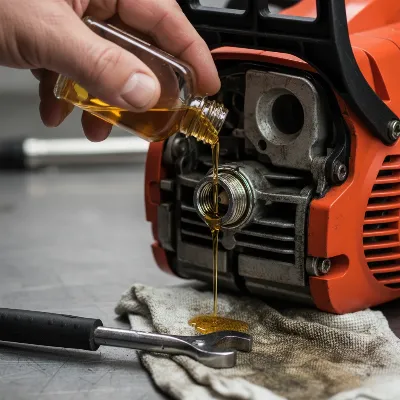 A close-up of a hand carefully pouring 2-stroke oil into the spark plug opening of a gas chainsaw engine, with a wrench nearby.
Air Filter Cleaning or Replacement: The air filter protects your engine from debris. Open the chainsaw’s casing and inspect the air filter. If it’s dirty, gently clean it with a chip brush or shop towel. For heavily soiled or damaged filters, it’s best to replace them. Remember that air filters are engine-specific, so ensure you have the correct replacement part. A clean filter ensures optimal airflow and prevents potential starting issues.
Spark Plug Inspection and Cylinder Lubrication: Disconnect the spark plug wire and carefully remove the spark plug using your scrench. Clean any debris around the spark plug opening to prevent it from falling into the combustion chamber. Pour approximately one teaspoon of fresh 2-cycle engine oil (e.g., your regular 40:1 or 50:1 mix) directly into the spark plug opening. Slowly pull the starter rope 8-10 times without the spark plug installed. This action distributes the oil throughout the cylinder, coating the piston and cylinder walls, which prevents rust and corrosion during storage. Inspect the old spark plug for wear or carbon buildup. If it’s heavily fouled or damaged, replace it. Otherwise, clean it and re-gap if necessary before reinstalling it and reconnecting the spark plug wire.
Cleaning Cylinder Fins: Over time, sawdust and grime can accumulate around the cylinder fins, impacting heat dissipation. Use a small, stiff brush to gently clean these areas, ensuring proper cooling when the chainsaw is back in use.
Bar and Chain Maintenance for Storage
The cutting components of your chainsaw also require thorough attention to prevent rust and maintain their sharpness.
Remove and Clean Bar and Chain: Open the chain sprocket cover and remove both the guide bar and the chain. Thoroughly clean all grime, sawdust, and sap from the sprocket area, the guide bar groove, and the chain itself. A dedicated bar and chain cleaner can be very effective for removing stubborn resin.
Lubricate and Protect: After cleaning, lightly spray the guide bar and chain with a biodegradable corrosion inhibitor or protective oil. This forms a protective barrier against rust and corrosion. If using a vegetable-based chain oil for regular use, consider filling the lubricant tank to the top for storage, as this can prevent gumming. Semi-synthetic oils, however, typically do not gum up and can be left at their existing level. Wrap the cleaned and oiled chain in heavy paper or cloth to keep it clean and prevent it from damaging other tools.
Sharpen or Replace Chain: Inspect the chain for dull teeth or any signs of damage. Winter is an ideal time to sharpen your chain or replace it if it’s worn out. Starting next season with a sharp, well-maintained chain will significantly improve cutting efficiency and safety.
Thorough Cleaning and Final Inspection
A clean chainsaw is a happy chainsaw. A comprehensive cleaning protects components and allows for a final inspection.
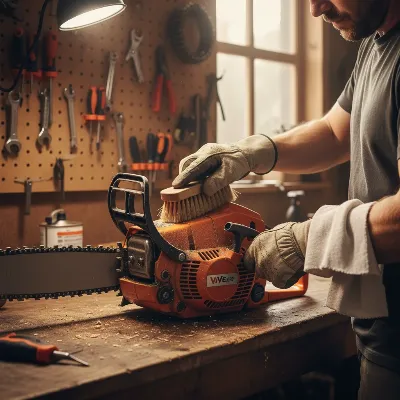 A person thoroughly cleaning the exterior of a gas chainsaw with a brush and cloth, removing sawdust and grime in a workshop setting.
Use a brush and shop towels to clean the entire exterior of your chainsaw, removing any remaining sawdust, sap, and dirt. Pay close attention to cooling vents and moving parts. While cleaning, take the opportunity to check for any loose screws, nuts, or bolts and tighten them. Also, inspect for any damaged or worn parts that might need replacement before the next season. This overall inspection helps you identify potential issues early.
Best Practices for Chainsaw Storage
Where and how you store your chainsaw is just as important as the winterization process itself. Proper storage conditions protect your tool from environmental damage.
Your chainsaw should be stored in a dry, well-ventilated area that is protected from the elements, ideally in a garage or shed. Avoid storing it outdoors or in damp basements, as moisture can lead to rust and corrosion. Direct sunlight can also cause UV degradation of the plastic body, so keep it in a covered spot. Many experts recommend storing the chainsaw in its original case or a dedicated storage box.
The ideal storage position is upright, on a flat and stable surface. This helps prevent any potential oil leaks and keeps the bar and chain in good condition. If the fuel tank is completely empty, you can also hang it vertically. To protect it from dust accumulation, you can wrap the entire chainsaw in an old sheet or towel. Most importantly, always store your chainsaw safely out of reach of children and unauthorized users, preferably in a lockable room or cupboard.
> “Proper winterization is the difference between a reliable start in spring and a frustrating trip to the repair shop. It’s about preserving your investment.” – John Smith, Master Chainsaw Technician
Common Winterization Mistakes to Avoid
Even with the best intentions, certain missteps during winterization can undermine your efforts. Being aware of these common mistakes can save you headaches later.
- Leaving Old Fuel Untreated: This is perhaps the most significant error. Untreated gasoline can degrade rapidly, forming gummy deposits that clog the carburetor and fuel lines, leading to difficult starts and expensive repairs. Always either stabilize your fuel or drain it completely.
- Neglecting Lubrication: Forgetting to lubricate the cylinder, bar, and chain before storage leaves these critical metal components vulnerable to rust and corrosion, especially in areas with high humidity or temperature fluctuations.
- Storing in Damp Environments: A damp garage or unsealed shed can expose your chainsaw to moisture, promoting rust on all metal surfaces, even those that have been oiled. Always choose a dry, well-ventilated storage location.
- Skipping the Cleaning Step: Dirt, sap, and sawdust can trap moisture and accelerate corrosion. A thorough cleaning of the entire saw is essential for effective winterization.
- Ignoring the Spark Plug: Not removing the spark plug and lubricating the cylinder can leave internal engine parts exposed to potential rust, making spring startup problematic.
Bringing Your Chainsaw Back to Life: Spring Recommissioning
When winter finally loosens its grip, getting your chainsaw ready for action is a straightforward process, especially if it was properly winterized. If you used a fuel stabilizer, simply fill the tank with fresh fuel, and it should be ready to go. If you drained the fuel, fill it with a fresh two-stroke fuel mixture. Check the chain tension, inspect the air filter one last time, and give the entire saw a quick visual once-over for any issues that might have arisen during storage. A few prime pumps and pulls of the starter cord, and you’ll be back to work in no time.
Expert Insights for Chainsaw Longevity
Beyond seasonal winterization, consistent care throughout the year is key to maximizing your chainsaw’s lifespan and performance. Always use fresh, high-quality fuel mixed with the correct ratio of 2-stroke oil as specified by your manufacturer. Regularly check and maintain proper chain tension, and keep your chain sharp for efficient, safe cutting. Clean the air filter frequently, especially after heavy use, and regularly inspect the guide bar for wear or burrs. By incorporating these practices into your routine, you’ll not only ensure your chainsaw is always ready for work but also extend its reliable service for many seasons to come.
Conclusion
Winterizing your gas chainsaw is a simple yet crucial maintenance task that protects your investment and ensures it remains a reliable tool for years. By meticulously managing your fuel, caring for the engine’s internal components, and maintaining the bar and chain, you can prevent common problems associated with prolonged storage. Remember to store your chainsaw in a dry, safe environment, free from moisture and direct sunlight. These preventative steps will save you time, money, and frustration, allowing you to confidently tackle any cutting task when the weather permits. What other steps do you take to prepare your outdoor power tools for the off-season?
Frequently Asked Questions
How long can gas sit in a chainsaw with stabilizer?
With a high-quality fuel stabilizer, gasoline can typically remain fresh and effective in your chainsaw’s tank for up to two years or even longer. Always check the specific stabilizer product’s instructions for exact longevity claims, as performance can vary.
What type of oil do I put in the spark plug hole for winter storage?
For winter storage, pour about one teaspoon of your regular 2-stroke engine oil (the same oil you mix with your gasoline, e.g., 40:1 or 50:1) into the spark plug opening. This helps lubricate the cylinder and prevent rust.
Can I skip winterizing my chainsaw if I use it year-round?
If you consistently use your chainsaw year-round, performing tasks at least monthly, full winterization might not be strictly necessary. However, regularly checking fuel quality, cleaning the saw, and lubricating the chain are still essential maintenance steps that should not be skipped.
Where is the best place to store a chainsaw during winter?
The best place to store your chainsaw during winter is in a dry, well-ventilated area, such as a garage or shed. Ensure it’s protected from direct sunlight, moisture, and extreme temperature fluctuations, and ideally, stored in its case or covered to prevent dust accumulation.
