You’ve just finished a tough day’s work with your chainsaw, proud of the neat stack of firewood you’ve accumulated. But then you notice it—a tell-tale puddle of bar oil forming beneath your trusted tool. A leaking chainsaw is more than just an unsightly mess; it’s a sign that something isn’t quite right, potentially leading to performance issues or even damage if not addressed. As someone who has spent over a decade working with these powerful machines, from basic homeowner models to heavy-duty forestry chainsaws, I understand the frustration and the importance of a well-maintained tool. This guide will walk you through fast, effective DIY solutions to stop chainsaw bar oil leaks, helping you keep your equipment running smoothly and efficiently.
Understanding Chainsaw Bar Oil Leaks
Bar oil is specifically designed to lubricate the chain and bar, reducing friction, heat, and wear during operation. This constant lubrication is critical for the lifespan of your chainsaw and for ensuring smooth, safe cutting. Without adequate oil, the chain can bind, overheat, and cause significant damage to both the chain and the guide bar, leading to costly repairs or replacements. A chainsaw bar oil leak, therefore, signifies a disruption in this vital lubrication system, impacting both performance and durability.
Common signs of an oil leak are usually quite obvious: puddles of oil on the ground or workbench, visible streaks of oil along the chainsaw’s body, or an abnormally fast depletion of the bar oil reservoir. It’s crucial to address these leaks promptly, not just to avoid a mess, but to prevent potential operational failures and maintain the integrity of your equipment. Ignoring a leak can lead to accelerated wear of critical components, reduced cutting efficiency, and ultimately, a shorter lifespan for your chainsaw.
Identifying the Source of Your Chainsaw’s Oil Leak
Pinpointing the exact source of a chainsaw oil leak is the first critical step towards fixing it. Often, the leak isn’t a major malfunction but a simple issue that can be easily remedied. A thorough visual inspection can save you a lot of time and effort in the long run. Let’s explore the most common culprits.
Loose or Damaged Oil Cap
One of the most frequent and easiest-to-fix causes of a bar oil leak is a loose or damaged oil cap. The cap’s primary function is to seal the oil reservoir and prevent spillage. If it’s not tightened properly, or if its rubber O-ring or gasket is cracked, worn, or missing, oil can easily seep out, especially when the chainsaw is tilted or stored. Always check this first, as it’s a quick fix that often solves the problem entirely.
Cracked Oil Reservoir or Housing
While less common, a crack in the chainsaw’s plastic oil reservoir or outer housing can also be the source of a leak. These cracks can occur due to impacts, extreme temperature changes, or simply material fatigue over time. A hairline crack might only weep oil slowly, while a larger one could result in a significant leak. Inspect the entire oil tank and surrounding casing carefully for any signs of damage.
Worn or Damaged Oil Lines and Hoses
Chainsaws use small hoses or lines to transport oil from the reservoir to the oil pump and then to the bar. Over time, these lines can become brittle, crack, or develop pinholes due to exposure to fuel, oil, and vibrations. A damaged hose will often drip oil, leaving a distinct trail along its path. These are generally accessible and replaceable components.
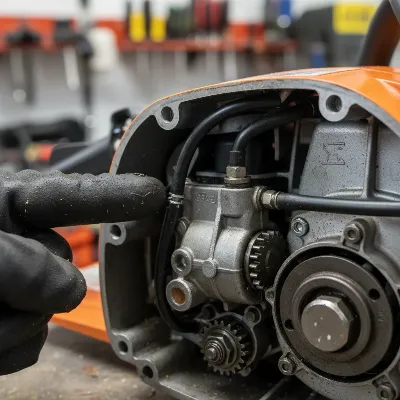 A close-up view of a chainsaw's internal oil lines and pump, with a hand pointing to a potential leak spot.
Clogged Oil Tank Vent
The oil reservoir needs a vent to allow air to enter as oil is consumed, preventing a vacuum that would stop oil flow. If this vent becomes clogged with sawdust or debris, pressure can build up inside the tank, forcing oil out through weak points, such as the cap seal or around the pump area. A clogged vent can often manifest as a seemingly inexplicable leak.
Faulty Oil Pump or Seals
The oil pump is responsible for delivering oil to the bar and chain. If the pump itself is faulty, or if its internal seals or O-rings are worn or damaged, oil can leak directly from the pump housing. This is a more complex issue, potentially requiring disassembly of the clutch cover and bar plate to access the pump for inspection or replacement.
Improper Storage Practices
Believe it or not, how you store your chainsaw can significantly contribute to leaks. Storing a chainsaw horizontally with a full oil tank, or leaving it on a surface that allows residual oil to accumulate, can worsen minor leaks. Gravity works its magic, and even a tiny imperfection in a seal can become a constant drip when the tool is left idle for extended periods. Draining the oil or storing it upright can often prevent these issues.
Step-by-Step DIY Fixes for Leaking Chainsaw Bar Oil
Once you’ve identified the potential source of the leak, it’s time to get your hands dirty with some practical DIY solutions. Always ensure the chainsaw is turned off, the spark plug cap is disconnected (for gas models), and the battery is removed (for electric/cordless models) before attempting any repairs. Safety is paramount when working with power tools and fluids.
Tightening or Replacing the Oil Cap
This is the simplest fix. First, ensure the oil cap is screwed on tightly. If it still leaks, carefully remove the cap and inspect the rubber O-ring or gasket on the underside. If it’s cracked, stiff, or missing, it needs to be replaced. These are inexpensive parts readily available from hardware stores or online retailers. Clean the cap and the opening before installing a new O-ring and tightening the cap securely.
Repairing or Replacing Damaged Hoses and Lines
If you’ve found a cracked or brittle oil line, the best course of action is typically replacement. You can often purchase universal fuel/oil line tubing from an auto parts store or specific replacement parts from your chainsaw manufacturer. Carefully remove the old line, noting its routing. Cut the new line to the exact same length and securely attach it, ensuring all connections are snug and free of kinks. For very small pinholes in rubber hoses, some temporary sealant tapes might work, but replacement is always more reliable.
Cleaning the Oil Tank Vent
Locate the oil tank vent, which is usually a small, often plastic or rubber, component somewhere on or near the oil tank. Sometimes it’s integrated into the oil cap. Use compressed air or a thin piece of wire to gently clear any debris or sawdust that might be blocking it. Ensure air can flow freely in and out of the vent. A clogged vent will prevent proper oil flow, leading to leaks due to pressure buildup.
Inspecting and Addressing Oil Pump Issues
Addressing a faulty oil pump is more involved. You’ll typically need to remove the clutch cover, guide bar, and chain to gain access. Visually inspect the pump for any obvious damage, cracks, or loose components. Check the small O-rings or seals associated with the pump’s connections to the oil lines. If the pump itself appears to be the culprit, it often requires replacement rather than repair. Consult your chainsaw’s manual for specific instructions on oil pump removal and installation.
Sealing Minor Cracks in the Oil Tank
For very small, hairline cracks in a plastic oil reservoir, certain fuel-resistant epoxy or plastic welding kits might offer a temporary or even permanent solution. Thoroughly clean and dry the area around the crack before applying the sealant according to the product’s instructions. However, for larger cracks or significant damage, replacing the entire oil tank is usually the safest and most reliable option to prevent future leaks and maintain structural integrity.
Proper Storage to Prevent Future Leaks
One of the easiest ways to prevent future leaks is to store your chainsaw correctly. After each use, especially if it will be stored for an extended period, drain any remaining bar oil from the reservoir. Alternatively, store the chainsaw upright in a designated stand or on a mat that can absorb any minimal drips. This simple habit minimizes the chance of oil seeping out through minor imperfections when the tool is inactive.
Essential Maintenance to Prevent Chainsaw Oil Leaks
Prevention is always better than cure, especially when it comes to intricate tools like chainsaws. Implementing a regular maintenance routine can significantly reduce the likelihood of experiencing annoying and costly oil leaks.
Routine cleaning and inspection are fundamental. After each use, take a moment to clean off sawdust, grime, and oil residue from around the oil tank, lines, and pump area. This not only keeps your chainsaw looking good but also allows you to spot potential issues, like developing cracks or wear, before they become major leaks. During cleaning, always look for any signs of physical damage or degradation of components.
Using the correct bar oil is also crucial. Bar oil has a specific viscosity and tackiness designed to adhere to the chain and lubricate effectively. Using improper oil, such as regular motor oil, can lead to inadequate lubrication, potentially stressing the oil system and contributing to leaks. Stick to the manufacturer’s recommendations.
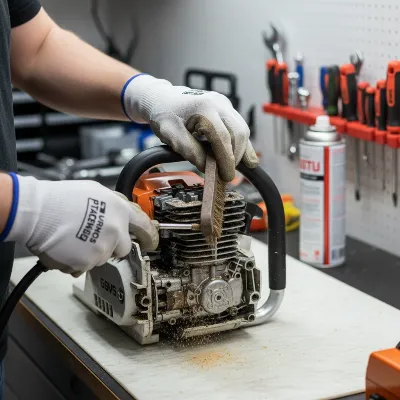 A person meticulously cleaning a chainsaw, emphasizing regular maintenance to prevent oil leaks.
Regularly checking hoses and seals is another vital step. Before each use, give a quick once-over to all visible hoses and seals. Look for any signs of cracking, brittleness, or loose connections. Replacing these small, inexpensive parts proactively can prevent a messy and inconvenient leak down the line, ensuring your chainsaw is always ready for action.
Choosing the Right Bar Oil and Tools for Repairs
Selecting the right materials for your chainsaw is just as important as the repair itself. Don’t underestimate the role of quality bar oil and having the correct tools at hand.
When it comes to bar oil, always opt for products specifically formulated for chainsaws. These oils have additives that improve tackiness, helping them cling to the chain, and ensure proper lubrication even in varying temperatures. While synthetic and biodegradable options are available, ensure they meet your chainsaw’s requirements. Using high-quality oil protects your machine and can indirectly help prevent leaks by reducing stress on the lubrication system.
For DIY leak repairs, you’ll generally need a few basic tools. A set of screwdrivers (flathead and Phillips), a socket wrench or nut driver set, and possibly a pair of pliers will be essential for disassembly and tightening. For replacing hoses, a sharp utility knife or box cutter will come in handy. Always ensure your tools are in good condition to prevent stripping screws or damaging components during repair.
Safety First: Precautions When Handling Chainsaw Oil
Working with chainsaws and their fluids requires a strong emphasis on safety. Neglecting precautions can lead to injuries or environmental contamination.
Always wear appropriate personal protective equipment (PPE). This includes sturdy work gloves to protect your hands from oil and sharp edges, as well as safety glasses to shield your eyes from debris or splashes during cleaning and repair. A long-sleeved shirt and trousers are also advisable to protect your skin.
When handling and disposing of oil, be mindful of environmental responsibility. Bar oil, even biodegradable types, should not be poured down drains or onto the ground. Use a funnel to drain old oil into a designated container and take it to a local hazardous waste facility or an auto parts store that accepts used oil for recycling. Promptly clean up any spills with absorbent materials.
Before commencing any repair or even a thorough inspection, disconnect the power source. For gas chainsaws, remove the spark plug boot to prevent accidental starting. For electric models, unplug the cord, and for battery-powered saws, remove the battery pack. This eliminates the risk of the chain engaging unexpectedly while your hands are near moving parts, which could lead to severe injury.
General Vulnerabilities in Popular Chainsaw Types
While specific models have their quirks, many common leak points apply across gas, electric, and battery-powered chainsaws. Gas chainsaws, with their more complex engines and fuel systems, often face issues with vibrating components loosening over time, stressing oil lines and seals. Their higher operating temperatures can also accelerate the degradation of rubber and plastic parts. Electric (corded) chainsaws, being simpler, tend to have fewer leak issues related to the power unit itself, but still suffer from worn oil caps, clogged vents, and damaged oil lines leading to the bar. Battery-powered chainsaws, similar to electric ones, are generally cleaner but are still susceptible to the same wear-and-tear on their oil reservoir, caps, and delivery system due to continuous use and exposure to debris. Regardless of the power source, the oiling system—from the reservoir to the bar—remains a common area for leaks if not regularly maintained and inspected.
Conclusion
A leaking chainsaw can be a nuisance, but with the right knowledge and a few basic tools, many bar oil leaks can be quickly and effectively resolved at home. By understanding the common causes—from a simple loose cap to a worn oil pump seal—and systematically identifying the source, you can implement the appropriate DIY fix. Remember, consistent maintenance, including regular cleaning, using proper bar oil, and inspecting hoses and seals, is your best defense against future leaks. Always prioritize safety by disconnecting the power and wearing appropriate PPE during any repair work. Addressing these issues promptly not only keeps your workshop clean but also extends the life of your chainsaw, ensuring it remains a reliable tool for all your cutting needs. What steps will you take to keep your chainsaw leak-free and ready for action?
Frequently Asked Questions
Why does my chainsaw leak oil when not in use?
Chainsaws often leak oil when idle due to residual oil in the pump and lines slowly dripping out, especially if stored horizontally. Common culprits include a loose oil cap, a worn O-ring on the cap, a clogged oil tank vent creating pressure, or minor cracks in the reservoir or hoses that are exacerbated by gravity when the saw is not running.
Can I use regular motor oil as bar oil?
It is strongly recommended not to use regular motor oil as bar oil. Bar oil has specific properties, including a higher tackifier additive that helps it cling to the chain and bar for effective lubrication. Motor oil lacks this tackiness, leading to insufficient lubrication, increased wear on your chain and bar, and potential overheating.
How often should I check my chainsaw for oil leaks?
You should visually inspect your chainsaw for oil leaks before each use and after every major cutting session. Pay close attention to the area around the oil cap, the oil lines, and beneath the chain and bar. Regular checks allow you to catch minor issues before they escalate into significant problems, ensuring safe and efficient operation.
Is a small oil leak dangerous?
While a small oil leak might not pose an immediate danger of catastrophic failure, it can lead to several problems. It contributes to environmental pollution, creates a messy workspace, and over time, can lead to insufficient lubrication of the chain and bar. Inadequate lubrication accelerates wear, reduces cutting efficiency, and could potentially lead to premature component failure.
How do I know if my oil pump is failing?
Signs of a failing oil pump include a noticeable lack of oil being delivered to the bar and chain, even when the reservoir is full, or a significant leak specifically from the pump housing area. You might also observe the chain running dry or experiencing increased friction and heat, indicating the pump is not circulating oil effectively.
