Dealing with a chainsaw chain that has come off the bar can be a frustrating, albeit common, occurrence for anyone who uses this powerful tool. Whether it slipped during a demanding cut or was removed for maintenance, knowing how to quickly and safely reinstall it is an essential skill. This guide, drawing on over a decade of hands-on experience, will walk you through the process step-by-step, ensuring you can get your chainsaw back in action efficiently and securely. Mastering this task not only renews your saw’s performance but also significantly enhances safety and extends the lifespan of your equipment.
Overview of Chainsaws
Chainsaws are indispensable tools for a variety of tasks, from felling trees and cutting firewood to pruning branches and clearing land. At their core, they consist of a rotating chain with sharp teeth driven by a motor, encircling a guide bar. The history of the chainsaw is surprisingly long, evolving from early medical instruments in the 18th century to the powerful, portable logging tools we recognize today. This evolution has brought significant advancements in both power and safety.
Modern chainsaws typically fall into three main categories: gas-powered, electric (corded), and battery-powered. Gas chainsaws are known for their raw power and mobility, making them ideal for heavy-duty logging and remote work where electrical outlets are unavailable. Electric chainsaws, while requiring a power cord, offer consistent power, quieter operation, and less maintenance, making them suitable for light to medium tasks around the home. Battery-powered chainsaws combine the mobility of gas models with the convenience of electric ones, perfect for quick jobs, lighter cutting, and situations where noise and emissions are concerns, though their runtime is limited by battery capacity.
Factors to Consider When Working with Chainsaws
Understanding the key characteristics of your chainsaw and the requirements of your task is crucial, especially when performing maintenance like chain reinstallation. Each type of chainsaw presents unique considerations that impact both operation and upkeep.
Type of Chainsaw
- Gas-Powered Chainsaws: These machines deliver robust power, making them the go-to for extensive cutting, particularly in professional forestry or large property maintenance. Their mobility is a major advantage, but they require regular fuel mixing, engine maintenance, and produce emissions and significant noise.
- Electric Chainsaws: Offering consistent, instant power without the need for fuel, electric models are simpler to operate and maintain. However, their range is limited by the length of the power cord, making them best suited for tasks close to an electrical outlet.
- Battery-Powered Chainsaws: These modern saws provide excellent portability and reduced noise and emissions, making them environmentally friendlier and more user-friendly for residential tasks. Their primary limitation is battery life and the power output, which may not match high-end gas models for intensive applications.
Size and Weight
The size of a chainsaw, primarily indicated by its guide bar length, dictates the maximum diameter of wood it can cut in a single pass. For small pruning jobs, a shorter bar (12-14 inches) is sufficient and more manageable. Heavier tasks like felling large trees demand longer bars (18-24 inches or more). The overall weight of the chainsaw significantly affects user fatigue and maneuverability. Lighter saws are easier to handle for extended periods or in awkward positions, while heavier, more powerful saws require greater physical stamina and control.
Power
A chainsaw’s power output directly correlates with its cutting efficiency and ability to handle different wood types. Higher horsepower (for gas saws) or wattage (for electric/battery saws) means faster cutting through dense hardwoods and larger logs. Matching the chainsaw’s power to your typical cutting tasks prevents bogging down and ensures optimal performance. Overpowering a small task is inefficient, while underpowering a large task can be dangerous and ineffective.
Safety Features
Modern chainsaws incorporate several safety features designed to protect the operator. The chain brake is perhaps the most critical, instantly stopping the chain in the event of kickback. A hand guard protects the user’s hand from the moving chain, while anti-vibration systems reduce fatigue during prolonged use, enhancing control. A chain catcher is also vital, preventing a derailed or broken chain from striking the operator. Always ensure these features are fully functional before operating or performing maintenance.
Brand and Cost
Reputable chainsaw brands such as Stihl, Husqvarna, Echo, and Ego have built their reputations on reliability, performance, and safety. While they might come with a higher initial price tag, the investment often translates into greater durability, better performance, and superior customer support. When comparing costs, consider not just the purchase price but also the long-term value, including parts availability, warranty, and ease of service. Quality and safety should always take precedence over the cheapest option.
Step-by-Step Guide: Reinstalling a Chainsaw Chain (DIY Focus)
Reinstalling a chainsaw chain, whether it’s slipped off or you’re replacing an old one, is a fundamental skill for any chainsaw owner. Following these steps carefully will ensure a quick and safe reinstallation.
Prioritize Safety
Before you even think about touching the chain, safety is paramount.
- Disconnect Power: For gas chainsaws, switch off the engine and remove the spark plug lead. For electric models, unplug the saw from the power outlet. For battery-powered saws, remove the battery. This crucial step prevents accidental starting.
- Engage Chain Brake: Push the chain brake forward to engage it.
- Wear Personal Protective Equipment (PPE): Always don sturdy gloves to protect your hands from the sharp chain teeth and potential nicks. Eye protection is also highly recommended to shield against debris.
Loosen the Side Cover
Using the scrench (the multi-tool usually supplied with your chainsaw), locate and loosen the nuts holding the side cover in place. You don’t need to remove them entirely; just loosen them enough so the side cover can be removed. Then, turn the chain tensioning screw counter-clockwise to fully release any remaining chain tension. Carefully remove the side cover to expose the drive sprocket, guide bar, and chain area. It’s a good practice to clean any sawdust or debris from this area while the cover is off.
Position the Guide Bar
With the side cover removed, gently slide the guide bar back towards the engine. This will give you enough slack to maneuver the chain onto the drive sprocket and into the bar’s groove. Ensure the guide bar is seated correctly over the mounting studs on the chainsaw body.
Orient the Chain Correctly
This is often where mistakes are made. Lay the chain around the guide bar, starting at the nose of the bar. Crucially, ensure the cutting teeth are facing forward, away from the engine, on the top side of the bar. The sharp edge of each tooth should point in the direction the chain will rotate during operation. If you’re unsure, imagine the saw cutting a log: the teeth on the top of the bar should be digging into the wood as the chain moves away from you. Once oriented, slot the chain’s drive links (the small tabs on the inside of the chain) into the groove of the guide bar. Then, carefully align the chain with the drive sprocket behind the guide bar, ensuring all the drive links fit securely into the sprocket teeth.
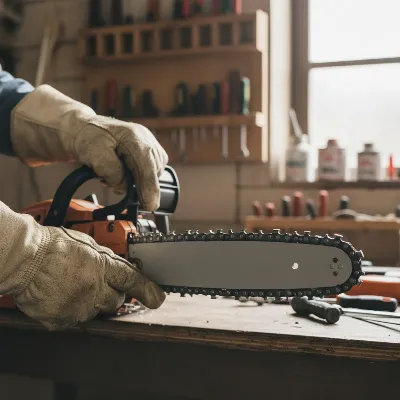 A close-up of hands wearing protective gloves correctly placing a chainsaw chain onto the guide bar with cutting teeth oriented forward, against a blurred workshop background.
Refit the Side Cover
Once the chain is properly seated on the guide bar and around the drive sprocket, carefully replace the side cover. Ensure the chain brake connector (if your model has one) fits correctly into its slot. Initially, just hand-tighten the nuts enough to hold the cover in place, allowing the guide bar to still move slightly for tension adjustment.
Tension the Chain Properly
Chain tension is critical for both safety and performance. Use your scrench to adjust the chain tensioning screw. Turn it clockwise to tighten the chain. The ideal tension is when the chain sits snugly against the underside of the guide bar but can still be pulled freely by hand, without significant sagging. A good test is to be able to lift the drive links out of the bar groove by hand about 1/8 to 1/4 inch at the midpoint of the bar, but no more. An overly loose chain can derail, while an overly tight one causes premature wear on the chain, bar, and sprocket, and can even damage the engine.
“Many users overlook chain tension, but it’s the single most important factor for safe and efficient chainsaw operation. A properly tensioned chain prevents derailments and ensures smooth, powerful cuts, protecting both the user and the equipment.” – Alex Chen, Master Chainsaw Technician, ReviewsThis.com
Final Checks
After achieving the correct tension, fully tighten the side cover nuts with your scrench. Before starting the saw, make sure the chain brake is disengaged. Double-check the chain oil reservoir to ensure it’s filled with quality chainsaw oil, as proper lubrication is vital for chain and bar life. Finally, with the saw on a clean, flat surface, briefly start it and let it idle to confirm the chain moves smoothly and without issue.
Common Issues and Troubleshooting When Reinstalling a Chainsaw Chain
Even with careful reinstallation, you might encounter a few common problems. Knowing how to diagnose and fix them can save you time and frustration.
- Chain Slipping or Coming Loose: This is often the result of improper chain tension. If the chain is too loose, it won’t engage properly with the drive sprocket and can jump off the bar. Re-adjust the tension as described in the previous section. If the problem persists, inspect the guide bar for wear (e.g., widened grooves) or the drive sprocket for damaged teeth. A stretched chain (often seen in older or pre-stretched chains that haven’t been re-tensioned) can also be the culprit.
- Incorrect Chain Direction: If your chainsaw cuts poorly, throws fine dust instead of chips, or simply refuses to cut, the chain might be installed backward. The cutting teeth must always face forward on the top of the bar, away from the engine. Refer to your chainsaw’s manual or a diagram if unsure.
- Worn Guide Bar or Sprocket: Over time, the guide bar’s groove can wear down, becoming too wide or uneven, preventing the chain from staying seated. Similarly, the drive sprocket’s teeth can wear or chip, leading to poor chain engagement. If tensioning doesn’t resolve slipping, these components may need replacement. Regularly cleaning the guide bar groove and sprocket area can help prevent premature wear.
- Difficulty Adjusting Tension: If the tensioning screw feels stripped or doesn’t seem to affect the chain tension, there might be an issue with the tensioning mechanism itself. This often requires professional inspection or replacement of internal components. Ensure that the guide bar can slide freely back and forth during tensioning.
Tips for Quick and Efficient Chainsaw Chain Management
Maintaining your chainsaw’s chain effectively isn’t just about fixing problems when they arise; it’s about proactive care and smart habits.
- Regular Maintenance: Make inspecting your chainsaw chain part of your routine before each use. Check for proper tension, sharpness, and lubrication. A well-maintained chain is less likely to derail or cause problems, making reinstallation less frequent. Always keep the guide bar groove clean from sawdust and resin buildup, as this allows the chain to run smoothly and reduces wear.
- Keep Tools Handy: Always have your scrench (or the appropriate wrench for your chainsaw) and protective gloves readily accessible. If a chain comes off in the field, having the right tools on hand will allow for a quick fix, minimizing downtime.
- Understand Your Saw: Familiarize yourself with your specific chainsaw model. Different brands and models might have slightly varied tensioning mechanisms or side cover designs. Consulting your owner’s manual provides model-specific instructions and troubleshooting tips, which can be invaluable for quick repairs.
- Carry a Spare Chain: For extensive work or remote locations, carrying a correctly sized and sharpened spare chain can be a lifesaver. If your primary chain becomes dull or damaged beyond quick repair, you can swap it out and continue working.
Conclusion
Reinstalling a chainsaw chain on its bar might seem daunting at first, but with a systematic approach and an emphasis on safety, it’s a straightforward DIY task. Remember to always disconnect power, wear protective gear, correctly orient the chain’s cutting teeth, and ensure proper tension. By understanding these steps and the common issues, you’ll not only enhance your efficiency but also significantly improve the safety and longevity of your chainsaw. A well-maintained and correctly installed chain is the cornerstone of powerful, precise, and safe cutting. How confident do you feel tackling your next chainsaw chain reinstallation now?
Frequently Asked Questions
What should I do if my chainsaw chain keeps coming off?
If your chainsaw chain repeatedly comes off, first check its tension; it’s likely too loose. Also, inspect the guide bar for wear or damage and the drive sprocket for worn teeth. A stretched chain may also be the cause, requiring replacement or careful adjustment.
How do I know if my chainsaw chain is too tight or too loose?
A chainsaw chain is correctly tensioned when it sits snugly against the guide bar but can still be pulled around by hand without excessive effort. If it sags noticeably underneath the bar, it’s too loose. If it’s difficult to pull or the chain binds, it’s too tight.
Can I install a chainsaw chain without a scrench?
While possible in an emergency, it is strongly recommended to use a scrench or the manufacturer’s specified tools for proper side cover removal and tension adjustment. Using incorrect tools can strip bolts or lead to improper tension, risking safety and damaging the saw.
How often should I check my chainsaw chain tension?
You should check your chainsaw chain tension before each use, and frequently during operation, especially when the saw is new or after periods of heavy use. Chains can stretch, particularly when new or when hot from use, requiring periodic adjustment.
What causes a chainsaw chain to jump off the bar?
A chainsaw chain typically jumps off the bar due to insufficient tension, a worn or damaged guide bar, a worn drive sprocket, or occasionally, striking an object during cutting that causes the chain to momentarily bind and derail.
