Few things are as frustrating as pulling the starter cord of your gas chainsaw only to be met with silence. Whether you’re tackling overgrown branches, felling a tree, or preparing firewood, a non-starting chainsaw can bring your work to an abrupt halt. This isn’t just an inconvenience; it can disrupt your entire day. But don’t despair! Many common starting issues can be diagnosed and fixed with basic tools and a bit of DIY know-how. This comprehensive guide will walk you through the most frequent culprits behind a stubborn chainsaw and provide clear, actionable steps to get your saw roaring back to life efficiently and safely.
Common Reasons Your Gas Chainsaw Won’t Start
A gas chainsaw relies on a delicate balance of fuel, air, and spark to ignite its engine. When any of these components are compromised, your saw will refuse to start. Understanding these common problems is the first step toward a quick fix.
Fuel System Issues
The fuel system is often the primary suspect when a chainsaw won’t start. The gasoline and oil mixture is crucial for a two-stroke engine, and any deviation can lead to trouble.
- Stale Fuel: Gasoline begins to degrade in as little as 30 days, especially if not mixed with a fuel stabilizer. Over time, oxygen reacts with gasoline molecules, leading to oxidation and the formation of varnish and gummy deposits. Old fuel can cause hard starting, poor performance, or complete failure to ignite.
- Clogged Fuel Filter: The fuel filter, located inside the fuel tank, prevents debris from reaching the carburetor. If it becomes clogged, fuel flow is restricted, starving the engine.
- Carburetor Problems: The carburetor precisely mixes air and fuel. Varnish and gum from stale fuel can clog its tiny passages, preventing the correct mixture from reaching the engine. This can lead to the engine being “too rich” (too much fuel) or “too lean” (not enough fuel), both of which impede starting.
- Flooded Engine: Repeatedly trying to start a chainsaw, especially with the choke engaged or by excessively pressing the primer bulb, can push too much fuel into the combustion chamber. This “floods” the engine, making it impossible for the spark plug to ignite the overly rich mixture.
- Fuel Lines: Cracks, blockages, or loose connections in the fuel lines can prevent fuel from reaching the carburetor.
Ignition System Problems
Even with perfect fuel, a chainsaw needs a robust spark to ignite the air-fuel mixture. Problems in the ignition system can quickly prevent any engine activity.
- Dirty or Faulty Spark Plug: The spark plug is responsible for creating the spark. Carbon deposits, wear, damage, or an incorrect gap can prevent it from firing effectively. A spark plug in good condition should produce a strong blue spark.
- Worn Recoil Starter/Pull Cord: The recoil starter engages the engine to initiate rotation. A broken pull cord, a faulty recoil spring, or a damaged starter mechanism will prevent you from being able to crank the engine.
- Ignition Coil: The ignition coil converts battery voltage into the high voltage needed for the spark plug. If the coil is faulty, it won’t produce a spark. This is less common as a DIY fix and often requires professional diagnosis.
Air System Restrictions
An engine needs a balanced air-fuel ratio. If airflow is restricted, the mixture will be too rich, making starting difficult or impossible.
- Clogged Air Filter: A dirty or clogged air filter restricts the amount of air entering the carburetor. This creates an overly rich fuel-air mixture, which is difficult to ignite.
- Clogged Spark Arrestor Screen: The spark arrestor is a small screen in the muffler that prevents hot carbon particles from exiting the exhaust. Over time, it can become clogged with carbon deposits, restricting exhaust flow and causing the engine to bog down or fail to start.
Compression Issues
While less common for quick DIY fixes, low compression can also prevent a chainsaw from starting. This usually indicates internal engine wear.
- Worn Piston Rings or Cylinder Damage: These issues reduce the engine’s ability to create the necessary compression for ignition. Symptoms often include a weak pull on the starter cord.
Essential Tools and Safety Precautions
Before attempting any repairs, gather the necessary tools and prioritize safety. Working with a chainsaw, even a non-starting one, requires caution.
Tools You’ll Need
Most common chainsaw starting problems can be addressed with a few basic tools:
- Spark Plug Wrench: Essential for removing and reinstalling spark plugs.
- Screwdriver Set: Flat-head and Phillips screwdrivers for various covers and adjustments.
- Carburetor Adjustment Tool: Some chainsaws require specialized tools (e.g., spline, D-shaped) for carburetor adjustment screws.
- Wire Brush or Spark Plug Cleaner: For cleaning spark plug electrodes.
- Feeler Gauge: To check and adjust the spark plug gap.
- Fuel Line Pliers: Helpful for disconnecting fuel lines without damage.
- Compressed Air: For cleaning air filters and other components.
- Carburetor Cleaner Spray: To dissolve gum and varnish deposits.
- Fresh Fuel (correctly mixed with 2-stroke oil): Always have a supply of fresh, properly mixed fuel.
- Fuel Stabilizer: To prevent fuel degradation during storage.
- Clean Rags: For wiping spills and cleaning components.
Safety First
Always assume the chainsaw could start at any moment during troubleshooting.
- Read Your Owner’s Manual: It contains specific instructions, diagrams, and safety warnings for your model.
- Wear Personal Protective Equipment (PPE): Always wear work gloves and eye protection.
- Engage the Chain Brake: This prevents accidental chain movement.
- Disconnect the Spark Plug Wire: This crucial step prevents the engine from accidentally starting while you’re working on it.
- Work in a Well-Ventilated Area: Especially when dealing with fuel and carburetor cleaners.
- Keep Away from Ignition Sources: Fuel vapors are highly flammable.
- Clear the Work Area: Ensure there’s no clutter that could cause a trip or snag.
Step-by-Step DIY Troubleshooting and Fixes
Once you’ve identified potential issues and gathered your tools, follow these steps to troubleshoot and fix your gas chainsaw.
1. Check the Fuel
Start with the simplest and most common issue: the fuel. Old or contaminated fuel is a frequent cause of starting problems.
- Drain Old Fuel: If your chainsaw has been sitting for more than a month with fuel in the tank, drain it. Old fuel can become stale and sticky.
- Replace with Fresh Fuel: Refill the tank with fresh, correctly mixed two-stroke fuel. Ensure the fuel-to-oil ratio matches your manufacturer’s recommendations (e.g., 50:1).
- Inspect Fuel Filter: Use a hook or thin wire to carefully retrieve the fuel filter from inside the tank. If it’s discolored, clogged with debris, or damaged, replace it.
- Inspect Fuel Lines: Look for any cracks, kinks, or loose connections in the fuel lines. Replace any damaged lines.
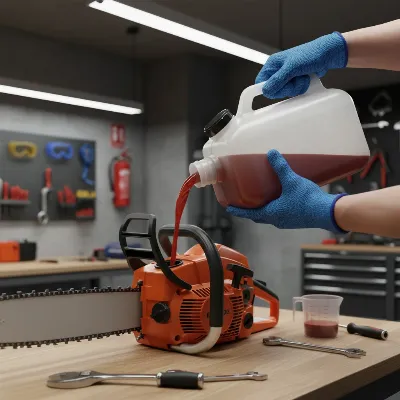 A person pouring fresh, correctly mixed two-stroke fuel into a gas chainsaw, with protective gloves on.
2. Inspect the Spark Plug
The spark plug is vital for ignition. A quick check can often reveal a major problem.
- Remove the Spark Plug: Use a spark plug wrench to carefully remove the spark plug.
- Inspect Its Condition:
- Dry and Clean: If it’s dry and clean, it might not be getting fuel.
- Wet with Fuel: If it’s wet and smells of gasoline, the engine is likely flooded.
- Black and Sooty: Indicates a rich fuel mixture or oil burning. Clean it.
- White or Ashy: Suggests a lean fuel mixture or overheating.
- Damaged or Eroded: If the porcelain insulator is cracked or the electrodes are heavily worn, replace the plug.
- Clean or Replace: If the plug is dirty but otherwise fine, clean the electrodes with a wire brush or fine sandpaper. If it’s damaged or heavily worn, replace it with a new one of the correct type.
- Check Spark Plug Gap: Use a feeler gauge to ensure the gap between the electrodes matches your chainsaw’s specifications (found in the owner’s manual). Adjust if necessary.
- Test for Spark: Reconnect the spark plug wire to the plug. Hold the plug’s metal body firmly against a clean, unpainted metal part of the engine (like the cylinder head). Pull the starter cord briskly (ensure the chain brake is engaged). You should see a strong, blue spark. If there’s no spark, the issue could be the plug itself, the spark plug wire, or the ignition coil.
3. Clean the Air Filter
A dirty air filter restricts airflow, which can make starting difficult.
- Remove the Air Filter Cover: Locate and remove the air filter cover, usually held by clips or screws.
- Remove and Inspect the Filter: Take out the air filter. If it’s visibly dirty, clogged with sawdust, or damaged, it needs attention.
- Clean or Replace: Most foam or felt filters can be cleaned with warm, soapy water, rinsed thoroughly, and allowed to air dry completely. Paper filters should be cleaned by tapping out debris or blowing with compressed air from the inside out. If the filter is heavily soiled or damaged, replace it.
4. Address Engine Flooding
A flooded engine is a common scenario after multiple failed starting attempts. The smell of gasoline is a key indicator.
- Clear the Flood:
- Place the on/off switch to the “OFF” position.
- Remove the spark plug.
- Hold the throttle trigger fully open.
- Pull the starter rope 5-10 times to clear excess fuel from the combustion chamber. This allows fresh air to enter and helps evaporate the fuel.
- Dry the spark plug if it was wet.
- Reinstall the spark plug and reconnect the wire.
- Attempt to start the chainsaw following the proper cold-start procedure, without engaging the choke again if the engine is warm.
5. Carburetor Adjustment and Cleaning
A dirty or improperly adjusted carburetor is a leading cause of starting and running issues.
- Basic Adjustment (if applicable): Some chainsaws have adjustable “L” (low speed) and “H” (high speed) screws, and a “T” (idle) screw. Refer to your manual for factory settings, typically 1 turn out from gently seated. Adjusting these screws incorrectly can damage the engine. If you’re unsure, consult a professional.
- Idle (T) Screw: Adjusts the engine’s idle speed.
- Low Speed (L) Screw: Controls the fuel-air mixture at idle and low RPMs.
- High Speed (H) Screw: Controls the fuel-air mixture at full throttle.
- > “Always start carburetor adjustments from the factory recommended settings. Making small, incremental changes while listening to the engine’s response is key to preventing damage.” – John Doe, Master Small Engine Technician
- Cleaning a Clogged Carburetor:
- Drain all fuel.
- Remove the air filter.
- Spray carburetor cleaner into the air intake and all visible openings of the carburetor.
- If the chainsaw starts but runs rough, this might be sufficient. If not, you may need to remove the carburetor for a more thorough cleaning.
- Disassembly and Cleaning (Advanced): If cleaning in place doesn’t work, carefully remove the carburetor. Take pictures during disassembly to aid reassembly. Spray all passages and jets with carburetor cleaner, ensuring no debris remains. You might need a carburetor rebuild kit if gaskets or diaphragms are damaged.
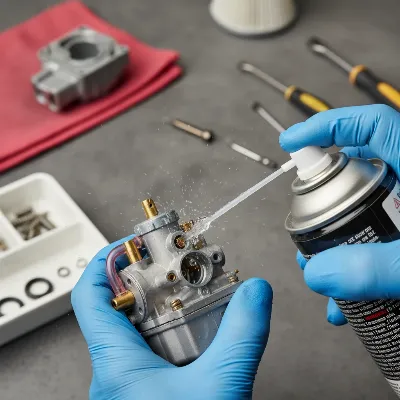 A person spraying carburetor cleaner into a disassembled chainsaw carburetor, showing precision and careful handling.
6. Inspect the Recoil Starter
If the pull cord doesn’t engage the engine or feels loose, the recoil starter might be the problem.
- Check Pull Cord: Ensure the cord isn’t frayed or broken.
- Inspect Recoil Mechanism: If the cord pulls out without resistance or doesn’t retract, the internal spring or mechanism may be damaged. These parts can be replaced, but it requires disassembling the recoil starter assembly. Consult your manual or a video tutorial for specific instructions for your model.
When to Seek Professional Help
While many chainsaw starting issues can be resolved with DIY efforts, some problems warrant professional attention.
- Persistent Issues: If you’ve tried all the common troubleshooting steps and your chainsaw still refuses to start, it’s time to visit a qualified service center.
- Complex Internal Engine Problems: Issues like low compression, a faulty ignition coil (after spark plug replacement), or serious carburetor damage often require specialized tools and expertise for diagnosis and repair.
- Lack of Confidence: If you’re uncomfortable with any step of the repair process, or if the problem seems beyond your skill level, it’s always safer to seek professional assistance. Improper repairs can lead to further damage or safety hazards.
Maintenance Tips to Prevent Starting Problems
Proactive maintenance is the best way to ensure your chainsaw starts reliably every time.
- Use Fresh Fuel and Stabilizer: Always use fresh, correctly mixed two-stroke fuel. For storage, always add a fuel stabilizer to prevent degradation. Drain the fuel tank completely if storing for extended periods (over 30 days).
- Clean Air Filter Regularly: Inspect and clean your air filter after every few uses, or more frequently in dusty conditions. A clean air filter ensures proper airflow.
- Replace Spark Plug Annually: Even if it looks okay, replacing the spark plug once a season is a good preventative measure to ensure strong ignition.
- Inspect and Clean Spark Arrestor: Periodically remove and clean the spark arrestor screen to prevent carbon buildup.
- Store Properly: Store your chainsaw in a clean, dry place, away from extreme temperatures. Ensure the chain brake is engaged and the saw is stable.
Frequently Asked Questions
Why does my chainsaw only start when I prime it, but then dies?
If your chainsaw only starts after priming and then quickly dies, it often indicates a fuel delivery problem, specifically a clogged fuel filter or carburetor. Priming forces fuel into the engine, allowing it to briefly run, but a persistent blockage prevents a steady supply, causing it to stall. Check and clean or replace your fuel filter and carburetor.
Can I use regular car fuel in my chainsaw?
No, you should never use regular car fuel in a gas chainsaw designed for a two-stroke engine. Chainsaws require a specific mixture of gasoline and two-stroke oil to lubricate the engine. Using straight gasoline or an incorrect mixture will lead to severe engine damage, as two-stroke engines rely on the oil mixed in the fuel for lubrication.
How often should I replace my chainsaw’s spark plug?
It is generally recommended to replace your chainsaw’s spark plug at least once a season, or approximately every 100 hours of operation, whichever comes first. Even if it appears clean, a spark plug can degrade over time, leading to weaker spark and less efficient combustion, which can make starting difficult.
Conclusion
A gas chainsaw that won’t start can be a significant setback, but with a systematic approach and the right tools, most common problems can be quickly diagnosed and resolved. By focusing on the triumvirate of fuel, air, and spark, you can often pinpoint the issue, whether it’s stale fuel, a dirty spark plug, a clogged air filter, or a flooded engine. Regular maintenance is your best defense against these frustrating occurrences, ensuring your chainsaw is ready to work when you are. Don’t let a stubborn start deter you—empower yourself with these DIY fixes and get back to tackling those challenging cutting tasks. What’s the most unusual chainsaw starting problem you’ve ever encountered?
