Choosing between gas and battery chainsaws in 2026 depends on specific tasks, with modern cordless models offering impressive capabilities alongside traditional fuel-fed counterparts. Gas chainsaws provide superior power and unlimited runtime for heavy-duty tasks like felling large trees, while battery chainsaws offer instant starts, quieter operation, and zero emissions for most homeowner and many professional applications. Understanding these distinct advantages is crucial for selecting the right tool.
An Overview of Chainsaws
Chainsaws are indispensable power tools designed for tasks from pruning small branches and felling trees to cutting firewood and clearing storm debris. Their core function involves a rotating chain with sharp teeth that efficiently cuts through wood. The history of chainsaws traces back to the early 20th century, with significant advancements in design, safety, and power sources over the decades.
Today, the market is primarily dominated by three types: gas, electric (corded), and battery (cordless) chainsaws. While corded electric models offer consistent power for tasks near an outlet, the primary debate for serious users often boils down to the portable power of gas versus the evolving convenience of battery-operated units. For compare top chainsaw sales on this site.
Key Factors When Buying a Chainsaw
Selecting the right chainsaw requires careful consideration of several factors. Your specific needs, the type of work you’ll undertake, and your personal preferences will ultimately dictate which power source is best suited for you.
Type of Chainsaw
The fundamental choice lies between gas and battery chainsaws, each with distinct advantages and drawbacks that impact performance, convenience, and environmental footprint.
Gas Chainsaws
Gas chainsaws have long been the industry standard for heavy-duty cutting. They are powered by a two-stroke internal combustion engine that runs on a mix of gasoline and oil.
- Advantages: Gas chainsaws offer superior power and torque, making them ideal for felling large trees, cutting thick timber, and sustained, heavy-duty work. Their runtime is virtually unlimited as long as you have fuel on hand, allowing for extended work sessions in remote locations without access to electricity. They are also generally more forgiving in challenging conditions, such as cutting through dense wood or with a slightly dull chain.
- Disadvantages: These models are notoriously loud, produce exhaust fumes, and require more extensive maintenance, including fuel mixing, spark plug changes, air filter cleaning, and carburetor tuning. Starting them often involves a pull-cord, which can be challenging, especially in cold weather. They are typically heavier than battery counterparts, contributing to operator fatigue during prolonged use.
Battery Chainsaws
Battery chainsaws have seen rapid advancements in recent years, becoming a formidable alternative for many users. They are powered by rechargeable lithium-ion batteries that drive an electric motor.
- Advantages: The instant start feature of battery chainsaws, activated by a simple button press, eliminates the frustration of pull-cords. They operate significantly quieter than gas models and produce zero emissions, making them ideal for use in residential areas or enclosed spaces. Battery chainsaws require less maintenance, as there’s no fuel system to manage or spark plugs to replace. Many are also lighter, enhancing maneuverability and reducing fatigue for shorter tasks.
- Disadvantages: The primary limitation is battery runtime, which depends on battery capacity and workload. While spare batteries can extend work time, they add to the upfront cost and require a charging plan. Power output, while greatly improved, may still not match the sustained brute force of the largest gas models for extreme heavy-duty professional tasks. Battery performance can also be affected by extreme temperatures.
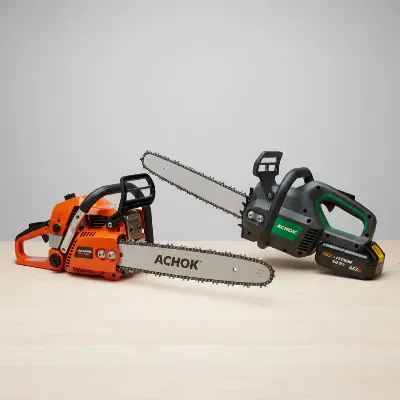 A side-by-side comparison of a gas chainsaw and a battery chainsaw, highlighting their distinct designs and power sources.
Size and Weight
|
Our Picks for the Best Chain Saw in 2026
As an Amazon Associate I earn from qualifying purchases.
|
||
| Num | Product | Action |
|---|---|---|
| 1 | Makita XCU03PT1 18V X2 (36V) LXT Lithium-Ion Brushless Cordless 14" Chain Saw Kit with, 4 Batteries (5.0Ah) |

|
| 2 | Oregon 3-Pack Chainsaw Chain 3/8" LP Pitch, .050" (1.3 mm) Gauge for 18" (45cm) Bar, 62 Drive Links – Low-kickback Replacement Saw Chain, Fits Husqvarna, Echo, Poulan, Homelite, Craftsman and more |
|
| 3 | Greenworks 24V 12" Brushless Cordless Compact Chainsaw (Great For Storm Clean-Up, Pruning, and Firewood / 125+ Compatible Tools), Tool Only |
|
| 4 | Makita-UC4051A Chain Saw, Electric, 16 in. Bar - Sliver |
|
| 5 | Greenworks 24V 10" Cordless Compact Chainsaw (Great For Storm Clean-Up, Pruning, and Firewood), 2.0Ah Battery and Charger Included |
|
| 6 | Gas Chainsaw 62CC 20 Inch Professional Powerful 2-Stroke Engine for Tree Cutting, Logging and Firewood with Chain Brake |
|
| 7 | STIHL Battery Operated Chainsaw with Sound Kids Toy |
|
| 8 | Stihl GTA 26 Wood Cutter with AS 2 Battery and Charger AL 1, Battery Operated |
|
| 9 | Husqvarna 450 Rancher 20 Inch Gas Chainsaw, 50.2-cc 3.2-HP, 2-Cycle X-Torq Engine, For Tree Pruning, Yard Cleanups and Firewood Cutting, 970613120 |
|
| 10 | Greenworks 80V 16" Brushless Cordless Chainsaw (Great For Tree Felling, Limbing, Pruning, and Firewood / 75+ Compatible Tools), Tool Only |
|
The physical dimensions and weight of a chainsaw are crucial for operator comfort and the suitability for specific jobs.
- Gas Chainsaws: Tend to be heavier due to their engine and fuel tank, which can lead to increased fatigue during extended use. Longer guide bars for heavy tasks further add to the weight and make them more awkward to handle.
- Battery Chainsaws: Often lighter in tool-only weight, improving maneuverability for tasks like pruning and limbing. However, high-capacity batteries, especially for more powerful models, can add significant weight, sometimes making them comparable to lighter gas chainsaws. The balance can also feel different, with the weight concentrated in the rear where the battery sits.
Power Output
The raw cutting power of a chainsaw directly correlates with its ability to tackle different types and sizes of wood.
- Gas Chainsaws: Historically, gas models have offered superior, sustained power, effortlessly cutting through large, dense hardwoods and providing faster cutting speeds. Engine displacement (measured in cubic centimeters, or cc) typically indicates their power.
- Battery Chainsaws: Modern high-voltage battery systems (e.g., 56V-80V) with brushless motors now deliver power comparable to mid-range gas chainsaws, capable of handling substantial trunk diameters. For most homeowner tasks, and even many professional applications, the power is more than adequate. However, for all-day, extreme-duty forestry work, gas chainsaws often still hold an edge in continuous output without performance degradation.
Safety Features
Safety is paramount when operating any chainsaw. Modern chainsaws, regardless of power type, incorporate features designed to protect the user.
- Chain Brake: This critical safety feature stops the chain’s rotation almost instantly in the event of kickback or if the operator’s hand pushes the front handguard forward. Automatic chain braking systems in battery models can detect kickback conditions and react electronically.
- Handguard: A protective barrier between the front handle and the chain, designed to prevent the operator’s hand from slipping onto the chain.
- Anti-Vibration System: Reduces vibrations transmitted to the handles, minimizing operator fatigue and the risk of developing conditions like Hand-Arm Vibration Syndrome (HAVS). Gas chainsaws typically have more vibration, making this feature particularly important.
- Throttle Lockout: Prevents accidental acceleration by requiring the operator to depress a lockout lever before the throttle trigger can be engaged.
- Low Kickback Chain and Bar: Designed to reduce the severity of kickback, which is a sudden, upward and backward motion of the saw.
Brand and Price
The market offers a wide range of chainsaw brands, each with its reputation and price point.
- Reputable Brands: Stihl, Husqvarna, DeWalt, EGO, Makita, Ryobi, and Worx are some of the leading manufacturers known for producing reliable chainsaws across both gas and battery categories.
- Pricing: Gas chainsaws often have a lower upfront cost for the bare tool. However, ongoing costs include fuel, oil, and more frequent maintenance. Battery chainsaws can have a higher initial investment, especially if you need to buy batteries and a charger separately or if you’re investing in a new battery ecosystem. In the long run, the absence of fuel costs and lower maintenance can make battery models more cost-effective. Consider the entire “system cost” when comparing battery chainsaws, including spare batteries if needed for longer work.
Comparing Popular Chainsaw Models (Illustrative Table)
To illustrate the differences, here’s an example comparison of popular types of chainsaws. Note that specific models and their features evolve rapidly, especially in the battery segment.
| Feature | Entry-Level Gas Chainsaw (e.g., Husqvarna 130) | Mid-Range Battery Chainsaw (e.g., EGO POWER+ CS1803) | Professional-Grade Gas Chainsaw (e-g., Stihl MS 271) | Professional-Grade Battery Chainsaw (e.g., EGO POWER+ CS2000) |
|---|---|---|---|---|
| Power Source | Gasoline | 56V Battery | Gasoline | 56V Battery |
| Engine/Motor | 38cc 2-stroke engine | Brushless Motor | 50.2cc 2-stroke engine | High-efficiency Brushless Motor (55cc gas equivalent) |
| Bar Length | 16 inches | 18 inches | 18-20 inches | 20 inches |
| Weight (Tool Only) | ~10.3 lbs | ~12.2 lbs (without battery) | ~12.3 lbs | ~13.5 lbs (without battery) |
| Starting | Pull-cord | Instant push-button | Pull-cord | Instant push-button |
| Noise Level | High (Loud) | Moderate (Significantly quieter) | Very High (Very Loud) | Moderate (Significantly quieter) |
| Emissions | Yes | No (Zero emissions) | Yes | No (Zero emissions) |
| Maintenance | High (Fuel, oil, spark plug, filter) | Low (Chain, bar, battery care) | Very High (Extensive) | Low (Chain, bar, battery care) |
| Runtime | Unlimited with fuel | ~30-45 mins (with 4.0Ah battery) | Unlimited with fuel | ~35-70 mins (with 6.0Ah+ battery) |
| Typical Use | Light pruning, small firewood | Homeowner use, medium trees, regular tasks | Felling large trees, heavy-duty forestry | Demanding homeowner tasks, professional light-to-medium work |
| Price Range | $$ | $$$ | $$$$ | $$$$ |
Chainsaw Buying Guide: Making the Right Choice
Choosing the ideal chainsaw is a personalized decision. It hinges on how you intend to use it, your budget, and the support you expect after purchase.
Determine Your Usage Needs
Before anything else, identify the primary tasks you’ll be performing with your chainsaw.
- Light-Duty (Occasional Use): For small pruning jobs, limbing small branches (up to 6 inches in diameter), or occasional storm cleanup, a lightweight battery chainsaw (10-14 inch bar) or a small gas chainsaw (30-40cc) is usually sufficient. Battery models excel here for their instant start and ease of use.
- Medium-Duty (Regular Homeowner Use): If you’re cutting firewood regularly, felling small to medium-sized trees (6-16 inches in diameter), or extensive property maintenance, a more powerful battery chainsaw (16-18 inch bar, 40V-60V) or a mid-range gas chainsaw (40-50cc) would be appropriate.
- Heavy-Duty (Professional or Demanding Tasks): For felling large trees (over 16-18 inches in diameter), bucking large logs, or all-day professional forestry work, a high-powered gas chainsaw (50cc+) with a longer bar (18-24+ inches) is still generally the go-to. However, top-tier battery chainsaws are increasingly capable of handling many demanding professional applications, particularly where noise and emissions are concerns.
Set Your Budget
Chainsaws vary widely in price, and a higher price doesn’t always mean it’s the right fit for you.
- Entry-Level: You can find basic gas or smaller battery chainsaws for lighter tasks at a more affordable initial cost.
- Mid-Range: Offers a balance of power, features, and durability, suitable for most homeowners. Battery models here might represent a higher upfront cost but often lead to savings on fuel and maintenance over time.
- High-End/Professional: These models, whether gas or battery, come with premium features, enhanced durability, and greater power, reflected in their higher price tag. Consider the long-term cost, including fuel/batteries and maintenance, not just the initial purchase price.
Research and Information Gathering
A little research goes a long way in making an informed decision.
- Read Reviews and Comparisons: Consult independent reviews and comparison articles from reputable sources to get an unbiased perspective on performance, reliability, and user satisfaction.
- Watch Demonstrations: Videos can provide valuable insights into a chainsaw’s handling, noise levels, and cutting performance in real-world scenarios.
- Seek Expert Opinions: Talk to experienced chainsaw users, arborists, or technicians for practical advice. “For infrequent use, a battery-powered saw can be easier to deal with. And if you have other cordless equipment, getting a saw that runs on the same platform makes sense because you can share batteries between the tools to extend runtime.”
- Understand Battery Ecosystems: If considering a battery chainsaw, investigate the manufacturer’s wider tool ecosystem. If you already own other cordless tools from a brand, choosing a chainsaw from the same platform allows you to share batteries, maximizing value and convenience.
Purchase from Reputable Dealers
Where you buy your chainsaw is as important as what you buy.
- Authorized Dealers: Purchase from authorized dealers who can provide expert advice, assembly, and after-sales service.
- Warranty and Return Policies: Understand the warranty offered by the manufacturer and the return policy of the retailer. This provides peace of mind in case of defects or if the saw doesn’t meet your expectations.
- Service and Support: Ensure that parts and service are readily available locally or through reliable channels.
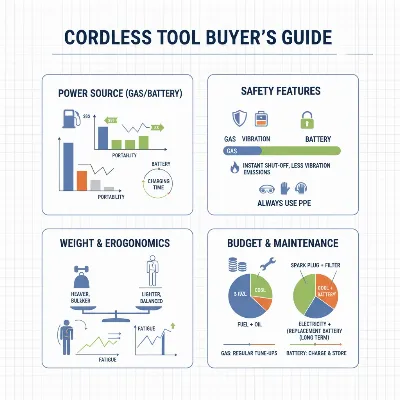 An infographic illustrating key factors to consider when purchasing a chainsaw, such as power, safety, weight, and budget.
Chainsaw Usage and Maintenance Tips
Proper usage and regular maintenance are crucial for both your safety and the longevity of your chainsaw.
Safe Chainsaw Operation
Chainsaws are powerful and potentially dangerous tools. Adhering to safety guidelines is non-negotiable.
- Personal Protective Equipment (PPE): Always wear appropriate PPE, including a hard hat, hearing protection (ear muffs or earplugs), eye protection (safety glasses or face shield), heavy-duty gloves, cut-resistant chaps or pants, and steel-toed boots.
- Know Your Saw: Read your owner’s manual thoroughly. Understand all the controls, safety features, and operational limits of your specific model.
- Inspect Before Each Use: Before starting, check the chain tension, bar lubrication, fuel/battery level, and ensure all parts (chain brake, handguards, throttle lockout) are functioning correctly and free of damage or debris.
- Clear Work Area: Ensure your work area is free of people, pets, and tripping hazards. Plan an escape route for falling trees or branches. Be aware of your surroundings, including “widow makers” (loose branches overhead).
- Maintain Proper Footing: Always maintain a balanced stance and firm grip on the chainsaw with both hands.
- Beware of Kickback: Understand and avoid situations that can cause kickback. Never cut with the tip of the guide bar, and always maintain proper chain sharpness and tension.
- Ventilation for Gas Saws: Only operate gas chainsaws in well-ventilated outdoor areas to avoid inhaling exhaust fumes.
> “The greatest asset for any chainsaw operator isn’t the saw’s power, but their commitment to safety and meticulous planning before making the first cut.” – ReviewsThis.com Admin, Chainsaw Technician with 10+ Years Experience
Chainsaw Maintenance for Longevity
Regular maintenance is the cornerstone of a reliable and safe chainsaw.
- Keep the Chain Sharp: A sharp chain cuts efficiently, reduces strain on the motor/engine, extends battery life (for cordless models), and minimizes kickback risk. Sharpen your chain regularly or have it professionally sharpened.
- Maintain Proper Chain Tension: Check chain tension before and during use. A properly tensioned chain prevents premature wear and dangerous derailment.
- Lubricate the Guide Bar: Ensure the bar oil reservoir is filled with proper bar and chain oil. Adequate lubrication protects both the chain and bar from excessive wear and heat. Regularly clean the guide bar groove and oil holes.
- Clean After Use: Remove sawdust, wood chips, and debris from the saw, especially from the air filter (for gas saws), cooling fins, and chain brake mechanism.
- Fuel and Oil for Gas Saws:
- Use fresh, properly mixed gasoline and 2-cycle oil.
- Store fuel in a well-marked, clean container in a cool place, and avoid storing fuel for more than 90 days.
- For long-term storage, empty the fuel tank and run the saw dry to prevent carburetor issues.
- Regularly clean or replace air and fuel filters and inspect spark plugs.
- Battery Care and Storage for Battery Saws:
- Recharge batteries after use, rather than storing them fully discharged or completely depleted.
- Store batteries at 40-60% charge in a cool, dry place for extended storage.
- Avoid charging or operating batteries in extreme temperatures, as this can affect performance and lifespan.
- Regularly clean battery contacts.
- Chainsaw Won’t Start: For gas saws, check fuel level, spark plug, air filter, and ensure choke settings are correct. For battery saws, check battery charge, ensure the battery is properly seated, and inspect for any power switch issues.
- Saw Not Cutting Efficiently: Most often, this is due to a dull chain. Check chain sharpness and tension. Also, ensure the guide bar is properly lubricated.
- Overheating: Can be caused by a dull chain, improper chain tension, or blockages in the cooling vents (gas) or excessive load (battery).
- Oil Leaks: Inspect oil lines, reservoir caps, and ensure the auto-oiling system is functioning correctly.
- EGO POWER+ CS2000 (20-inch): Widely regarded as one of the most powerful battery-operated chainsaws, delivering performance comparable to a 55cc gas model. It features a high-efficiency brushless motor and digital display, making it suitable for demanding applications.
- EGO POWER+ CS1803 (18-inch): Offers an excellent balance of power and portability, often sold as a complete kit with a battery and charger. It matches the power of a 45cc gas chainsaw and features tool-free chain tensioning.
- DEWALT 60V MAX DCCS672B (18-inch): A professional-grade option with impressive peak horsepower, a brushless motor, and an auto-oiling system. It leverages DeWalt’s robust 60V MAX battery platform.
- CRAFTSMAN V20 RP CMCCS630P1 (12-inch): A value-oriented package with a brushless motor, offering good power for its size and making many cuts per charge, while being lighter than comparable gas saws.
- Husqvarna 440 (16-18 inch): A popular homeowner-friendly gas chainsaw known for its ease of starting and strong cutting power for various tasks.
- Stihl MS 271 Farm Boss (18-20 inch): A highly regarded professional-grade gas chainsaw, offering robust power and durability for heavy-duty forestry and firewood cutting. While not directly detailed in the browsed content, Stihl is a leading brand in gas chainsaws, and this model is consistently praised for its performance.
- Husqvarna 130 (16-inch): A lightweight gas-powered chainsaw suitable for homeowners performing light to moderate work around the yard.
Common Issues and Troubleshooting
Most Popular Chainsaw Products in 2026
The market for chainsaws in 2026 is robust, with both gas and battery models competing for top spots. Here are some of the highly-rated and popular options across both categories, reflecting the latest advancements.
Top Battery-Powered Chainsaws
Modern battery chainsaws are now capable of handling tasks that were once exclusive to gas models, offering a compelling blend of power, convenience, and environmental benefits.
Top Gas-Powered Chainsaws
Despite the rise of battery technology, gas chainsaws remain the preferred choice for those needing maximum power and extended runtime without interruption.
The “best” model ultimately depends on your specific needs, but these examples showcase the high-quality options available in 2026.
Conclusion
Choosing between a gas and battery chainsaw in 2026 is a decision that reflects modern demands for power, convenience, and environmental responsibility. While gas chainsaws continue to excel in raw power and unlimited runtime for the most demanding professional tasks, battery chainsaws have significantly closed the performance gap, offering compelling advantages like instant starts, quieter operation, zero emissions, and reduced maintenance.
For most homeowners and many professionals handling routine maintenance, pruning, and medium-duty cutting, a modern battery chainsaw provides an efficient, user-friendly, and environmentally conscious solution. However, for those requiring continuous, heavy-duty cutting in remote locations, the reliability and power of a gas chainsaw remain unmatched. Often, the ideal solution might even involve owning both—a versatile battery saw for quick, quiet jobs and a powerful gas saw for the heaviest, most sustained tasks.
What kind of cutting tasks do you envision tackling most frequently, and which of these chainsaw characteristics aligns best with your ideal work experience?
Frequently Asked Questions
Are battery chainsaws powerful enough for large trees?
Powerful battery chainsaws, such as the EGO POWER+ CS2000 or DEWALT 60V MAX models with 18-20 inch bars, can effectively cut large trees. They deliver professional-grade power, but battery life will be the limiting factor for extensive tree felling projects, making gas chainsaws more practical for all-day professional forestry work.
How long do battery chainsaw batteries last on a single charge?
Battery runtime varies significantly by model and usage. Top-performing models with 6.0Ah batteries can offer 200+ cuts on 4×4 lumber or 30-45 minutes of continuous cutting under load. Smaller 20V models typically provide 15-25 minutes, while professional 60V-80V systems might achieve 45-70 minutes, depending on the cutting load and battery capacity.
Is the maintenance for battery chainsaws truly minimal?
Yes, battery chainsaws require significantly less maintenance than gas models. There’s no need for fuel mixing, spark plug replacement, carburetor adjustments, or extensive air filter cleaning. Primary maintenance involves keeping the chain sharp, maintaining proper chain tension, ensuring bar lubrication, and proper care and storage of the battery packs.
Are gas chainsaws still relevant in 2026 with battery advancements?
Absolutely. Gas chainsaws remain highly relevant, especially for heavy-duty professional applications, felling large trees, or extended work in remote areas where recharging batteries is not practical. Their sustained power, rapid refueling, and resilience in challenging conditions still make them the preferred choice for specific, demanding tasks.
What is chainsaw kickback, and how do safety features help?
Chainsaw kickback is a sudden, uncontrolled upward and backward thrust of the chainsaw, typically occurring when the tip of the guide bar strikes an object or gets pinched in a cut. Safety features like automatic chain brakes and low kickback chains/bars are designed to minimize the risk and severity of kickback by stopping the chain rapidly or reducing the force of the reaction.
Frequently Asked Questions
Are battery chainsaws powerful enough for large trees?
Yes, powerful battery chainsaws like the EGO POWER+ CS2000 or DEWALT 60V MAX models with 18-20 inch bars can effectively cut large trees. While they deliver professional-grade power, battery life will be the limiting factor for extensive tree felling projects, making gas chainsaws more practical for all-day professional forestry work.
How long do battery chainsaw batteries last on a single charge?
Battery runtime varies significantly by model and usage. Top-performing models with 6.0Ah batteries can offer 200+ cuts on 4x4 lumber or 30-45 minutes of continuous cutting under load. Smaller 20V models typically provide 15-25 minutes, while professional 60V-80V systems might achieve 45-70 minutes, depending on the cutting load and battery capacity.
Is the maintenance for battery chainsaws truly minimal?
Yes, battery chainsaws require significantly less maintenance than gas models. There's no need for fuel mixing, spark plug replacement, carburetor adjustments, or extensive air filter cleaning. Primary maintenance involves keeping the chain sharp, maintaining proper chain tension, ensuring bar lubrication, and proper care and storage of the battery packs.
Are gas chainsaws still relevant in 2026 with battery advancements?
Absolutely. Gas chainsaws remain highly relevant, especially for heavy-duty professional applications, felling large trees, or extended work in remote areas where recharging batteries is not practical. Their sustained power, rapid refueling, and resilience in challenging conditions still make them the preferred choice for specific, demanding tasks.
What is chainsaw kickback, and how do safety features help?
Chainsaw kickback is a sudden, uncontrolled upward and backward thrust of the chainsaw, typically occurring when the tip of the guide bar strikes an object or gets pinched in a cut. Safety features like automatic chain brakes and low kickback chains/bars are designed to minimize the risk and severity of kickback by stopping the chain rapidly or reducing the force of the reaction.
How to Choose the Right Chainsaw
Selecting the ideal chainsaw involves assessing your usage needs, setting a budget, researching models, and purchasing from reputable dealers to ensure safety and longevity.
Identify the primary tasks you'll perform. For light-duty tasks like pruning small branches (up to 6 inches), a battery chainsaw (10-14 inch bar) is sufficient. For medium-duty tasks like cutting firewood or felling small to medium trees (6-16 inches), consider a more powerful battery (16-18 inch bar, 40V-60V) or mid-range gas chainsaw (40-50cc). Heavy-duty tasks like felling large trees (over 16-18 inches) typically require a high-powered gas chainsaw (50cc+) with a longer bar (18-24+ inches).
Chainsaw prices vary widely. Entry-level models for lighter tasks are more affordable. Mid-range options offer a balance of power and features for most homeowners, with battery models potentially having higher upfront costs but lower long-term fuel and maintenance expenses. High-end/professional models, whether gas or battery, come with premium features and greater power at a higher price.
Consult independent reviews and comparison articles for unbiased perspectives on performance and reliability. Watch demonstration videos to see handling and cutting performance in real-world scenarios. Seek expert opinions from experienced users or technicians, and if considering a battery chainsaw, investigate the manufacturer's wider tool ecosystem to share batteries with other cordless tools.
Buy from authorized dealers who can provide expert advice, assembly, and after-sales service. Understand the manufacturer's warranty and the retailer's return policy for peace of mind. Ensure that parts and service are readily available locally or through reliable channels to support your chainsaw's longevity.

My husband and I just bought our first home with a lot of mature trees, and we were debating between gas and battery. We went with a battery model for general homeowner applications, and it’s been fantastic. It’s so much easier to maintain than a gas one, and the lack of fumes is a huge bonus when working in the backyard.
I was hoping a battery chainsaw would be a good replacement for my old gas one for general yard work, but I found the runtime a bit limiting for bigger clearing jobs. While the zero emissions are a plus, I still had to recharge more often than I’d like when tackling a lot of storm debris. It’s good for light stuff, but I might need to stick with gas for anything substantial.
I’ve been a gas chainsaw guy for decades, but after reading about the advancements in battery models, I decided to try one for smaller tasks around my property. The instant start and quieter operation are game changers for pruning and cutting firewood. It’s perfect for those quick jobs where I don’t want to mess with mixing fuel.
I appreciate the breakdown of gas vs. battery. I recently got a new gas chainsaw for felling some larger trees on my land, and the superior power is definitely noticeable. It handles big logs without bogging down, which is exactly what I needed. The only downside is the noise, but that’s expected with the power it delivers.