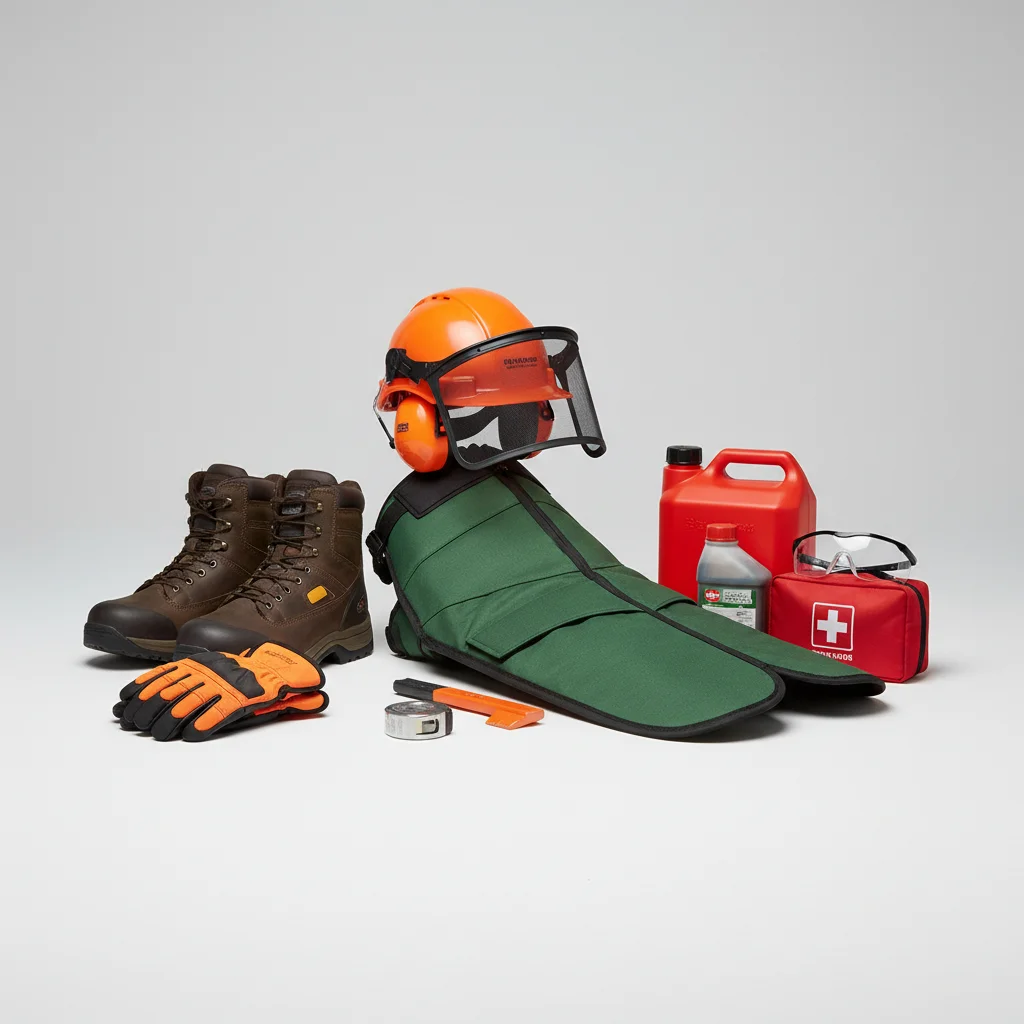
When operating a chainsaw, prioritizing safety is paramount. You need at least five essential pieces of safety gear to protect yourself from common hazards like flying debris, kickback, and noise. Using the correct protective equipment can significantly reduce the risk of injury, ensuring a safer and more productive cutting experience.
Head Protection: Helmets and Eye Protection
A chainsaw helmet is your first line of defense against falling branches and kickback. Look for helmets that meet ANSI Z89.1 standards, often integrated with a face shield and earmuffs. The face shield, typically mesh or polycarbonate, protects your eyes and face from wood chips and sawdust. For additional eye protection, safety glasses worn under the face shield are highly recommended, especially when working in dusty conditions or with fine debris. Ensure your helmet fits snugly and doesn’t obstruct your vision. For more chainsaw sales guides on this site.
Hearing Protection: Earmuffs or Earplugs
Chainsaws produce noise levels that can cause permanent hearing damage over time. Most chainsaws operate at 100-120 decibels, far exceeding the safe limit of 85 decibels. Therefore, hearing protection is non-negotiable. Earmuffs designed for chainsaw use offer excellent noise reduction and are often integrated into safety helmets. Alternatively, high-quality earplugs can be used, but ensure they provide adequate Noise Reduction Rating (NRR) for the specific chainsaw you are using. Always check the NRR rating on your hearing protection to ensure it meets or exceeds the noise output of your saw.
Hand Protection: Chainsaw Gloves
|
Our Picks for the Best Chain Saw in 2026
As an Amazon Associate I earn from qualifying purchases.
|
||
| Num | Product | Action |
|---|---|---|
| 1 | Makita-UC4051A Chain Saw, Electric, 16 in. Bar - Sliver |

|
| 2 | Greenworks 80V 16" Brushless Cordless Chainsaw (Great For Tree Felling, Limbing, Pruning, and Firewood / 75+ Compatible Tools), Tool Only |
|
| 3 | Makita XCU03PT1 18V X2 (36V) LXT Lithium-Ion Brushless Cordless 14" Chain Saw Kit with, 4 Batteries (5.0Ah) |
|
| 4 | Gas Chainsaw 62CC 20 Inch Professional Powerful 2-Stroke Engine for Tree Cutting, Logging and Firewood with Chain Brake |
|
| 5 | Husqvarna 450 Rancher 20 Inch Gas Chainsaw, 50.2-cc 3.2-HP, 2-Cycle X-Torq Engine, For Tree Pruning, Yard Cleanups and Firewood Cutting, 970613120 |
|
| 6 | STIHL Battery Operated Chainsaw with Sound Kids Toy |
|
| 7 | Stihl GTA 26 Wood Cutter with AS 2 Battery and Charger AL 1, Battery Operated |
|
| 8 | Greenworks 24V 12" Brushless Cordless Compact Chainsaw (Great For Storm Clean-Up, Pruning, and Firewood / 125+ Compatible Tools), Tool Only |
|
| 9 | Oregon 3-Pack Chainsaw Chain 3/8" LP Pitch, .050" (1.3 mm) Gauge for 18" (45cm) Bar, 62 Drive Links – Low-kickback Replacement Saw Chain, Fits Husqvarna, Echo, Poulan, Homelite, Craftsman and more |
|
| 10 | Greenworks 24V 10" Cordless Compact Chainsaw (Great For Storm Clean-Up, Pruning, and Firewood), 2.0Ah Battery and Charger Included |
|
Chainsaw gloves are specifically designed to protect your hands from cuts, vibrations, and abrasions. They typically feature a cut-resistant material, often Kevlar or similar synthetic fibers, on the back of the left hand, which is the hand most vulnerable to chain contact during kickback. Good chainsaw gloves also offer a strong grip, which is crucial for maintaining control of the saw, especially in wet or slippery conditions. Look for gloves that are comfortable, durable, and allow for good dexterity.
Leg Protection: Chainsaw Chaps or Pants
Leg injuries are among the most common and severe chainsaw accidents. Chainsaw chaps or pants are made with multiple layers of cut-resistant material that can clog the chainsaw chain upon contact, stopping the saw almost instantly. They are an absolute must for anyone operating a chainsaw. Chaps are worn over your regular work pants and are a cost-effective solution, while chainsaw pants offer full leg protection and are often preferred by professionals for their comfort and integrated design. Always ensure your chaps or pants meet relevant safety standards, such as ASTM F1897.
- Chainsaw Helmet: Protects against falling objects and kickback.
- Safety Glasses: Essential for eye protection from debris.
- Hearing Protection: Prevents noise-induced hearing loss.
- Chainsaw Gloves: Shields hands from cuts and vibrations.
- Chainsaw Chaps/Pants: Crucial for leg protection against chain contact.
Foot Protection: Steel-Toe Boots
Sturdy footwear is another critical component of chainsaw safety gear. Steel-toe boots provide protection against falling logs, branches, and the chainsaw itself if it were to drop or slip. They also offer ankle support, which is important when working on uneven terrain. Look for boots that are waterproof, have good traction, and meet safety standards for impact and compression. Avoid wearing sneakers or open-toed shoes when operating a chainsaw, as they offer no protection against the inherent dangers.
Investing in high-quality chainsaw safety gear is an investment in your personal well-being. Never operate a chainsaw without all the necessary protective equipment. Regular inspection of your gear for wear and tear is also important to ensure it remains effective.Always prioritize your safety above all else when tackling any cutting task.

I appreciate the emphasis on safety gear, especially the part about protecting against flying debris. I bought a new helmet recently, and while the earmuffs are good, the mesh face shield sometimes lets through really fine sawdust, which is annoying even with safety glasses underneath. I might need to look into a different type of shield for those dusty conditions.
Good breakdown of the essential safety gear. I recently upgraded my eye protection to safety glasses worn under my face shield, and it’s been great for keeping out fine debris. My only minor complaint is that my current helmet, while good, doesn’t always fit as snugly as I’d like, which can be a bit distracting when I’m really focused on a cut.
I’ve been using chainsaws for years, and the advice here about integrated helmets with face shields and earmuffs is spot on. I used to piece together my gear, but having it all in one unit, especially one that meets ANSI Z89.1, makes a huge difference in convenience and actual protection. It really does make for a safer and more productive cutting experience, just like it says.
This is a solid guide. I always tell new users that head protection is non-negotiable. The mention of kickback and falling branches as primary hazards for the head is exactly why I invested in a high-quality helmet with a polycarbonate face shield. It’s saved me from a few close calls already and gives me peace of mind.