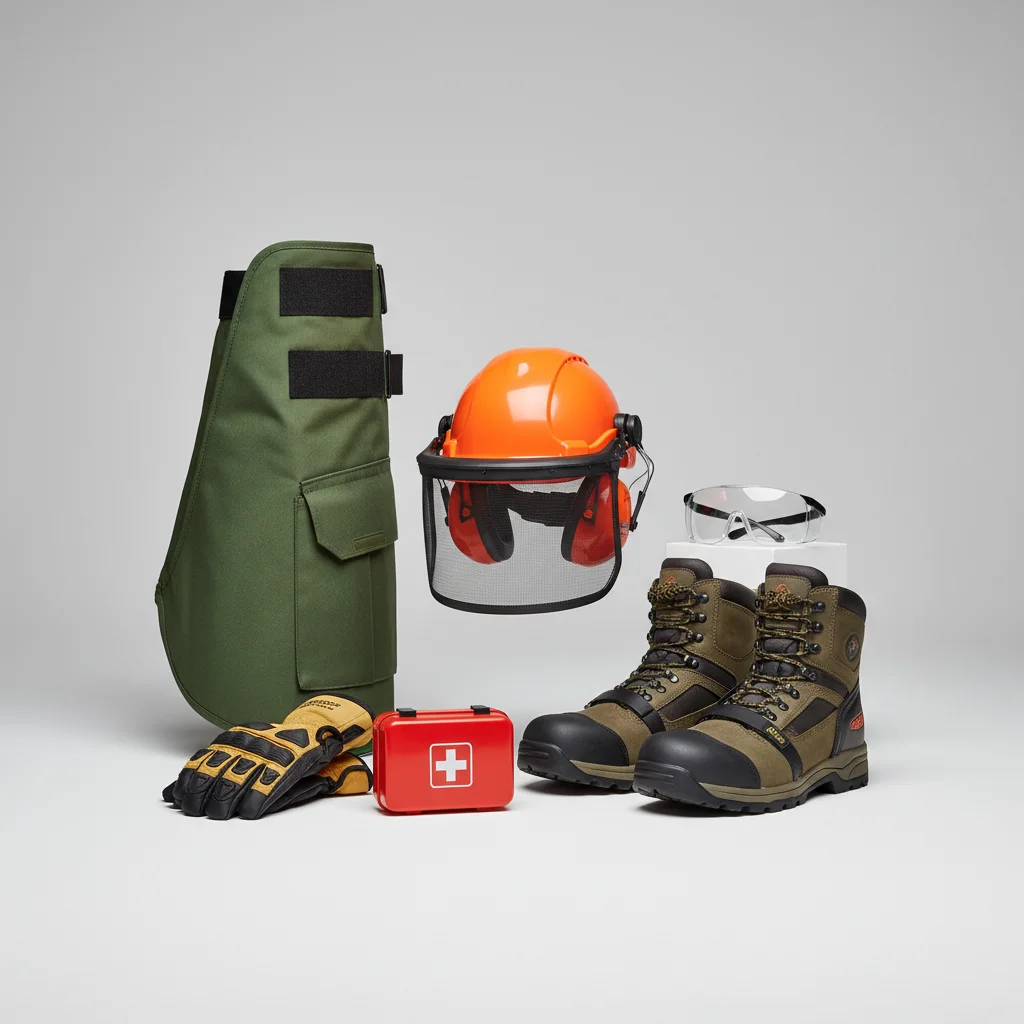
When operating a chainsaw, prioritizing safety is paramount. There are five essential pieces of chainsaw safety gear that every user, from casual homeowner to professional logger, should always wear to prevent serious injury. These include a helmet with face shield and hearing protection, safety glasses, chainsaw chaps or pants, heavy-duty gloves, and steel-toed boots. Neglecting any of these items significantly increases the risk of accidents, which can range from minor cuts to life-threatening injuries.
Why a Chainsaw Helmet is Non-Negotiable
A chainsaw helmet is more than just head protection; it’s a multi-functional safety device. It typically integrates a hard hat to protect against falling branches, a mesh or polycarbonate face shield to guard against flying debris and kickback, and earmuffs for hearing protection. The noise level produced by chainsaws can cause permanent hearing damage over time, making integrated hearing protection crucial. Always ensure your helmet fits snugly and all components are in good condition before starting your saw.
Chainsaw Chaps and Pants: Your First Line of Defense
Chainsaw chaps or pants are arguably the most critical piece of personal protective equipment (PPE) for the lower body. They are designed with multiple layers of ballistic nylon or other protective fibers that, upon contact with a moving chain, are pulled into the sprocket, jamming the saw and stopping the chain almost instantly. This can prevent severe lacerations to the legs. It’s vital to choose chaps or pants that meet safety standards, such as ASTM F1897 for North America or EN 381-5 for Europe, and to ensure they cover your legs from hip to ankle.
Protecting Your Hands and Feet
|
Our Picks for the Best Chain Saw in 2026
As an Amazon Associate I earn from qualifying purchases.
|
||
| Num | Product | Action |
|---|---|---|
| 1 | Makita-UC4051A Chain Saw, Electric, 16 in. Bar - Sliver |

|
| 2 | Stihl GTA 26 Wood Cutter with AS 2 Battery and Charger AL 1, Battery Operated |
|
| 3 | Greenworks 24V 12" Brushless Cordless Compact Chainsaw (Great For Storm Clean-Up, Pruning, and Firewood / 125+ Compatible Tools), Tool Only |
|
| 4 | Husqvarna 450 Rancher 20 Inch Gas Chainsaw, 50.2-cc 3.2-HP, 2-Cycle X-Torq Engine, For Tree Pruning, Yard Cleanups and Firewood Cutting, 970613120 |
|
| 5 | Greenworks 80V 16" Brushless Cordless Chainsaw (Great For Tree Felling, Limbing, Pruning, and Firewood / 75+ Compatible Tools), Tool Only |
|
| 6 | STIHL Battery Operated Chainsaw with Sound Kids Toy |
|
| 7 | Greenworks 24V 10" Cordless Compact Chainsaw (Great For Storm Clean-Up, Pruning, and Firewood), 2.0Ah Battery and Charger Included |
|
| 8 | Oregon 3-Pack Chainsaw Chain 3/8" LP Pitch, .050" (1.3 mm) Gauge for 18" (45cm) Bar, 62 Drive Links – Low-kickback Replacement Saw Chain, Fits Husqvarna, Echo, Poulan, Homelite, Craftsman and more |
|
| 9 | Makita XCU03PT1 18V X2 (36V) LXT Lithium-Ion Brushless Cordless 14" Chain Saw Kit with, 4 Batteries (5.0Ah) |
|
| 10 | Gas Chainsaw 62CC 20 Inch Professional Powerful 2-Stroke Engine for Tree Cutting, Logging and Firewood with Chain Brake |
|
Heavy-duty work gloves are essential for maintaining a firm grip on the chainsaw, reducing vibration, and protecting your hands from cuts, splinters, and abrasions. Look for gloves with good dexterity and reinforced palms. For foot protection, steel-toed boots are a must. They shield your feet from falling logs, dropped tools, and the chainsaw itself in case of an accidental slip. Ensure your boots have good ankle support and non-slip soles for stability on uneven terrain.
The Importance of Safety Glasses and Proper Fit
Even with a face shield, safety glasses are a critical backup. Fine sawdust and small chips can sometimes bypass a face shield, and glasses provide an extra layer of protection for your eyes. Choose glasses that are impact-resistant and have side shields. Beyond individual gear, ensuring all your safety equipment fits correctly is vital. Ill-fitting gear can be uncomfortable, distracting, and less effective. Take the time to adjust straps, ensure proper coverage, and replace any worn or damaged items immediately.
- Always inspect all safety gear for damage before each use.
- Ensure chainsaw chaps or pants meet current safety standards.
- Wear steel-toed boots with good ankle support.
- Never operate a chainsaw without a helmet, face shield, and hearing protection.
- Keep a first-aid kit readily accessible when working with chainsaws.
Where to Find Reliable Chainsaw Safety Gear
Investing in high-quality chainsaw safety gear is an investment in your personal well-being. You can find a wide range of certified safety equipment at specialized outdoor power equipment retailers and online stores. Look for brands known for their durability and adherence to safety standards. Remember, the cost of safety gear is minimal compared to the potential medical expenses and long-term consequences of a chainsaw injury.
Many manufacturers offer complete chainsaw safety kits that bundle essential items like helmets, chaps, and gloves, often at a more economical price than purchasing them individually. These kits are an excellent starting point for new chainsaw users or for those looking to upgrade their existing gear. Always read reviews and check product specifications to ensure the gear meets your specific needs and local safety regulations.
