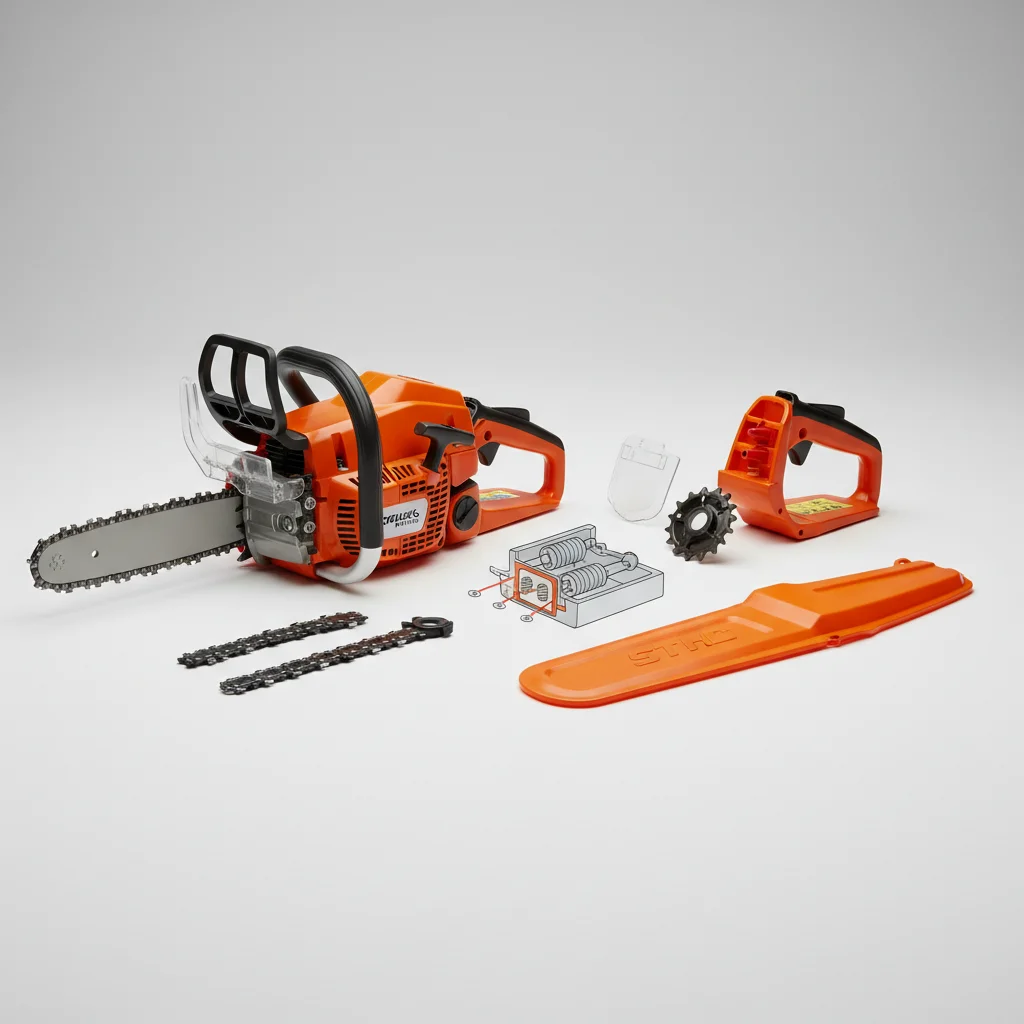
When purchasing a chainsaw, understanding its safety features is paramount to preventing accidents and ensuring a secure operating experience. There are at least five critical safety features you should always look for to protect yourself and those around you while cutting wood.
Understanding the Chain Brake Mechanism
The chain brake is arguably the most crucial safety feature on any chainsaw. It’s designed to stop the chain’s rotation almost instantaneously in the event of kickback, a sudden upward and backward motion of the saw. Most modern chainsaws feature an inertia-activated chain brake, which engages automatically when the saw experiences a sudden jolt. Always test the chain brake before each use to ensure it’s functioning correctly. A manual chain brake can also be engaged by pushing the handguard forward. For browse all chainsaw sales articles on this site.
The Importance of Anti-Vibration Systems
Prolonged exposure to chainsaw vibrations can lead to Hand-Arm Vibration Syndrome (HAVS), a debilitating condition. Anti-vibration systems are designed to reduce the amount of vibration transmitted from the engine and chain to the handles. These systems typically involve springs or rubber dampeners strategically placed between the engine and the handles. Look for models that explicitly mention advanced anti-vibration technology to minimize fatigue and long-term health risks during extended use.
Kickback Reduction Features Explained
|
Our Picks for the Best Chain Saw in 2026
As an Amazon Associate I earn from qualifying purchases.
|
||
| Num | Product | Action |
|---|---|---|
| 1 | Makita-UC4051A Chain Saw, Electric, 16 in. Bar - Sliver |

|
| 2 | Oregon 3-Pack Chainsaw Chain 3/8" LP Pitch, .050" (1.3 mm) Gauge for 18" (45cm) Bar, 62 Drive Links – Low-kickback Replacement Saw Chain, Fits Husqvarna, Echo, Poulan, Homelite, Craftsman and more |
|
| 3 | Greenworks 24V 10" Cordless Compact Chainsaw (Great For Storm Clean-Up, Pruning, and Firewood), 2.0Ah Battery and Charger Included |
|
| 4 | Makita XCU03PT1 18V X2 (36V) LXT Lithium-Ion Brushless Cordless 14" Chain Saw Kit with, 4 Batteries (5.0Ah) |
|
| 5 | Husqvarna 450 Rancher 20 Inch Gas Chainsaw, 50.2-cc 3.2-HP, 2-Cycle X-Torq Engine, For Tree Pruning, Yard Cleanups and Firewood Cutting, 970613120 |
|
| 6 | STIHL Battery Operated Chainsaw with Sound Kids Toy |
|
| 7 | Gas Chainsaw 62CC 20 Inch Professional Powerful 2-Stroke Engine for Tree Cutting, Logging and Firewood with Chain Brake |
|
| 8 | Greenworks 24V 12" Brushless Cordless Compact Chainsaw (Great For Storm Clean-Up, Pruning, and Firewood / 125+ Compatible Tools), Tool Only |
|
| 9 | Stihl GTA 26 Wood Cutter with AS 2 Battery and Charger AL 1, Battery Operated |
|
| 10 | Greenworks 80V 16" Brushless Cordless Chainsaw (Great For Tree Felling, Limbing, Pruning, and Firewood / 75+ Compatible Tools), Tool Only |
|
Kickback is a significant hazard, and beyond the chain brake, several other features help mitigate its risk. These include low-kickback chains, which have ramped depth gauges and guard links to reduce the force of impact, and reduced-kickback guide bars, which have a small radius tip to lessen the chance of the chain catching. Always use the manufacturer-recommended chain and bar combination to ensure optimal kickback protection.
Throttle Lockout and Rear Hand Guard
The throttle lockout prevents accidental acceleration of the chainsaw. It’s a lever or button that must be depressed simultaneously with the throttle trigger to engage the chain. This simple mechanism ensures that the saw won’t unexpectedly rev up if the throttle is bumped. The rear hand guard, often integrated into the handle, protects your hand from the chain if it were to derail or break. It also provides a barrier against flying debris. Both features are standard on most chainsaws but are essential to verify.
Chain Catcher and Scabbard for Added Protection
A chain catcher is a small metal or plastic projection located near the base of the guide bar. Its purpose is to catch a broken or derailed chain, preventing it from whipping back towards the operator. While a rare occurrence, a chain breaking can be extremely dangerous, and the catcher provides a vital last line of defense. Additionally, always use a scabbard or guide bar cover when transporting or storing your chainsaw. This protects the chain from damage and prevents accidental contact with the sharp teeth.
- Always wear appropriate personal protective equipment (PPE), including a helmet, eye protection, hearing protection, gloves, and chainsaw chaps.
- Read your chainsaw’s owner’s manual thoroughly before operation.
- Never operate a chainsaw when fatigued or under the influence of substances.
- Maintain a firm grip with both hands on the chainsaw handles.
- Ensure a clear work area free of obstacles and bystanders.
