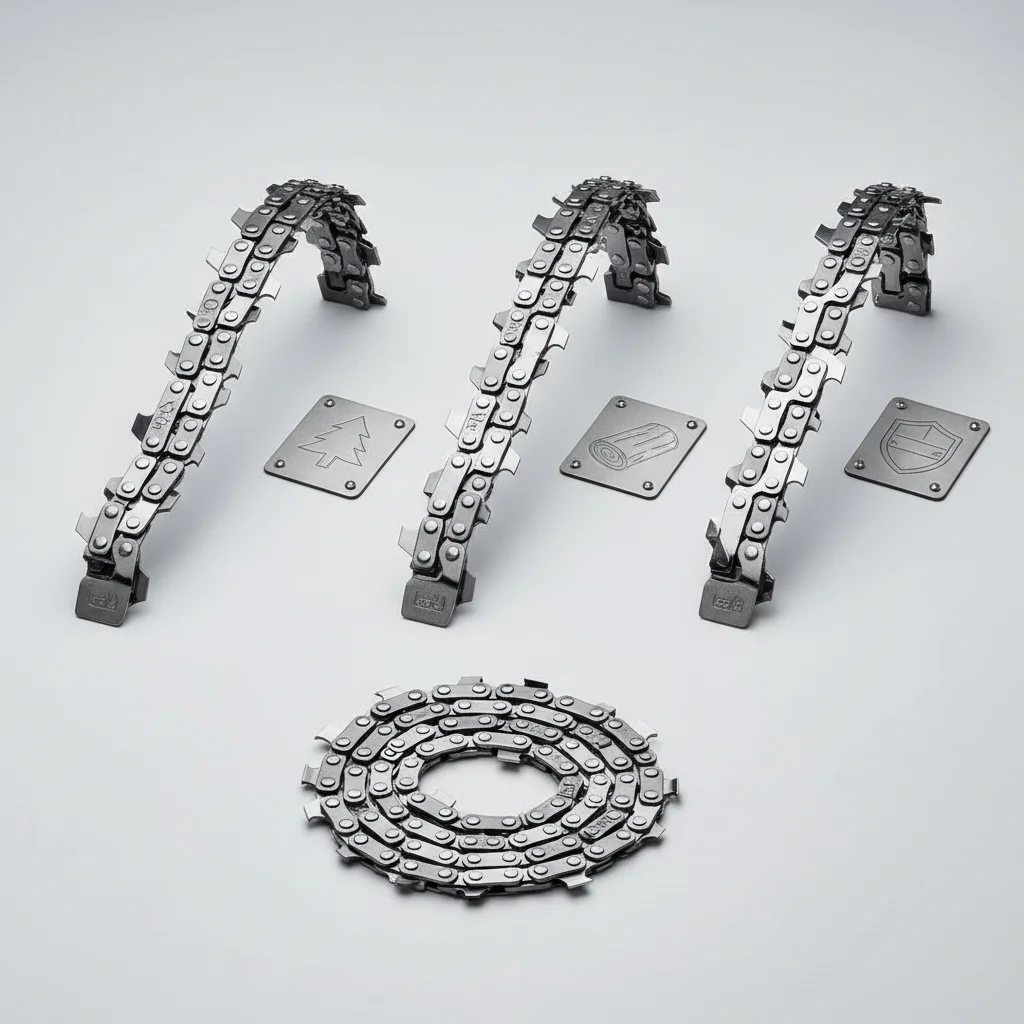
Understanding the different chainsaw chain types is crucial for optimizing your cutting performance and ensuring safety. There are primarily three main types of chainsaw chains: full chisel, semi-chisel, and low-profile (or chipper) chains. Each type is designed for specific cutting tasks and wood conditions, offering distinct advantages in terms of speed, durability, and kickback reduction. Selecting the correct chain will significantly impact the efficiency and ease of your work, whether you’re felling trees, limbing branches, or cutting firewood.
Full Chisel Chains: Aggressive Cutting Power
Full chisel chains are characterized by their sharp, square-cornered cutters. These chains are designed for fast, aggressive cutting in clean wood, making them a favorite among professional loggers and those working with large timber. The sharp corners slice through wood fibers with minimal resistance, allowing for rapid material removal. However, their aggressive nature also means they are more prone to kickback and can dull quickly if they encounter dirt or debris. They require precise sharpening and are best suited for experienced users who prioritize speed and power. For chainsaw sales buying guides on this site.
Semi-Chisel Chains: Balancing Speed and Durability
Semi-chisel chains feature cutters with rounded working corners. This design makes them less aggressive than full chisel chains but significantly more forgiving. They maintain their sharpness longer, especially when cutting through dirty or frozen wood, and are less prone to kickback. Semi-chisel chains are an excellent all-around choice for homeowners and occasional users, offering a good balance between cutting speed and durability. They are easier to sharpen and maintain, making them a popular option for a wide range of tasks, from felling small trees to bucking firewood.
Low-Profile Chains: Safety First for Homeowners
|
Our Picks for the Best Chain Saw in 2026
As an Amazon Associate I earn from qualifying purchases.
|
||
| Num | Product | Action |
|---|---|---|
| 1 | Greenworks 24V 12" Brushless Cordless Compact Chainsaw (Great For Storm Clean-Up, Pruning, and Firewood / 125+ Compatible Tools), Tool Only |

|
| 2 | Makita XCU03PT1 18V X2 (36V) LXT Lithium-Ion Brushless Cordless 14" Chain Saw Kit with, 4 Batteries (5.0Ah) |
|
| 3 | Greenworks 24V 10" Cordless Compact Chainsaw (Great For Storm Clean-Up, Pruning, and Firewood), 2.0Ah Battery and Charger Included |
|
| 4 | Greenworks 80V 16" Brushless Cordless Chainsaw (Great For Tree Felling, Limbing, Pruning, and Firewood / 75+ Compatible Tools), Tool Only |
|
| 5 | Makita-UC4051A Chain Saw, Electric, 16 in. Bar - Sliver |
|
| 6 | Gas Chainsaw 62CC 20 Inch Professional Powerful 2-Stroke Engine for Tree Cutting, Logging and Firewood with Chain Brake |
|
| 7 | Husqvarna 450 Rancher 20 Inch Gas Chainsaw, 50.2-cc 3.2-HP, 2-Cycle X-Torq Engine, For Tree Pruning, Yard Cleanups and Firewood Cutting, 970613120 |
|
| 8 | STIHL Battery Operated Chainsaw with Sound Kids Toy |
|
| 9 | Stihl GTA 26 Wood Cutter with AS 2 Battery and Charger AL 1, Battery Operated |
|
| 10 | Oregon 3-Pack Chainsaw Chain 3/8" LP Pitch, .050" (1.3 mm) Gauge for 18" (45cm) Bar, 62 Drive Links – Low-kickback Replacement Saw Chain, Fits Husqvarna, Echo, Poulan, Homelite, Craftsman and more |
|
Low-profile chains, also known as chipper chains, are designed with a smaller, more rounded cutter profile and often incorporate additional safety features to reduce kickback. These chains are typically found on smaller chainsaws and are ideal for homeowners, beginners, and those performing light-duty tasks like pruning and limbing. While they cut slower than full or semi-chisel chains, their enhanced safety features make them a preferred choice for users who prioritize safety above all else. They are also very tolerant of dirty wood and are easy to sharpen.
- Full Chisel: Best for fast, clean cuts in large, clean wood. High kickback risk.
- Semi-Chisel: Versatile, good for various wood types, more durable, less kickback.
- Low-Profile: Safest option, ideal for light tasks and beginners, reduced kickback.
- Carbide-Tipped: Extremely durable for abrasive conditions, but expensive.
- Rip Cut: Specifically designed for milling lumber with a smooth finish.
Specialty Chains: Beyond the Basics
Beyond the three primary types, there are also specialty chainsaw chains designed for unique applications. Carbide-tipped chains, for example, feature tungsten carbide inserts on the cutters, making them exceptionally durable and resistant to dulling in abrasive conditions like cutting through dirty wood, roots, or even masonry. While more expensive, they offer extended life and reduced sharpening frequency in tough environments. Another specialty chain is the rip cut chain, which is specifically designed for milling lumber. These chains have a different sharpening angle that allows them to cut parallel to the wood grain, producing smoother, more consistent planks.
Choosing the Right Chain for Your Task
When selecting a chainsaw chain, consider the type of wood you’ll be cutting, the specific task, and your experience level. For heavy-duty felling and bucking in clean wood, a full chisel chain will offer the fastest performance. For general use and mixed conditions, a semi-chisel chain provides a reliable balance of speed and durability. If safety is your top priority, especially for light pruning or if you’re a novice, a low-profile chain is the best choice. Always consult your chainsaw’s manual for recommended chain types and sizes, and ensure the chain matches your bar length and gauge. Proper chain selection not only improves efficiency but also significantly enhances safety during operation.

I’ve always used full chisel chains for felling trees and larger timber, and this breakdown really confirmed why. The aggressive cutting power is unmatched, especially when I’m dealing with clean wood. It makes such a difference in how quickly I can get through a job. Definitely the way to go for serious cutting.
Understanding the different chainsaw chain types has been a game-changer for my efficiency. I used to just grab whatever was on sale, but now I know to match the chain to the task. The explanation of how each type impacts cutting performance was really clear. My work is much easier now.
I found the info on semi-chisel chains super helpful. I mostly cut firewood and limb branches, so the durability and reduced kickback are big for me. It’s a good balance between speed and not having to sharpen it every five minutes. My old chain was always getting dull, but this type holds up much better.
I tried a low-profile chain for some lighter work around the yard, thinking the kickback reduction would be great. While it was safer, I found it a bit slow for even smaller tasks. It’s fine for really light stuff, but I wish it had a little more oomph. Next time I might go for a semi-chisel instead.