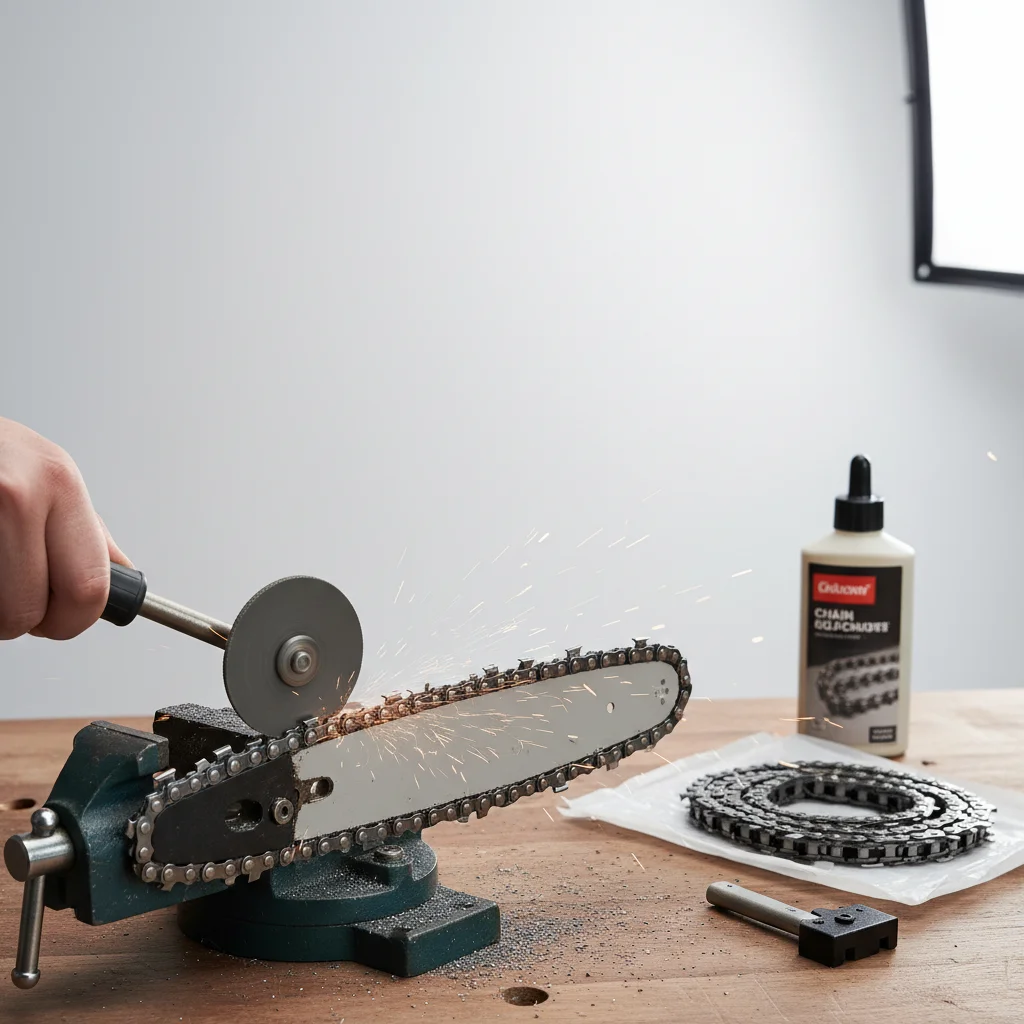
Knowing how often to sharpen your chainsaw chain is crucial for efficient and safe operation. Generally, you should sharpen your chainsaw chain every time you refuel, or after about 3-5 hours of continuous cutting. However, this can vary significantly based on the type of wood you’re cutting, the presence of dirt or debris, and the specific model of your chainsaw. A dull chain not only makes cutting harder but also increases the risk of kickback and premature wear on your saw.
Signs Your Chainsaw Chain Needs Sharpening
Several clear indicators signal that your chainsaw chain is no longer performing optimally and requires sharpening. If your saw is producing fine sawdust instead of coarse chips, it’s a strong sign of a dull chain. Another common symptom is the need to apply excessive pressure to make a cut, which can be exhausting and dangerous. The saw might also pull to one side, indicating unevenly sharpened teeth. Listen for changes in the saw’s sound; a dull chain will often cause the engine to strain more.
Additionally, if the chain is smoking excessively during normal cutting, or if the cuts are ragged and splintered, it’s definitely time for a touch-up. Regularly inspecting your chain for damaged or worn teeth will help you stay ahead of these issues and maintain peak performance.
Factors Influencing Sharpening Frequency
The type of material you’re cutting is a primary factor in how often your chain needs sharpening. Cutting softwoods like pine or cedar will dull your chain much slower than hardwoods such as oak or maple. Even more detrimental is cutting through dirty wood, which can contain embedded soil, sand, or small stones. These abrasive materials can dull a chain almost instantly. Always inspect logs for debris before cutting.
The condition of your chain itself also plays a role. A new, well-maintained chain will hold its edge longer than an older, worn chain. Proper lubrication and tension also contribute to chain longevity and sharpness retention. Consider investing in a high-quality chain for better durability.
Tools and Techniques for Effective Sharpening
|
Our Picks for the Best Chain Saw in 2026
As an Amazon Associate I earn from qualifying purchases.
|
||
| Num | Product | Action |
|---|---|---|
| 1 | Greenworks 24V 12" Brushless Cordless Compact Chainsaw (Great For Storm Clean-Up, Pruning, and Firewood / 125+ Compatible Tools), Tool Only |

|
| 2 | Gas Chainsaw 62CC 20 Inch Professional Powerful 2-Stroke Engine for Tree Cutting, Logging and Firewood with Chain Brake |
|
| 3 | Husqvarna 450 Rancher 20 Inch Gas Chainsaw, 50.2-cc 3.2-HP, 2-Cycle X-Torq Engine, For Tree Pruning, Yard Cleanups and Firewood Cutting, 970613120 |
|
| 4 | Makita-UC4051A Chain Saw, Electric, 16 in. Bar - Sliver |
|
| 5 | Stihl GTA 26 Wood Cutter with AS 2 Battery and Charger AL 1, Battery Operated |
|
| 6 | Makita XCU03PT1 18V X2 (36V) LXT Lithium-Ion Brushless Cordless 14" Chain Saw Kit with, 4 Batteries (5.0Ah) |
|
| 7 | STIHL Battery Operated Chainsaw with Sound Kids Toy |
|
| 8 | Oregon 3-Pack Chainsaw Chain 3/8" LP Pitch, .050" (1.3 mm) Gauge for 18" (45cm) Bar, 62 Drive Links – Low-kickback Replacement Saw Chain, Fits Husqvarna, Echo, Poulan, Homelite, Craftsman and more |
|
| 9 | Greenworks 80V 16" Brushless Cordless Chainsaw (Great For Tree Felling, Limbing, Pruning, and Firewood / 75+ Compatible Tools), Tool Only |
|
| 10 | Greenworks 24V 10" Cordless Compact Chainsaw (Great For Storm Clean-Up, Pruning, and Firewood), 2.0Ah Battery and Charger Included |
|
To effectively sharpen your chainsaw chain, you’ll need a few essential tools. A round file of the correct diameter for your chain’s pitch is paramount. You’ll also need a flat file for depth gauges, a file guide to maintain the correct angle, and a vice to secure the bar. Always refer to your chainsaw’s manual for the precise filing angles and depths recommended for your specific chain.
When sharpening, ensure you file each tooth with consistent strokes and pressure, always filing from the inside out. Pay close attention to the depth gauges, as these control how much wood each tooth can take. Incorrectly filed depth gauges can lead to inefficient cutting or increased kickback risk.
Maintaining Chain Sharpness Between Sharpenings
Beyond regular sharpening, several practices can help extend the life of your chain’s edge. Avoid cutting into the ground or any metal objects. Even a brief contact with concrete or a rock can severely dull or damage your chain. Always ensure your chain is properly tensioned; a loose chain can cause excessive wear and dulling. Keep your chain well-lubricated with quality bar oil, as this reduces friction and heat buildup, both of which contribute to dulling.
When not in use, store your chainsaw in a clean, dry place to prevent rust and damage to the chain. Consider using a bar cover to protect the chain from accidental contact with abrasive surfaces.
When to Replace Your Chainsaw Chain
While sharpening can restore your chain’s edge many times, there comes a point when replacement is necessary. You should consider replacing your chain if:
- The cutting teeth are too short to be effectively sharpened.
- There are visible cracks or damage to the links.
- The rivets are loose, causing excessive play in the chain.
- The depth gauges are worn down beyond the recommended limits.
- The chain consistently dulls very quickly after sharpening, indicating metal fatigue.
A new chain will always provide the best cutting performance and safety. Don’t compromise on safety by using an overly worn chain.
