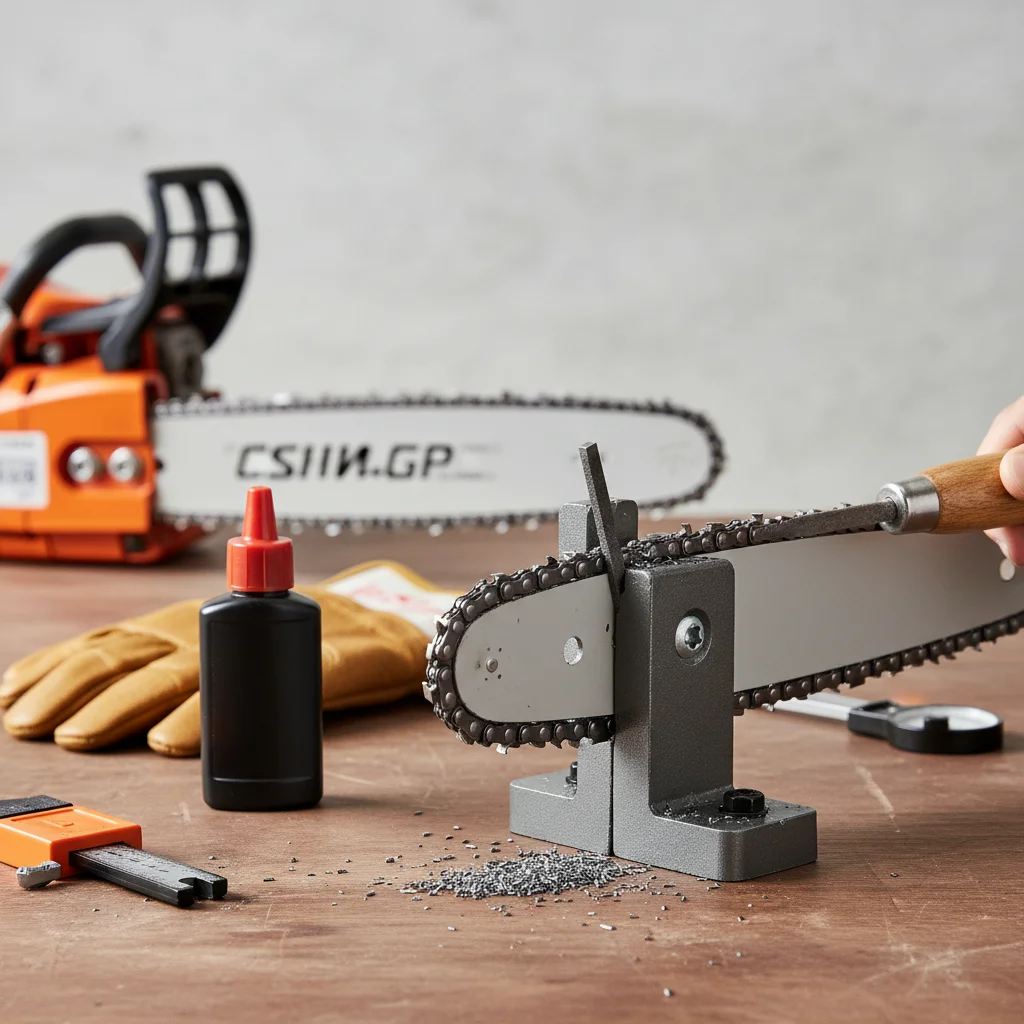
Sharpening your chainsaw chain is a crucial maintenance task that can significantly improve cutting performance and extend the life of your saw. A dull chain not only makes cutting harder but can also be dangerous, leading to kickback and inefficient operation. This DIY guide will walk beginners through the essential steps to sharpen a chainsaw chain effectively, ensuring you get clean, precise cuts every time.
Why Sharpen Your Chainsaw Chain?
A sharp chainsaw chain cuts through wood with minimal effort, producing fine, consistent wood chips. When your chain is dull, you’ll notice it struggles to cut, creating sawdust instead of chips, and requiring more force to push the saw. This not only puts strain on you but also on the chainsaw’s engine, potentially leading to premature wear and tear. Regular sharpening maintains the chain’s efficiency and safety.
Essential Tools for Chainsaw Chain Sharpening
Before you begin, gather the right tools. You’ll need a round file that matches the size of your chain’s cutters (check your chainsaw manual or the chain itself for this specification), a flat file for depth gauges, a filing guide or holder to maintain the correct angle, and a vice to secure the chainsaw bar. Safety gloves are also recommended to protect your hands.
- Round file (correct size for your chain)
- Flat file
- Filing guide or holder
- Bench vice or bar clamp
- Safety gloves
Step-by-Step Sharpening Process
|
Our Picks for the Best Chain Saw in 2026
As an Amazon Associate I earn from qualifying purchases.
|
||
| Num | Product | Action |
|---|---|---|
| 1 | Greenworks 24V 12" Brushless Cordless Compact Chainsaw (Great For Storm Clean-Up, Pruning, and Firewood / 125+ Compatible Tools), Tool Only |

|
| 2 | Stihl GTA 26 Wood Cutter with AS 2 Battery and Charger AL 1, Battery Operated |
|
| 3 | Greenworks 24V 10" Cordless Compact Chainsaw (Great For Storm Clean-Up, Pruning, and Firewood), 2.0Ah Battery and Charger Included |
|
| 4 | Greenworks 80V 16" Brushless Cordless Chainsaw (Great For Tree Felling, Limbing, Pruning, and Firewood / 75+ Compatible Tools), Tool Only |
|
| 5 | Husqvarna 450 Rancher 20 Inch Gas Chainsaw, 50.2-cc 3.2-HP, 2-Cycle X-Torq Engine, For Tree Pruning, Yard Cleanups and Firewood Cutting, 970613120 |
|
| 6 | Gas Chainsaw 62CC 20 Inch Professional Powerful 2-Stroke Engine for Tree Cutting, Logging and Firewood with Chain Brake |
|
| 7 | Oregon 3-Pack Chainsaw Chain 3/8" LP Pitch, .050" (1.3 mm) Gauge for 18" (45cm) Bar, 62 Drive Links – Low-kickback Replacement Saw Chain, Fits Husqvarna, Echo, Poulan, Homelite, Craftsman and more |
|
| 8 | Makita-UC4051A Chain Saw, Electric, 16 in. Bar - Sliver |
|
| 9 | Makita XCU03PT1 18V X2 (36V) LXT Lithium-Ion Brushless Cordless 14" Chain Saw Kit with, 4 Batteries (5.0Ah) |
|
| 10 | STIHL Battery Operated Chainsaw with Sound Kids Toy |
|
First, secure your chainsaw firmly in a vice, ensuring the chain is taut. Identify the shortest cutter on your chain, as this will be your starting point and the reference for all other cutters. Using your round file and filing guide, place the file in the cutter at the correct angle (usually 25-35 degrees, again, consult your manual). File in one direction, away from you, with smooth, even strokes. Apply consistent pressure and count your strokes for each tooth to ensure uniformity. Typically, 3-5 strokes are sufficient for a moderately dull chain.
After sharpening all the cutters on one side, flip the chainsaw and repeat the process for the cutters facing the opposite direction. Remember to maintain the same number of strokes for each tooth. Once all cutters are sharp, check the depth gauges. These small protrusions in front of each cutter determine how much wood the cutter can take. If they are too high, the chain won’t cut effectively. Use your flat file and depth gauge tool to file them down to the correct height, being careful not to remove too much material.
Tips for Maintaining a Sharp Chain
To keep your chainsaw chain sharp for longer, avoid cutting into dirt, rocks, or metal, as these can dull the chain almost instantly. Always ensure your chain is properly tensioned before use. A loose chain can jump off the bar or wear unevenly. After each use, clean your chainsaw and chain to remove sap and debris, which can build up and affect performance. Consider having a spare chain on hand so you can swap it out when one gets dull, allowing you to sharpen the dull chain at your leisure.Investing in a good quality sharpening kit can make the process much easier and more precise.
