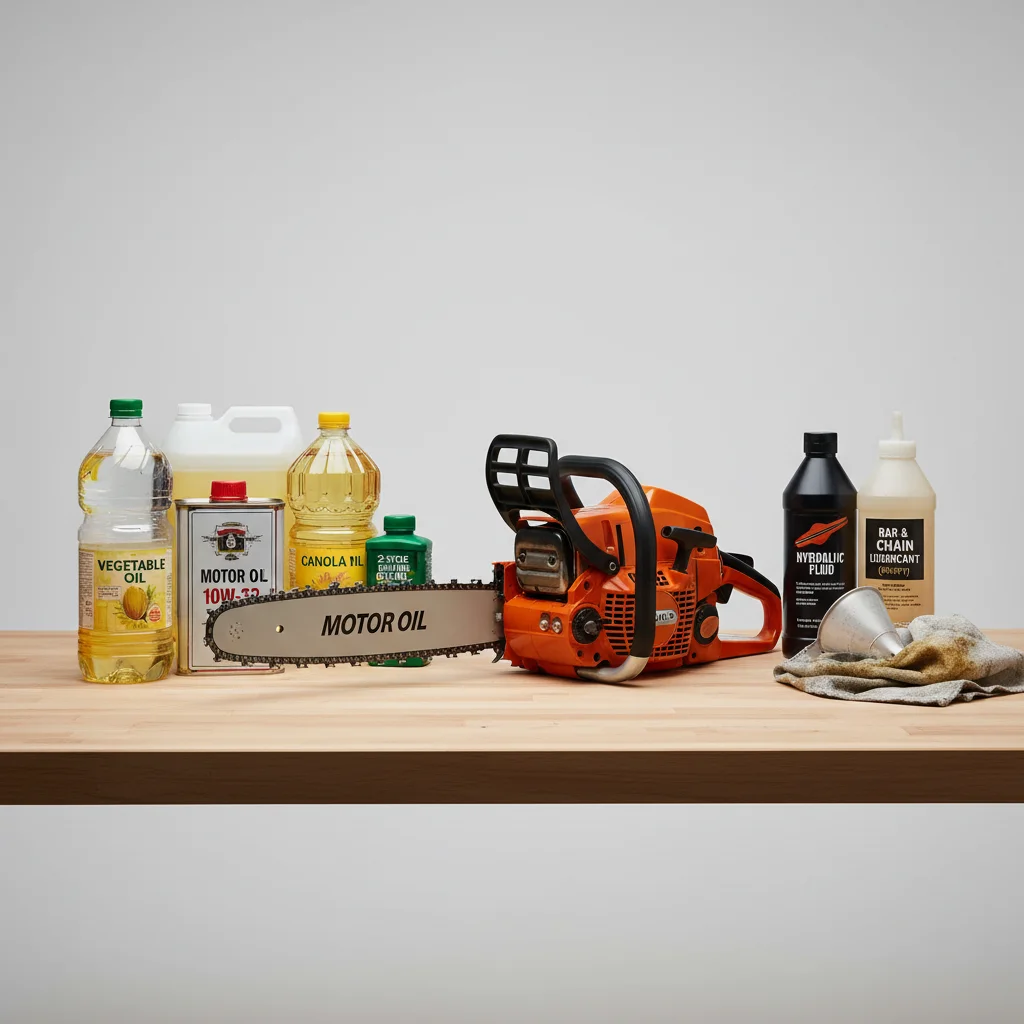
When you’re in the middle of a project and realize you’re out of chainsaw bar oil, finding a suitable alternative can save your day. While dedicated bar oil is always recommended for optimal performance and chain longevity, there are three common household lubricants you can use as a temporary substitute to keep your chainsaw running smoothly and prevent damage.
Understanding Why Bar Oil is Crucial
Chainsaw bar oil serves a vital purpose: it lubricates the chain and guide bar, reducing friction and heat generated during cutting. This lubrication prevents premature wear of the chain and bar, ensures smooth operation, and helps to dissipate heat, which can otherwise lead to stretching and damage. Using the correct viscosity of oil is important, as it needs to adhere to the chain as it spins at high speeds.
Temporary Alternatives for Chainsaw Bar Oil
If you’re in a bind, certain oils can provide temporary lubrication. The key is to choose an oil that is thick enough to stick to the chain and offers some level of lubrication. Remember, these are short-term solutions only.
- Vegetable Oil: Common cooking oils like canola or vegetable oil can be used for very light, temporary tasks. They are biodegradable, which is a plus for environmental concerns, but they break down quickly under heat and offer less protection than petroleum-based oils.
- Motor Oil (New, Unused): New motor oil, particularly 10W-30 or 10W-40, can serve as a temporary substitute. It has good lubricating properties and can withstand some heat. However, it’s not designed to stick to the chain as effectively as bar oil, and its environmental impact is higher.
- Hydraulic Fluid: If you have hydraulic fluid on hand, it can also work as a temporary bar oil. It’s designed for lubrication under pressure and heat, making it a decent short-term option. Like motor oil, it’s not formulated for chain adhesion.
Why Dedicated Bar Oil is Always Best
|
Our Picks for the Best Chain Saw in 2026
As an Amazon Associate I earn from qualifying purchases.
|
||
| Num | Product | Action |
|---|---|---|
| 1 | STIHL Battery Operated Chainsaw with Sound Kids Toy |

|
| 2 | Makita XCU03PT1 18V X2 (36V) LXT Lithium-Ion Brushless Cordless 14" Chain Saw Kit with, 4 Batteries (5.0Ah) |
|
| 3 | Oregon 3-Pack Chainsaw Chain 3/8" LP Pitch, .050" (1.3 mm) Gauge for 18" (45cm) Bar, 62 Drive Links – Low-kickback Replacement Saw Chain, Fits Husqvarna, Echo, Poulan, Homelite, Craftsman and more |
|
| 4 | Gas Chainsaw 62CC 20 Inch Professional Powerful 2-Stroke Engine for Tree Cutting, Logging and Firewood with Chain Brake |
|
| 5 | Greenworks 24V 10" Cordless Compact Chainsaw (Great For Storm Clean-Up, Pruning, and Firewood), 2.0Ah Battery and Charger Included |
|
| 6 | Greenworks 80V 16" Brushless Cordless Chainsaw (Great For Tree Felling, Limbing, Pruning, and Firewood / 75+ Compatible Tools), Tool Only |
|
| 7 | Makita-UC4051A Chain Saw, Electric, 16 in. Bar - Sliver |
|
| 8 | Stihl GTA 26 Wood Cutter with AS 2 Battery and Charger AL 1, Battery Operated |
|
| 9 | Greenworks 24V 12" Brushless Cordless Compact Chainsaw (Great For Storm Clean-Up, Pruning, and Firewood / 125+ Compatible Tools), Tool Only |
|
| 10 | Husqvarna 450 Rancher 20 Inch Gas Chainsaw, 50.2-cc 3.2-HP, 2-Cycle X-Torq Engine, For Tree Pruning, Yard Cleanups and Firewood Cutting, 970613120 |
|
Chainsaw bar oil is specifically formulated with tackifiers that help it cling to the chain, even at high speeds. It also contains anti-wear additives and rust inhibitors that protect the metal components. These properties are not fully replicated by general-purpose oils, which means using alternatives can lead to increased wear, more frequent chain adjustments, and a shorter lifespan for your bar and chain over time. For serious work or prolonged use, always revert to a proper bar oil.
When to Avoid Alternatives Entirely
There are situations where using an alternative is simply not worth the risk. If you are undertaking a large project, cutting dense hardwoods, or operating your chainsaw for extended periods, the heat and friction generated will quickly break down any substitute oil. In these cases, waiting to get proper bar oil is the safest and most economical choice in the long run. Using an inadequate lubricant can lead to costly damage to your chainsaw’s bar and chain, potentially requiring replacement parts sooner than expected.
For reliable performance and to extend the life of your chainsaw, always use a high-quality, dedicated bar oil. You can find excellent options at most hardware stores or online.Investing in a good bar oil is a small cost compared to replacing a worn-out bar and chain.
