Navigating the challenges of outdoor work often brings unexpected conditions, and cutting wood when it’s wet is a common scenario. Whether it’s freshly fallen timber saturated with sap or logs dampened by rain, the question of using a battery chainsaw safely and effectively arises for many homeowners and professionals. This guide dives deep into the capabilities and limitations of battery-powered chainsaws when confronted with wet wood, offering expert advice to ensure both efficiency and paramount safety. We’ll explore the unique characteristics of wet wood, the specific considerations for electric tools, and crucial safety protocols to keep you protected while tackling the task.
Understanding Chainsaws and Wet Wood
Wet wood, whether “green” from a recently felled tree or simply soaked by rain, behaves differently under the saw than seasoned, dry timber. Green wood, in particular, contains a high moisture content, often over 50%. This moisture affects how the chainsaw’s chain interacts with the wood fibers, creating a unique cutting experience. While some might assume wet wood is harder to cut, its moisture can actually act as a natural lubricant, potentially reducing friction between the chain and the wood. However, this natural lubrication comes with its own set of challenges, particularly concerning sawdust management.
Chainsaws, regardless of their power source, operate on the principle of a rapidly moving chain with sharp teeth tearing through wood fibers. The motor drives the chain around a guide bar, and oil continuously lubricates the chain and bar to minimize friction and prevent overheating. When cutting wet wood, the higher moisture content causes sawdust to become damp and clumpy, adhering more readily to the chain, bar, and sprocket. This accumulation can impede the chain’s movement, reduce cutting efficiency, and necessitate more frequent cleaning during operation. Historically, gas-powered chainsaws have been the go-to for many in adverse conditions due to their robust power and less direct vulnerability to water ingress compared to corded electric models. However, battery chainsaws have significantly advanced, offering impressive power and convenience, making them a strong contender for various tasks, including cutting wet wood.
The Specifics of Battery Chainsaws and Wet Wood
Battery-powered chainsaws offer a compelling blend of portability, lower noise, and reduced emissions, making them increasingly popular. However, their electrical nature introduces particular considerations when operating in damp or wet environments. Understanding these specific dynamics is key to safe and effective use.
Performance Considerations
When a battery chainsaw encounters wet wood, the primary performance challenge stems from sawdust management. Unlike dry sawdust that’s easily expelled, wet sawdust tends to clump and stick to the chain, the guide bar, and the drive sprocket. This buildup can clog the chain’s grooves, reduce its cutting efficacy, and increase friction. Consequently, you might experience a noticeable slowdown in cutting speed, requiring more effort from the saw and, by extension, consuming battery power more rapidly. Regular cleaning of the chain and bar becomes paramount during operation to maintain optimal performance.
Furthermore, while the moisture in wet wood can act as a lubricant, it can also dilute the chainsaw’s bar and chain oil. This makes consistent and adequate lubrication even more critical to prevent premature wear on the chain and bar. A dull chain exacerbates all these issues, forcing the motor to work harder and diminishing battery life even further. Therefore, ensuring your chain is always impeccably sharp and correctly tensioned is non-negotiable when dealing with wet wood.
Safety Concerns
The most significant safety concern when using a battery chainsaw in wet conditions revolves around its electrical components. While battery chainsaws eliminate the risk of cutting a power cord, they are still electrical devices. Direct exposure to heavy rain, standing water, or even extreme humidity can pose risks. Water ingress into the motor housing or battery compartment can lead to short circuits, potentially damaging the tool, the battery, or, in severe cases, presenting an electrocution hazard. Most modern battery chainsaws are designed with some degree of weather resistance, but they are generally not waterproof.
Beyond the electrical risks, the environment itself becomes a major safety factor. Wet wood surfaces are inherently more slippery, increasing the chance of kickback, where the chain forcefully recoils towards the operator. The ground around wet wood can also be slick, leading to slips and falls, which are incredibly dangerous when operating a powerful cutting tool. These environmental hazards apply to all types of chainsaws but warrant particular vigilance when using any power tool in damp conditions.
Advantages and Disadvantages
Battery chainsaws offer distinct advantages for certain wet wood cutting tasks. Their freedom from a power cord makes them safer than corded electric models in damp environments, as there’s no risk of cutting the cord or navigating it through puddles. They are also quieter and produce no exhaust fumes, making them more pleasant for extended use. However, their disadvantages include a finite battery life, which can be shortened when cutting denser or wetter wood due to increased motor strain. While powerful, some heavy-duty gas chainsaws may still offer superior raw power and run-time for extensive, professional-grade wet wood felling, though battery technology continues to close this gap rapidly.
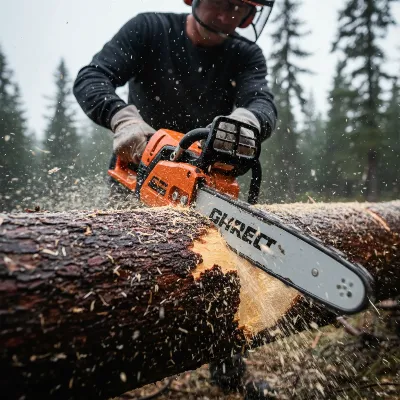 A battery chainsaw actively cutting through a wet log, with sawdust visibly clumping on the chain and guide bar
Essential Safety Practices When Cutting Wet Wood
Safety should always be the top priority when operating a chainsaw, and this becomes even more critical when working with wet wood or in damp conditions. The inherent risks associated with powerful cutting tools are magnified when environmental factors reduce grip, visibility, or stability.
Personal Protective Equipment (PPE)
Appropriate PPE is non-negotiable for chainsaw operation, especially in wet conditions. You must wear:
- A helmet with a face visor: Protects your head from falling branches and your face from flying debris and kickback. A visor is often preferable to safety glasses as it provides broader coverage and prevents rain or mist from obscuring vision.
- Chainsaw protective gloves: These should offer a firm grip, which is essential when handling a wet chainsaw or wet wood, and may include anti-vibration padding.
- Chainsaw protective chaps or trousers: Designed with multiple layers of protective material that can stop a moving chain, these are vital for leg protection.
- Non-slip, protective footwear: Steel-toed boots with excellent traction are crucial for maintaining balance on slippery, uneven ground.
- Water-resistant clothing: Helps keep you dry and comfortable, preventing distraction from the cold or damp, which can lead to mistakes.
Environmental Awareness
Before making the first cut, thoroughly assess your work area.
- Slippery ground conditions: Wet leaves, mud, and moss can be extremely slick. Identify stable footing and clear any obstacles that could cause a slip or fall.
- Avoid standing water or heavy rain: While battery chainsaws offer more flexibility than corded models, operating any electrical tool in heavy rain or near standing water significantly increases the risk of electrical hazard and damage to the tool. Choose drier conditions if possible.
- Clear the work area: Remove any loose branches, tools, or debris that could interfere with your movement or become a tripping hazard, especially when wet.
- Wind and falling hazards: Pay attention to wind direction and strength, as well as the stability of surrounding trees and branches, which might be more prone to falling when wet.
Chainsaw Handling and Technique
Correct chainsaw handling is fundamental to preventing accidents.
- Maintain a secure stance: Always keep both feet firmly planted, maintaining good balance. Adjust your position frequently to avoid overreaching.
- Be aware of kickback: The likelihood of kickback can increase with wet, knotty, or frozen wood. Always be alert to the upper quadrant of the guide bar’s tip, as this is the primary kickback zone. Never cut with the tip.
- Use proper cutting angles: Engage the chain at an appropriate angle to prevent pinching and ensure a clean cut. For wet wood, make relief cuts to release tension and avoid the bar getting pinched.
- Always cut below your waist: This improves control and reduces the risk of injury if the saw kicks back.
- Take breaks: Cutting wet wood can be more strenuous due to clumping sawdust and slippery conditions. Take regular breaks to avoid fatigue, which can lead to errors.
Optimizing Your Battery Chainsaw for Wet Wood
To maximize efficiency and extend the life of your battery chainsaw when tackling wet wood, a proactive approach to maintenance and operation is essential.
Pre-Operation Checks
Before you begin, a thorough check ensures your chainsaw is ready for the task:
- Battery fully charged: Cutting wet wood can be more demanding, potentially drawing more power and draining the battery faster. Start with a full charge, and have spare batteries ready.
- Chain tension: A properly tensioned chain is critical for safety and performance. While some advise a slight loosening for wet wood to prevent binding, always consult your chainsaw’s manual for specific recommendations. An overly loose chain can derail, while an overly tight one can strain the motor.
- Chain oil reservoir full: Ensure your bar and chain oil reservoir is topped up with good quality oil. The natural lubricating effect of water might be present, but consistent oil flow is still vital to combat friction and wash away damp sawdust.
- Bar and chain clean: Start with a clean bar and chain, free of any dried sawdust or debris from previous tasks.
During Operation
Managing your chainsaw effectively while cutting wet wood will significantly impact your experience:
- Frequent cleaning of bar and chain: Wet sawdust will accumulate quickly. Stop the saw regularly, remove the battery, and use a brush or scraper to clear the sawdust from the chain, guide bar groove, and sprocket area. This prevents binding and maintains cutting efficiency.
- Monitor chain lubrication: Keep an eye on the oil consumption. You might need to add oil more frequently than when cutting dry wood, as wet sawdust can interfere with proper oil distribution.
- Sharpen chain more often: A sharp chain is paramount. Wet wood can be tougher on the cutting edge due to the fibrous nature of green wood and the stickiness of damp sawdust. Sharpen your chain more frequently to maintain peak performance and reduce strain on the motor.
- Consider chain type: For wet or green wood, a semi-chisel or rounded-profile chain can be more effective. These chains tend to shed sawdust more easily and are less prone to dulling quickly than full-chisel chains when encountering tough, wet fibers.
 A person cleaning and oiling a chainsaw chain and guide bar, emphasizing maintenance for wet wood cutting
Post-Operation Care
After completing your task, proper care ensures your battery chainsaw remains in top condition:
- Thorough cleaning and drying: Remove the battery, then meticulously clean the entire chainsaw, paying special attention to the bar, chain, sprocket, and air vents. Wipe down all surfaces and allow the tool to air dry completely before storing.
- Remove battery, store separately: Always remove the battery from the chainsaw when not in use. Store the battery and charger in a dry, temperate environment, away from moisture and extreme temperatures, to prolong their lifespan.
- Inspect for damage: Take this opportunity to inspect the chain for any damage, the bar for burrs, and the overall tool for any wear or issues that might require attention before its next use.
Comparing Battery Chainsaws with Gas and Corded Electric for Wet Wood
Each type of chainsaw offers different advantages and disadvantages when cutting wet wood. Understanding these distinctions helps in choosing the best tool for the job.
| Feature | Battery Chainsaw | Gas Chainsaw | Corded Electric Chainsaw |
|---|---|---|---|
| Power Output | Excellent for most homeowner tasks, good for small to medium trees. Varies by voltage and brand. | High, suitable for heavy-duty professional tasks and large trees. | Moderate, sufficient for light to medium tasks. |
| Portability | Highly portable, no cords or fuel to mix. | Highly portable, no cords. Requires fuel. | Limited by cord length and power outlet. |
| Safety in Wet Conditions | Moderate. Less risk than corded, but sensitive to water ingress into battery/motor. | Good. Not affected by rain, but fuel/oil spills are a concern. | Low. High risk of electrocution if cord or tool gets wet. |
| Maintenance | Low. Regular chain sharpening/oiling, battery care. | High. Engine maintenance, fuel mixing, chain care. | Low. Regular chain sharpening/oiling. |
| Noise Level | Low, quiet operation. | High, requires hearing protection. | Moderate. |
| Run Time | Limited by battery capacity, can be reduced by dense/wet wood. | Long, limited only by fuel supply. | Continuous, as long as plugged in. |
| Emissions | Zero emissions. | High, produces exhaust fumes. | Zero emissions. |
For tasks involving only damp wood (not heavy rain), a battery chainsaw often strikes a good balance between safety, convenience, and performance. However, for prolonged work in genuinely wet or rainy conditions, or for very large, dense wet timber, a gas chainsaw might still be the more robust and safer option. Corded electric chainsaws are generally not recommended for anything beyond very lightly damp conditions due to the significant electrical hazard presented by the cord.
Choosing the Right Battery Chainsaw for Your Needs
Selecting the ideal battery chainsaw for your specific requirements involves a careful evaluation of several factors, ensuring it can handle wet wood when necessary while providing overall versatility.
Assess Your Typical Tasks
Consider the primary uses for your chainsaw:
- Light pruning and limbing: A compact, lightweight 12-inch or 14-inch bar model might be sufficient.
- Cutting firewood or felling small to medium trees (up to 12-16 inches in diameter): Look for more powerful models with 16-inch or 18-inch bars.
- Occasional heavy-duty work: Consider professional-grade battery saws with higher voltage (e.g., 80V) and longer bars, if you absolutely need a battery option for larger tasks.
Power and Bar Length
The power of a battery chainsaw is often indicated by its voltage (e.g., 40V, 60V, 80V) and amp-hours (Ah) of its battery. Higher voltage generally means more power, which is beneficial when cutting through denser or wetter wood without stalling. The bar length should match the diameter of the wood you typically cut; as a general rule, the bar should be at least two inches longer than the wood’s diameter for safe cutting.
Battery System
Consider the battery platform. Many manufacturers offer interchangeable batteries across a range of tools. If you already own other battery-powered tools from a particular brand, choosing a chainsaw from the same brand can save you money on additional batteries and chargers. Look at the charging time and available battery capacities (Ah) to ensure sufficient run-time for your tasks.
Ergonomics and Weight
Even a powerful chainsaw becomes a burden if it’s uncomfortable to use. Pay attention to the tool’s weight, balance, and handle design. For tasks involving wet wood, a well-balanced saw with ergonomic handles and anti-vibration features can significantly reduce user fatigue and improve control, which is critical on slippery surfaces.
Brand Reputation and Features
Invest in a chainsaw from a reputable brand known for quality and customer support. Look for safety features such as a chain brake (essential for stopping the chain instantly in case of kickback), hand guards, and tool-less chain tensioning systems, which make adjustments quicker and safer. Features like automatic oilers are also a significant convenience, especially when frequently cutting wet wood.
Conclusion
Cutting wet wood with a battery chainsaw can be done safely and effectively, provided you understand the specific challenges and adhere to strict safety protocols. While wet wood doesn’t inherently damage the chainsaw, it demands meticulous attention to chain sharpness, lubrication, and frequent cleaning to manage clumping sawdust. The primary safety concern shifts from the wood itself to the operating environment, where slippery conditions and the electrical nature of the tool necessitate heightened vigilance.
By prioritizing comprehensive personal protective equipment, maintaining environmental awareness, and optimizing your battery chainsaw through diligent pre-operation checks and post-use care, you can confidently tackle damp timber. Ultimately, battery chainsaws offer a versatile, quieter, and more convenient option for many users. Remember, safety isn’t just a feature of your chainsaw; it’s a practice.
Are you ready to embrace the power and convenience of battery chainsaws, even when facing a little rain?
Frequently Asked Questions
Is it harder to cut wet wood with a chainsaw?
Not necessarily harder, but different. Wet wood contains moisture that can act as a lubricant, potentially making it easier to cut than extremely dry wood. However, the main challenge is that damp sawdust tends to clump and stick, requiring more frequent cleaning of the chain and bar.
Can a battery chainsaw get wet?
Battery chainsaws are generally designed with some weather resistance, but they are not waterproof. Light dampness might be acceptable, but direct exposure to heavy rain or standing water can lead to short circuits, damage the battery or motor, and pose an electrocution risk. Always avoid using them in very wet conditions.
What causes a chainsaw chain to get dull quickly when cutting wet wood?
Wet wood, especially green wood, can contain abrasive sap and fibers that wear down the chain more quickly. The clumping of damp sawdust also interferes with efficient cutting, forcing the chain to work harder and dull faster. Regular sharpening is crucial.
Should I use different chain oil for wet wood?
While there isn’t typically a “wet wood” specific chain oil, ensuring you use a high-quality bar and chain oil is essential. You might need to refill the reservoir more frequently when cutting wet wood, as the moisture can dilute or wash away some of the lubricant, especially with heavy sawdust buildup.
How do I prevent sawdust from sticking to my battery chainsaw?
Frequent cleaning is the best method. Stop the saw, remove the battery, and use a brush or scraper to clear the accumulated damp sawdust from the chain, guide bar groove, and sprocket. Ensuring your chain is sharp and adequately lubricated also helps.
Is kickback more likely with wet wood?
Kickback can be influenced by wood density, knots, and improper cutting technique rather than just wetness. However, if wet wood leads to a duller chain or increased binding due to sawdust, it could indirectly increase the risk. Always maintain a sharp chain and proper cutting posture.
